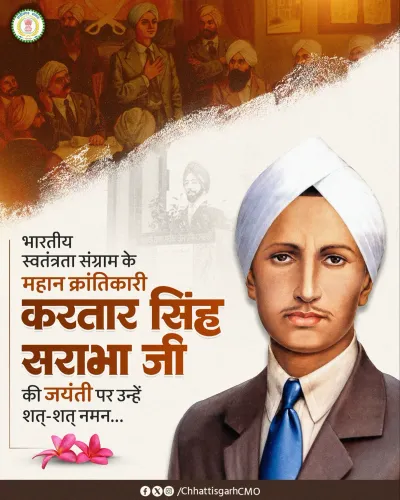
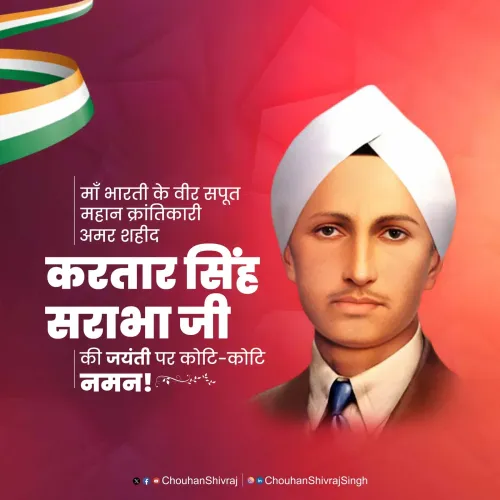
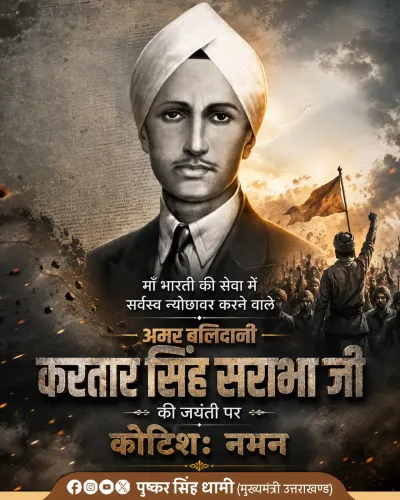
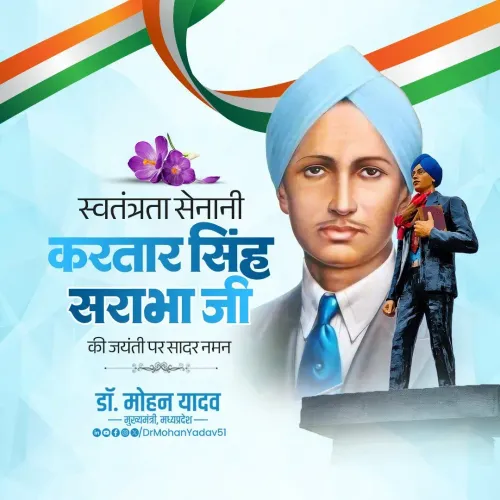
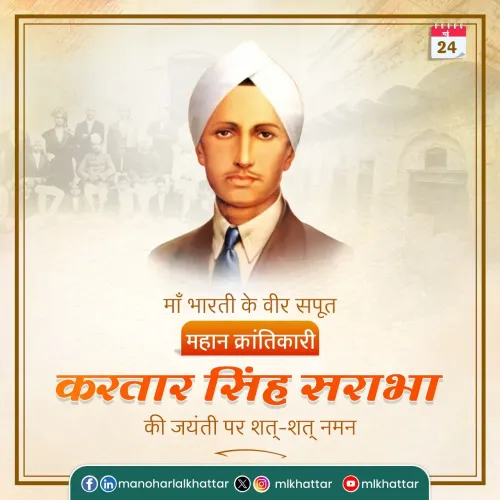
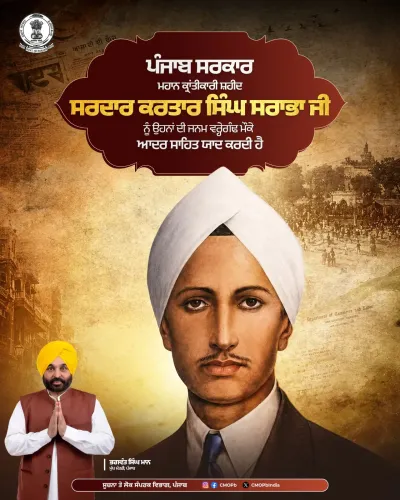
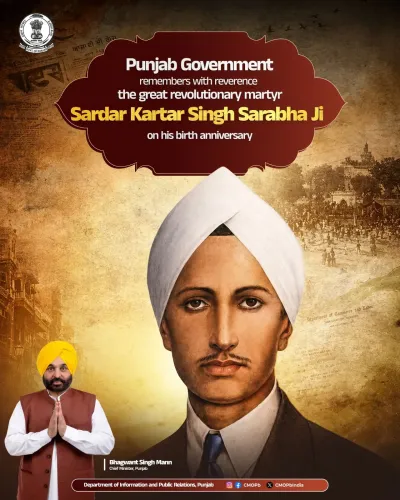
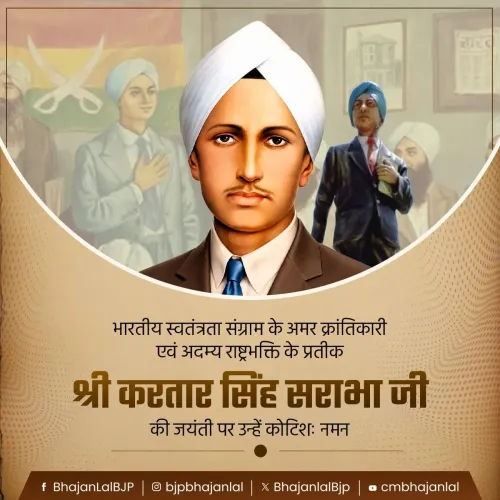
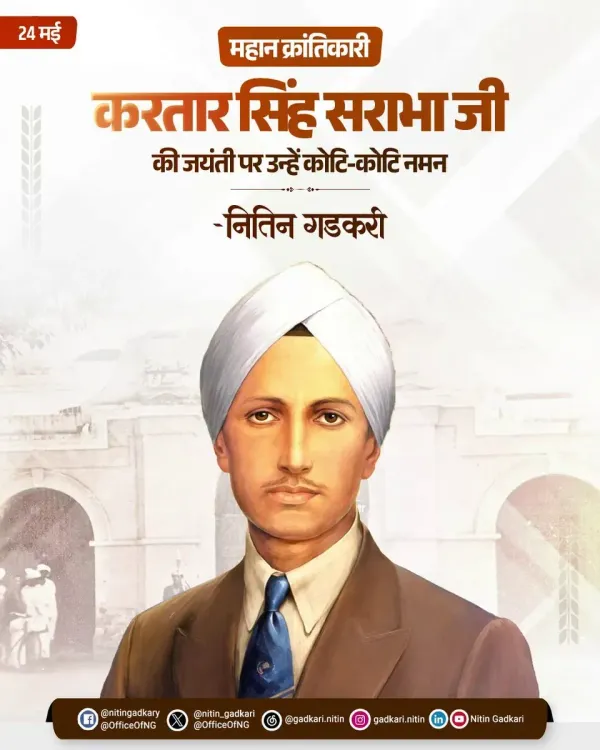
Gadkari pays tribute to revolutionary Kartar Singh Sarabha
Synopsis
Union Minister Nitin Gadkari on 24 May 2026 paid homage to Ghadar Party revolutionary Kartar Singh Sarabha on his birth anniversary. Executed by the British at 19 in 1915, Sarabha remains a revered symbol of armed anti-colonial resistance, particularly in Punjab, and an inspiration to later revolutionaries including Bhagat Singh.
Key Takeaways
Union Minister Nitin Gadkari offered tribute to Kartar Singh Sarabha on his birth anniversary on 24 May 2026 .
Kartar Singh Sarabha was a Ghadar Party revolutionary executed by British authorities on 16 November 1915 at age 19 .
Sarabha was born in Sarabha village, Ludhiana district, Punjab , and is particularly revered in the state.
Bhagat Singh reportedly carried a photograph of Sarabha as a personal inspiration.
The tribute aligns with the government's Azadi Ka Amrit Mahotsav initiative honouring freedom fighters across India.
BJP cabinet ministers regularly mark anniversaries of independence-era revolutionaries as part of sustained nationalist outreach on social media.
Union Road Transport and Highways Minister Nitin Gadkari on Sunday, 24 May 2026, paid homage to freedom fighter Kartar Singh Sarabha on his birth anniversary, offering what he described as koti-koti naman (countless salutations) to the young revolutionary.
Context
Kartar Singh Sarabha was a towering figure of India's anti-colonial resistance. Born in 1896 in Sarabha village, Ludhiana district, Punjab, he became one of the most prominent members of the Ghadar Party, a revolutionary organisation formed among the Indian diaspora in North America to overthrow British rule.
He was arrested by British authorities and executed on 16 November 1915, at just 19 years of age, for his role in organising armed insurrection and distributing revolutionary literature. His sacrifice left a lasting impression on later revolutionaries, including Bhagat Singh, who reportedly kept a photograph of Sarabha with him as a source of inspiration.
Policy Backdrop
The tribute comes in the broader context of the Government of India's Azadi Ka Amrit Mahotsav, launched in 2021 to mark 75 years of Indian independence through nationwide events honouring freedom fighters, including those associated with armed resistance against colonial rule.
Ministers across the BJP-led Union Cabinet have consistently marked birth and death anniversaries of independence-era revolutionaries on social media, highlighting figures from the Ghadar movement, the revolutionary left, and the mainstream nationalist movement alike. These posts form part of a sustained effort to keep the memory of lesser-celebrated freedom fighters in public discourse.
Stakeholders and Impact
The tribute resonates especially strongly in Punjab, where Sarabha is revered as a local hero and a symbol of youthful sacrifice. Educational institutions, cultural organisations, and political parties across the state regularly commemorate his birth anniversary.
For the broader Indian public, such remembrances serve to reinforce awareness of the diverse strands of the independence movement, particularly the contributions of revolutionary groups that operated outside the mainstream Congress-led agitation. Sarabha's story — of a teenager who gave his life for national liberation — continues to hold significant emotive and pedagogical value.
What's Next
Tributes to Ghadar Party figures and other armed revolutionaries are expected to continue from Union ministers as the calendar of birth and death anniversaries progresses through the year. Observers will watch for any accompanying policy proposals — such as memorials, curriculum inclusions, or commemorative infrastructure — that may build on these symbolic gestures and translate them into lasting institutional recognition for figures like Kartar Singh Sarabha.
Point of View
Lending them a policy dimension beyond mere symbolism. Whether such remembrances translate into concrete measures — memorials, curriculum changes, or named infrastructure — remains the real test of their lasting impact.
NationPress
19 Sept 2026
Frequently Asked Questions
Who was Kartar Singh Sarabha?
Kartar Singh Sarabha was a Ghadar Party revolutionary born in 1896 in Sarabha village, Ludhiana, Punjab. He was executed by British authorities on 16 November 1915 at the age of 19 for organising armed resistance and distributing revolutionary literature against colonial rule.
Why is Kartar Singh Sarabha important in Indian history?
Sarabha is remembered as one of the youngest martyrs of India's independence movement. His courage inspired later revolutionaries, including Bhagat Singh, and he remains a symbol of youthful sacrifice and anti-colonial resistance, especially in Punjab.
What is the Ghadar Party?
The Ghadar Party was a revolutionary organisation formed primarily among the Indian diaspora in North America in the early 20th century. Its goal was to overthrow British rule in India through armed insurrection, and Kartar Singh Sarabha was among its most prominent members.
Why did Nitin Gadkari pay tribute to Kartar Singh Sarabha?
Gadkari posted the tribute on X on 24 May 2026, marking Sarabha's birth anniversary. BJP ministers regularly honour freedom fighters on their birth and death anniversaries as part of broader nationalist outreach and the government's Azadi Ka Amrit Mahotsav initiative.
What is Azadi Ka Amrit Mahotsav?
Azadi Ka Amrit Mahotsav is a Government of India initiative launched in 2021 to commemorate 75 years of Indian independence. It includes nationwide events and programmes honouring freedom fighters from all strands of the independence movement.