PM Modi flies to Philippines for ASEAN-India Summit, East Asia Summit
Synopsis
Modi's Manila visit is more than a multilateral formality — it arrives in the ASEAN-India Year of Maritime Cooperation, with India-ASEAN trade at $122 billion and Indo-Pacific tensions running high. The twin summits offer New Delhi a rare chance to consolidate its Act East credentials and shape a 'Navigating the Future' agenda alongside Southeast Asia's most consequential forum.
Key Takeaways
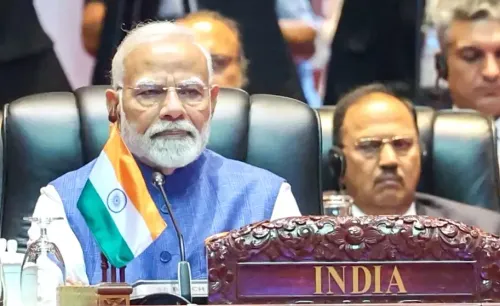
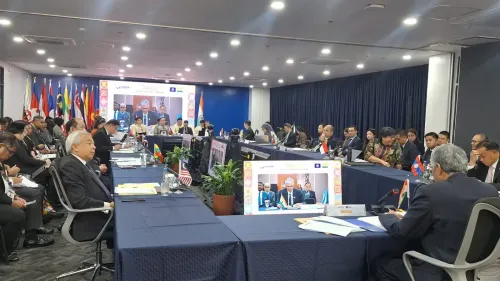
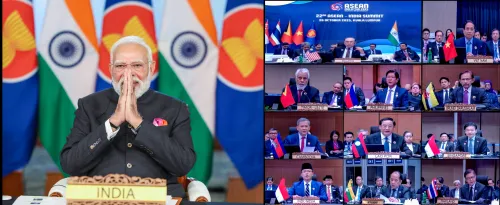
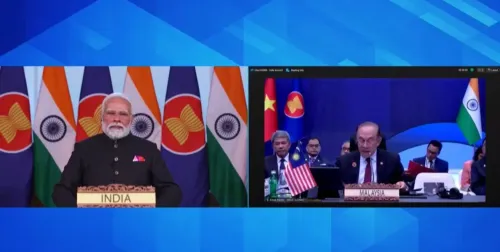
PM Modi travelled to Manila, Philippines on 16 November 2026 for the 23rd ASEAN-India Summit and the 21st East Asia Summit .
The summit will review the ASEAN-India Plan of Action 2026–2030 under the Comprehensive Strategic Partnership framework.
India-ASEAN trade stands at approximately $122 billion , according to MEA Secretary Rudrendra Tandon .
2026 is the designated ASEAN-India Year of Maritime Cooperation ; the sides will mark 35 years of Dialogue Relations.
This year's ASEAN theme is 'Navigating the Future' , with the Philippines holding the ASEAN Chair.
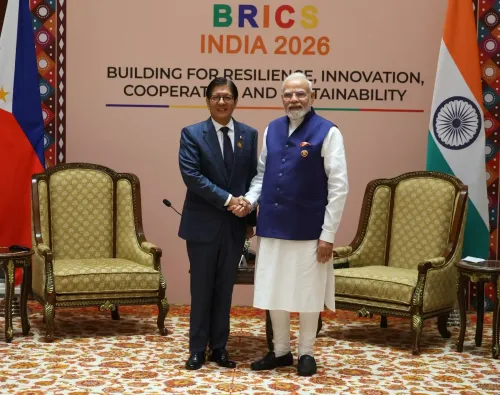
Modi's Manila schedule includes a dinner hosted by President Ferdinand Marcos Jr. and bilateral meetings with other leaders.
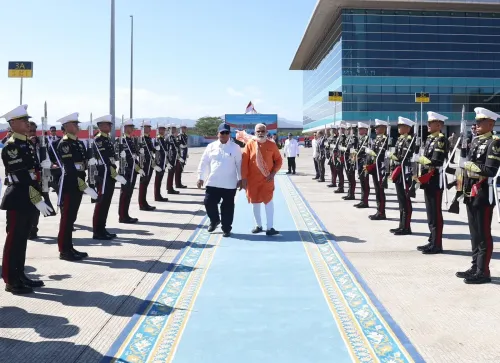
Prime Minister Narendra Modi departed for Manila, Philippines on Monday, 16 November 2026 to attend the 23rd ASEAN-India Summit and the 21st East Asia Summit, marking a significant diplomatic engagement at the heart of India's Act East Policy. The visit places India at the table with Southeast Asian leaders at a time of heightened geopolitical flux across the Indo-Pacific.
Agenda in Manila
According to the Ministry of External Affairs (MEA), the ASEAN-India Summit will review progress under the Comprehensive Strategic Partnership, including implementation of the ASEAN-India Plan of Action 2026–2030. The summit will also chart the future direction of bilateral and multilateral cooperation. Modi's programme in Manila includes a dinner hosted by Philippine President Ferdinand Marcos Jr. for visiting dignitaries, followed by the two summits the next day, with bilateral meetings scheduled in between.
India-ASEAN Trade and Maritime Ties
Rudrendra Tandon, Secretary (East) at the MEA, told reporters that ASEAN has emerged as a major trading partner for India, with bilateral trade across the region standing at approximately $122 billion. He stressed that a strong strategic relationship with ASEAN member states — collectively and individually — was essential for both sides. 'We in India strongly believe that, as an Indian Ocean country that abuts this very important Southeast Asian maritime zone, a strong strategic relationship with the ASEAN member states, as a collective as well as individually, is good for both of us,' Tandon said.
The visit coincides with 2026 being designated the ASEAN-India Year of Maritime Cooperation. The two sides will also commemorate 35 years of Dialogue Relations and look ahead to five years of their Comprehensive Strategic Partnership in 2027.
East Asia Summit: A Platform for Geopolitical Dialogue
The East Asia Summit, described by Tandon as 'a very unique ASEAN-led grouping of eight leaders,' provides an informal setting for discussions on global security and shared concerns. This year's summit is chaired by the Philippines as the ASEAN Chair — the reason Manila is hosting the proceedings. The overarching theme of this year's ASEAN processes is 'Navigating the Future', with leaders expected to focus on building collective resilience against rapid global changes.
Tandon noted that such engagement 'will make both sides more resilient in handling rapid geopolitical changes and will contribute to peace and stability in Asia as a whole.'
Strategic Significance for India
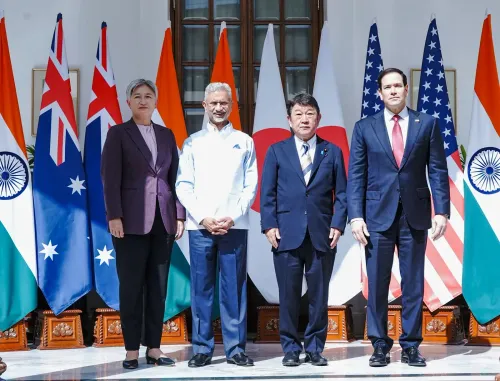
India's participation in the ASEAN-led multilateral architecture has deepened steadily since the Act East Policy was articulated in 2014 as an upgrade of the earlier Look East Policy. Notably, this summit comes at a moment when Indo-Pacific security arrangements — including the Quad — have sharpened focus on maritime freedom and connectivity, areas where India and ASEAN share significant common ground. For New Delhi, Manila represents an opportunity to reinforce both economic and security partnerships with a region that accounts for a substantial share of India's external trade.
Further details on outcomes from the bilateral meetings are expected to emerge as the summit concludes.
Point of View
The Philippines summit is a stress test of how far Act East has actually translated into strategic depth. The ASEAN-India Year of Maritime Cooperation is a useful diplomatic label, but it needs deliverables — particularly on connectivity and defence cooperation — that past summits have promised without fully delivering. As geopolitical competition in the South China Sea intensifies, India's ability to position itself as a credible and consistent Indo-Pacific partner — rather than a periodic visitor — will define the lasting value of engagements like this one.
NationPress
16 Nov 2026
Frequently Asked Questions
Why is PM Modi visiting the Philippines in November 2026?
PM Modi is in Manila to attend the 23rd ASEAN-India Summit and the 21st East Asia Summit on 16–17 November 2026. The visit is part of India's active engagement under its Act East Policy and coincides with the ASEAN-India Year of Maritime Cooperation.
What is the ASEAN-India Comprehensive Strategic Partnership?
The Comprehensive Strategic Partnership is the highest tier of India-ASEAN diplomatic relations, elevated to this level in 2022. The Manila summit will review progress under the ASEAN-India Plan of Action 2026–2030, which sets the roadmap for cooperation across trade, maritime security, and connectivity.
What is the East Asia Summit and who attends it?
The East Asia Summit is an ASEAN-led forum comprising ASEAN's ten member states plus eight dialogue partners — including India — that convenes leaders for informal discussions on regional security and global issues. This year's summit is chaired by the Philippines as the ASEAN Chair, which is why it is hosted in Manila.
How significant is India-ASEAN trade?
India-ASEAN trade stands at approximately $122 billion, making ASEAN one of India's largest trading blocs. MEA Secretary Rudrendra Tandon has described a robust strategic relationship with ASEAN member states as essential for resilience amid rapid geopolitical change.
What milestones are India and ASEAN commemorating in 2026 and 2027?
In 2026, India and ASEAN are celebrating the ASEAN-India Year of Maritime Cooperation and 35 years of Dialogue Relations. In 2027, the two sides will mark five years of their Comprehensive Strategic Partnership, adding significance to the Manila summit's agenda.