Gujarat releases 50 spotted deer in Surat forests to curb human-wildlife conflict
Synopsis
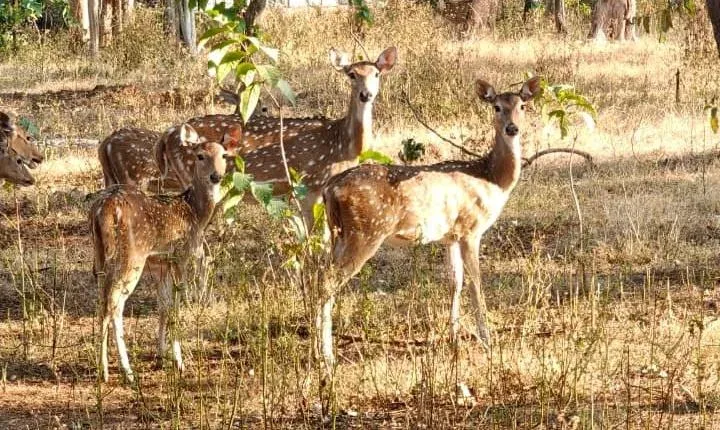
Gujarat has quietly moved 50 spotted deer from Gir to Surat's Mandvi Forest Range in three phases — a science-backed bet that a stronger prey base will keep predators inside forests and away from villages. With camera traps, water points, and a Quick Response Team now in place, the state is treating human-wildlife conflict as an ecological problem, not just a policing one.
Key Takeaways
The Gujarat Forest Department released 50 spotted deer into the Mandvi Forest Range, Surat , between May and June 2025 .
Deer were relocated from Sasan Gir Wildlife Division in three batches: 21 on 23 May, 16 on 18 June, and 13 on 24 June.
10 permanent water points were developed across the release area ahead of the translocation.
A spotted deer breeding centre and a jungle fowl breeding centre are already operational in the Mandvi range.
A Quick Response Team and post-release camera trap monitoring are in place to track deer movement, health, and survival.
The programme is aimed at reducing predator incursions into human settlements by strengthening the in-forest prey base.
The Gujarat Forest Department has released 50 spotted deer into the Mandvi Forest Range in Surat district as part of a long-term conservation programme aimed at bolstering the natural prey base for carnivores, enhancing biodiversity, and reducing human-wildlife conflict in South Gujarat. The translocation was carried out in three phases between May and June 2025, under the provisions of the Wildlife (Protection) Act, 1972.
Translocation in Three Phases
The 50 spotted deer were relocated from the Sasan Gir Wildlife Division to the Mandvi Forest Range in a phased manner. 21 deer were released on 23 May, followed by 16 on 18 June, and the remaining 13 on 24 June. According to the Forest Department, the phased approach was designed to allow the animals to acclimatise gradually to their new habitat.
Why the Prey Base Matters
A core logic underpins the initiative: when forest carnivores have adequate prey within their natural range, they are less likely to venture into adjacent human settlements in search of food. Forest and Environment Minister Arjun Modhwadia said the programme reflects a science-based approach to wildlife management. 'Under the guidance of Chief Minister Bhupendra Patel, the Forest Department is implementing a range of science-based conservation measures to reduce human-wildlife conflict. Strengthening the natural prey base in forest habitats is a key component of this strategy,' Modhwadia said. Minister of State for Forests and Environment Pravin Mali echoed this, noting that 'a healthy prey base enables predators to meet their food requirements within forest habitats, reducing the likelihood of their movement into human-dominated areas in search of prey.'
Habitat Preparation and Infrastructure
Conservator of Forests, Surat Circle, Puneet Nayyar said the department conducted detailed habitat assessments before the release to identify locations capable of sustaining the deer population. Ten permanent water points were developed across the release area to ensure year-round drinking water access. The Mandvi Forest Range also hosts a spotted deer breeding centre and a jungle fowl breeding centre, both aimed at diversifying the prey base and enhancing avian biodiversity, according to Principal Chief Conservator of Forests (Wildlife) and Chief Wildlife Warden Jaipal Singh.
Post-Release Monitoring
The department has established a dedicated post-release monitoring programme. Forest guards and trained trackers are conducting continuous field surveillance, while strategically placed camera traps are being used to assess the deer's movements, habitat use, health, and survival rates. A Quick Response Team equipped with modern rescue equipment has also been deployed to address wildlife emergencies and safeguard both local communities and wild animals.
Broader Conservation Context
Officials said the initiative aligns with Prime Minister Narendra Modi's stated position that wildlife conservation and development can advance together. This comes amid growing concern across Indian states about rising human-wildlife conflict incidents, particularly in forest-fringe communities. The Mandvi Range intervention is intended to strengthen the ecological resilience of the Surat Forest Division while contributing to long-term biodiversity goals in the region. How effectively the prey augmentation translates into reduced conflict incidents will be closely watched in the months ahead.
Point of View
With habitat assessment and water infrastructure built in advance, signals genuine planning rather than optics. The harder question is whether 50 deer are sufficient to meaningfully shift predator behaviour in the Mandvi range, or whether this is a pilot that needs rapid scaling. Post-release monitoring data, if made public, will be the real test of whether the model is replicable across other conflict-prone forest divisions in South Gujarat.
NationPress
18 Oct 2026
Frequently Asked Questions
Why did Gujarat release spotted deer into the Mandvi Forest Range?
The Gujarat Forest Department released 50 spotted deer to strengthen the natural prey base for carnivores in the Mandvi Forest Range, Surat. The aim is to keep predators within forest habitats by ensuring adequate food supply, thereby reducing their movement into nearby human settlements and lowering human-wildlife conflict incidents.
Where were the spotted deer sourced from?
The 50 spotted deer were relocated from the Sasan Gir Wildlife Division in Gujarat. The translocation was carried out in three phases between May and June 2025 under the Wildlife (Protection) Act, 1972.
How is the Forest Department monitoring the released deer?
The department has set up a post-release monitoring programme involving forest guards, trained trackers, and strategically placed camera traps to assess the deer's movements, habitat use, health, and survival. A Quick Response Team with modern rescue equipment has also been deployed for wildlife emergencies.
What infrastructure was put in place before the deer were released?
The Forest Department conducted detailed habitat assessments to identify suitable release sites and developed 10 permanent water points across the release area to ensure year-round drinking water access for the deer.
What other conservation facilities exist in the Mandvi Forest Range?
The Mandvi Forest Range already hosts a spotted deer breeding centre to increase local herbivore populations and a jungle fowl breeding centre aimed at diversifying the prey base and enhancing avian biodiversity, according to Chief Wildlife Warden Jaipal Singh.