Gujarat CM Patel Marks International Biodiversity Day 2026
Synopsis
On International Biodiversity Day, 22 May 2026, Gujarat's Chief Minister's Office reaffirmed CM Bhupendra Patel's commitment to conservation, linking state initiatives to PM Narendra Modi's national vision for protecting and enriching India's natural heritage.
Key Takeaways
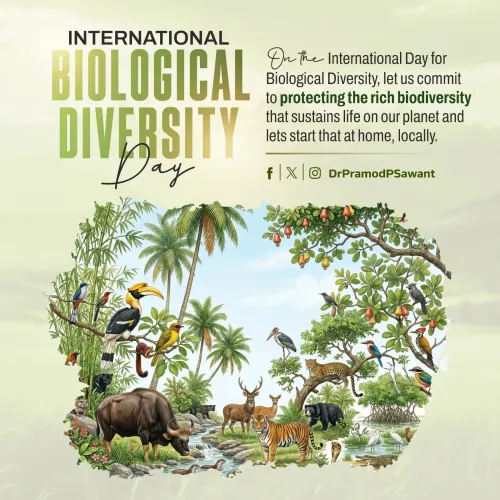
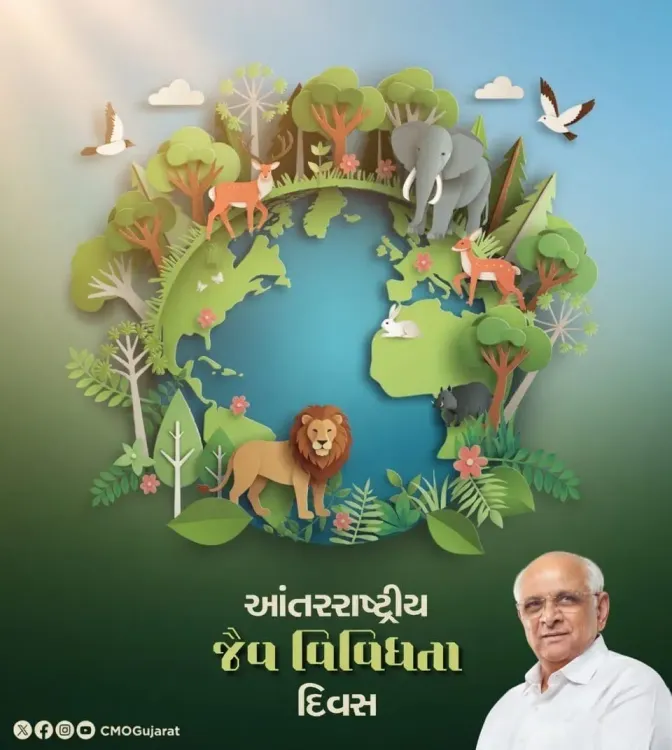
The Chief Minister's Office of Gujarat posted a message on 22 May 2026 marking International Biodiversity Day .
CM Bhupendra Patel is credited with leading 'numerous initiatives' to conserve and enrich the state's natural heritage.
The post frames state action as an extension of PM Narendra Modi's resolve for conservation of natural resources.
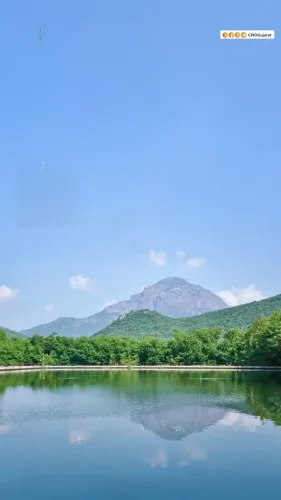
Gujarat hosts critical biodiversity assets including the Gir forest , the sole habitat of the Asiatic lion , and extensive coastal ecosystems.
India has been a party to the Convention on Biological Diversity since 1994 and enacted the Biological Diversity Act in 2002 to operationalise those commitments.
The message called on citizens to collectively pledge to maintain the balance between nature and human life.
The Chief Minister's Office of Gujarat on Friday, 22 May 2026 issued a message marking International Biodiversity Day, reaffirming the state government's commitment to conservation and calling on citizens to pledge support for preserving the balance between nature and human life.
Context
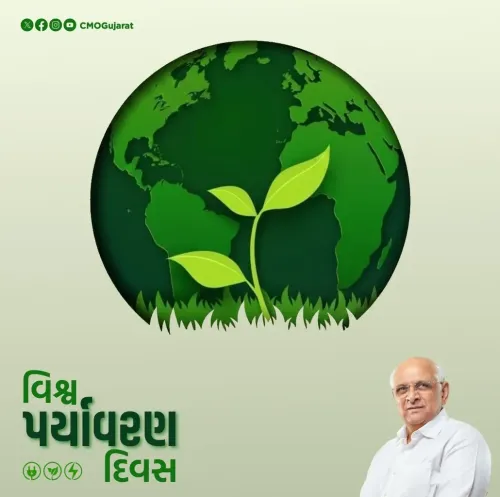
The post, shared in Gujarati, opens with the principle that 'sampurna jeevsrishti nu santulan ane parasparik sahyog anivarya che' — 'the balance and mutual cooperation of all living beings is essential' — to keep the Earth safe and the environment stable. It invokes Prime Minister Narendra Modi's resolve for the 'conservation and enrichment of natural heritage' and states that the Gujarat government under Chief Minister Bhupendra Patel has undertaken 'numerous initiatives' toward that goal. The message closes with a call to collectively commit to maintaining the balance between nature and human life on the occasion of International Biodiversity Day, accompanied by the hashtag #InternationalBioDiversityDay.
Policy Backdrop
International Biodiversity Day is observed every year on 22 May under the framework of the Convention on Biological Diversity (CBD), to which India has been a signatory since 1994. Domestically, the Biological Diversity Act of 2002 established national and state biodiversity boards to regulate access to biological resources and promote conservation across all states, including Gujarat. India has also periodically updated its National Biodiversity Action Plan to keep domestic policy aligned with evolving CBD commitments.
Gujarat occupies a distinctive position in India's biodiversity landscape. The state is home to the Gir forest, the last refuge of the Asiatic lion, as well as extensive coastal and marine ecosystems. State policy has historically focused on protecting endemic species and habitats while integrating eco-tourism and sustainable resource use into its development agenda.
Stakeholders and Impact
The state's biodiversity commitments touch a wide range of communities. Coastal communities and forest dwellers depend directly on healthy ecosystems for their livelihoods, while the agricultural sector relies on pollinator species and soil biodiversity for productivity. Conservation organisations working across Gujarat monitor protected areas and advocate for stronger enforcement of biodiversity norms.
By linking state-level action to PM Modi's national vision, the message reinforces a pattern of aligning Gujarat's environmental governance with central policy priorities — a framing that also positions the state as a model for other state governments on biodiversity mainstreaming.
What's Next
Attention will now turn to whether the Gujarat government follows the observance with concrete announcements — such as new protected-area notifications, budget allocations for biodiversity programmes, or fresh eco-tourism initiatives. At the international level, outcomes of upcoming sessions of the Conference of the Parties to the CBD will shape the targets that India and its states must translate into ground-level action. How Gujarat maps its existing and new initiatives against those global targets will be a key indicator of the state's seriousness in moving beyond annual observances toward measurable conservation outcomes.
Point of View
The post serves a dual purpose: reinforcing Gujarat's credentials as a proactive environmental steward and projecting political continuity between Gandhinagar and New Delhi. The absence of specific programme details keeps the statement aspirational rather than accountable, which is typical of such ceremonial communications. The real test will come when the state tables concrete budget lines or protected-area expansions that can be measured against India's CBD commitments.
NationPress
6 Oct 2026
Frequently Asked Questions
What is International Biodiversity Day and when is it observed?
International Biodiversity Day is a global observance held every year on 22 May to raise awareness about the importance of biological diversity and the need to protect ecosystems. It is observed under the framework of the Convention on Biological Diversity .
What did Gujarat's CMO post on Biodiversity Day 2026?
The Chief Minister's Office of Gujarat posted a message on 22 May 2026 reaffirming the state government's commitment to conservation, linking its initiatives to PM Narendra Modi's vision and calling on citizens to pledge support for balancing nature and human life.
What biodiversity assets does Gujarat have?
Gujarat is home to the Gir forest , the last natural habitat of the Asiatic lion , as well as significant coastal and marine ecosystems. The state has historically focused on protecting endemic species while integrating eco-tourism and sustainable resource use.
What is India's legal framework for biodiversity conservation?
India enacted the Biological Diversity Act in 2002 , which established national and state biodiversity boards to regulate access to biological resources and promote conservation. India has also been a signatory to the Convention on Biological Diversity since 1994 .
Who is Bhupendra Patel and what is his role in Gujarat's environment policy?
Bhupendra Patel is the Chief Minister of Gujarat and is responsible for state-level execution of biodiversity and environmental protection measures. The CMO's post credits his leadership for the 'numerous initiatives' undertaken to conserve and enrich the state's natural heritage.