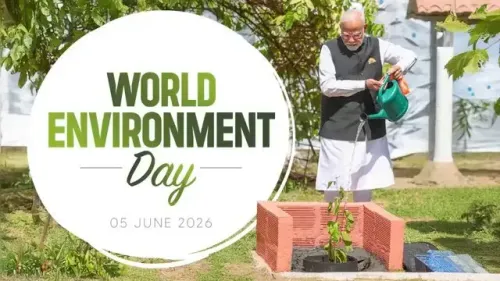
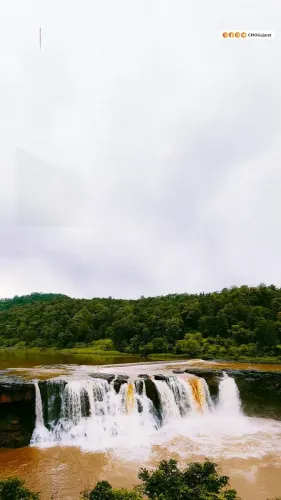
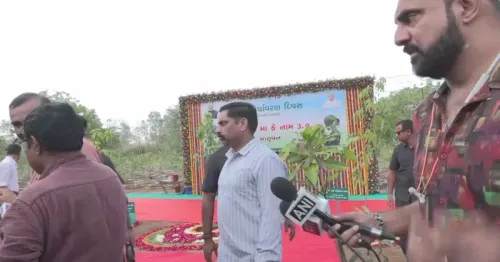
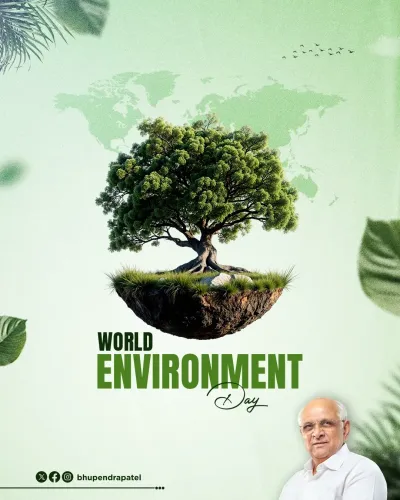
Gujarat CM Bhupendra Patel Marks World Environment Day 2026
Synopsis
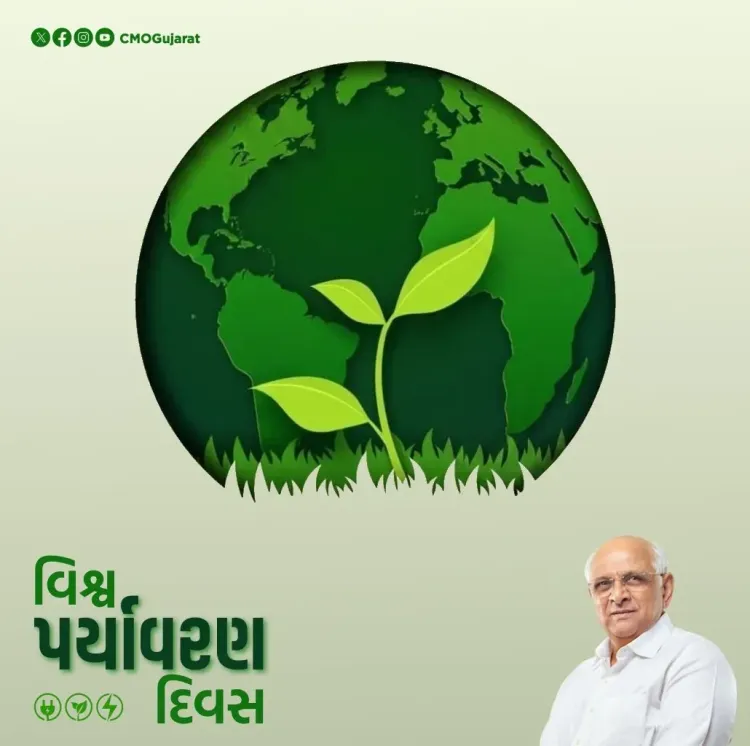
On World Environment Day 2026, Gujarat's Chief Minister's Office called on citizens to commit to tree plantation, water conservation and energy saving, linking state efforts to PM Modi's Green Growth vision under CM Bhupendra Patel's leadership.
Key Takeaways
The Chief Minister's Office of Gujarat issued a World Environment Day message on 5 June 2026 calling for citizen action on conservation.
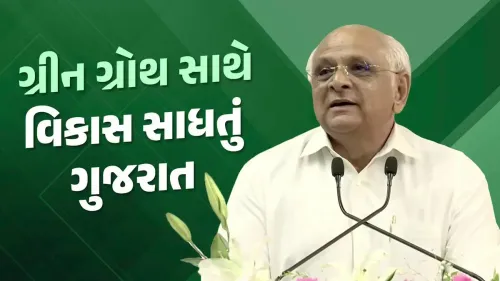
CM Bhupendra Patel's government is accelerating environment-friendly development aligned with PM Modi's 'Green Growth' vision.
Citizens were urged to pledge action on tree plantation, water harvesting, and energy conservation .
World Environment Day is a UN-established annual observance since 1972 , observed every 5 June .
India's Panchamrit strategy, announced at COP26 in 2021 , includes a net-zero target by 2070 and underpins the Green Growth framework.
Gujarat is a major industrial state that has paired economic growth with renewable energy adoption and resource conservation drives.
The Chief Minister's Office of Gujarat marked World Environment Day on 5 June 2026 with a public call to action, urging citizens to pledge their commitment to environmental balance through tree plantation, water conservation, and energy saving. The message, issued under Chief Minister Bhupendra Patel's leadership, framed these everyday efforts as part of Prime Minister Narendra Modi's 'Green Growth' vision for India.
Context
The post, written in Gujarati, opens with a declaration: 'Prakrutik sansadhano ane paryavarannu rakshan karvu e aapna sauni samuhik farj chhe' — 'Protecting natural resources and the environment is our collective duty.' It then invites citizens to take a resolve on World Environment Day to contribute to environmental balance through small but meaningful actions such as tree planting, rainwater harvesting, and energy conservation.
World Environment Day is observed every year on 5 June under the United Nations framework, a tradition established in 1972 to promote global awareness and mobilise action on pressing environmental challenges. India has consistently used the occasion to align state-level campaigns with national climate commitments.
Policy Backdrop
The Gujarat CMO's messaging directly invokes PM Modi's 'Green Growth' framework, one of the seven priorities outlined in India's development agenda, which seeks to integrate economic expansion with environmental stewardship. At COP26 in 2021, PM Modi unveiled India's Panchamrit strategy, which includes a net-zero emissions target by 2070 and a commitment to meeting 50 per cent of energy requirements from renewable sources.
India's National Action Plan on Climate Change (NAPCC), launched in 2008, established eight national missions covering solar energy, water conservation, sustainable agriculture, and afforestation — frameworks that state governments, including Gujarat, have since adapted into their own policy and public outreach programmes.
Gujarat, historically one of India's most industrialised states, has in recent years positioned itself as a leader in renewable energy adoption, housing large solar and wind energy installations. The state's messaging on environment days serves as a bridge between its industrial identity and its green transition commitments.
Stakeholders and Impact
The primary audience for this appeal is Gujarat's general public — residents, schools, local bodies, and industries — who are being called upon to integrate conservation habits into daily life. The three actions highlighted — tree plantation, water harvesting, and energy saving — are low-barrier, citizen-level interventions that collectively contribute to state and national climate targets.
Local industries in Gujarat, particularly in energy-intensive sectors, also operate within the broader Green Growth framework, making public messaging of this kind part of a wider normative push toward sustainable practices. Community participation in afforestation and water conservation drives has historically been mobilised through such annual observances across Indian states.
What's Next
Observers will watch whether World Environment Day 2026 serves as a launchpad for concrete state-level announcements — such as new afforestation targets, expanded water harvesting schemes, or updated renewable energy rollout timelines — in Gujarat's upcoming budget or policy calendar. The alignment of state messaging with PM Modi's Green Growth vision suggests continued federal-state coordination on climate action, with Gujarat positioned as a model implementer of central environmental priorities.
Point of View
The message reinforces political continuity between Gandhinagar and New Delhi on environmental policy. For Gujarat, a state whose industrial base makes green credentials both a challenge and an opportunity, such messaging also serves a reputational function ahead of investment forums and policy reviews. The focus on individual citizen actions — planting trees, saving water, conserving energy — reflects a deliberate strategy to democratise climate responsibility beyond government and industry.
NationPress
20 Oct 2026
Frequently Asked Questions
What is World Environment Day and when is it observed?
World Environment Day is an annual United Nations observance held every 5 June to promote global awareness and action on environmental issues. It was established in 1972 and is one of the principal platforms for encouraging positive environmental action worldwide.
What is PM Modi's Green Growth vision?
PM Narendra Modi's Green Growth vision seeks to integrate economic development with environmental protection. It is one of the seven priorities in India's development agenda and is backed by the Panchamrit strategy announced at COP26 in 2021 , which includes a net-zero emissions target by 2070 .
What actions did Gujarat's CMO urge citizens to take on Environment Day 2026?
The Chief Minister's Office of Gujarat urged citizens to pledge commitment to tree plantation, water harvesting, and energy conservation as small but impactful steps toward environmental balance.
Who is the Chief Minister of Gujarat?
Bhupendra Patel has been the Chief Minister of Gujarat since 2021 . He oversees the state's implementation of sustainable development and environmental conservation programmes.
How does Gujarat fit into India's national climate goals?
Gujarat is a major industrial state that has positioned itself as a leader in renewable energy, hosting large solar and wind installations. The state adapts central frameworks like the National Action Plan on Climate Change into local policy and public outreach, making it a key implementer of India's national climate commitments.