CM Bhupendra Patel highlights Gujarat's green industrial push on World Environment Day
Synopsis
On World Environment Day 2026, Gujarat CM Bhupendra Patel amplified PM Modi's address at Surat Navsarjan Parv, spotlighting the state's push for industrial growth, port-led development, and renewable energy — while stressing that environmental conservation must accompany every step of that progress.
Key Takeaways
Gujarat CM Bhupendra Patel posted on 5 June 2026 — World Environment Day — quoting PM Narendra Modi 's remarks at the Surat Navsarjan Parv .
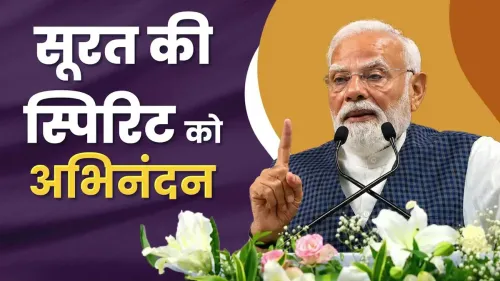
Modi was quoted as calling Surat 'not merely a city, but a spirit,' framing it as a symbol of Gujarat's development ambition.
The post highlighted three parallel thrusts: industrial development , port-led development , and renewable energy projects across Gujarat.
Modi also underscored the necessity of environmental conservation alongside economic growth, per Patel's account.
The Sagarmala programme (launched 2015) and Gujarat's renewable energy policy (updated from 2016) form the policy backbone for these projects.
Rollout timelines, environmental clearances, and state budget allocations for South Gujarat projects remain the key metrics to watch.
Gujarat Chief Minister Bhupendra Patel on Friday, 5 June 2026 — World Environment Day — shared highlights from Prime Minister Narendra Modi's address at the Surat Navsarjan Parv, underscoring the state's simultaneous push for industrial expansion and environmental protection across Gujarat, with special focus on Surat and South Gujarat.
Context
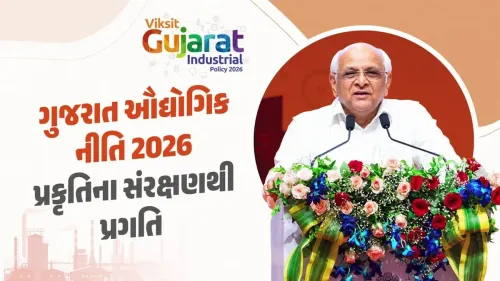
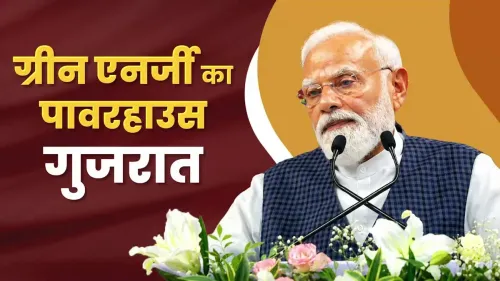
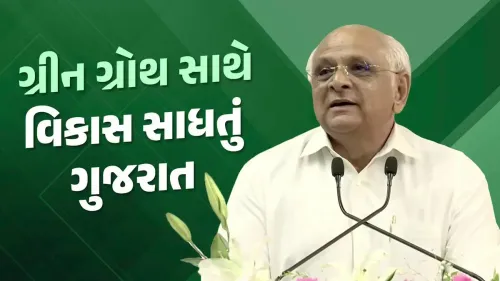
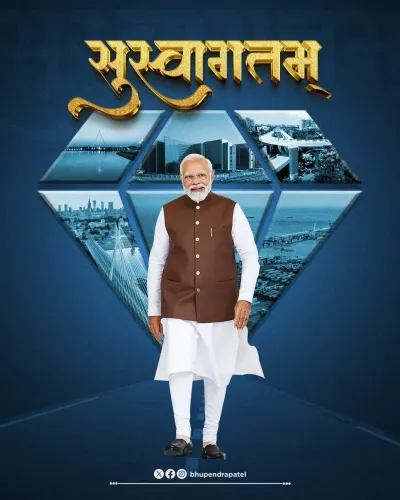
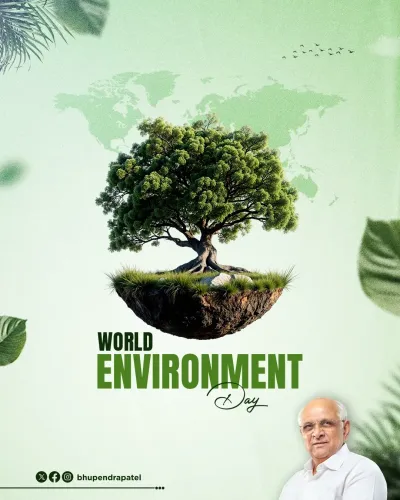
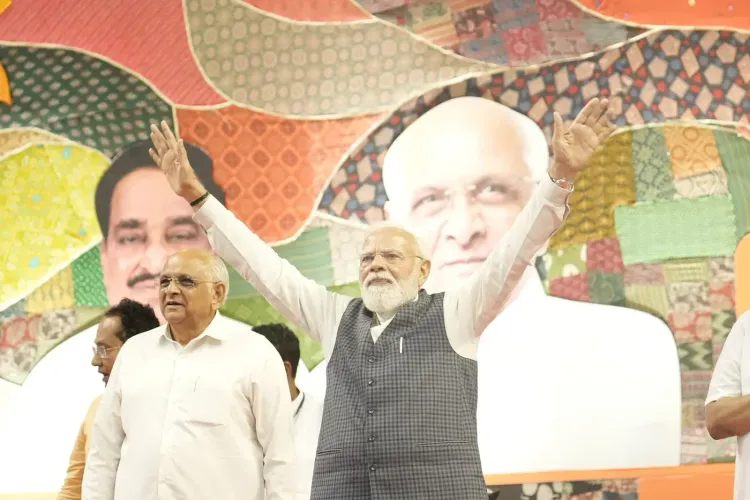
Posting in Gujarati on the occasion of World Environment Day, CM Patel quoted PM Modi as saying that 'Surat matr ek shaher nahi, pan spirit chhe' — 'Surat is not merely a city, it is a spirit.' The post, tagged #SuratNavsarjanParv and #WorldEnvironmentDay, was accompanied by four images from the event, signalling a high-profile occasion that brought together development and ecology messaging.
Patel noted that Modi outlined ongoing projects covering industrial development, port-led development, and renewable energy across the state, while simultaneously stressing the necessity of environmental conservation alongside growth.
Policy Backdrop
The framing reflects a pattern Gujarat has pursued for over a decade: coupling economic corridor expansion with public climate commitments. The Sagarmala port-led development programme, launched nationally in 2015, identified Gujarat as a key beneficiary state, with South Gujarat's coastline central to that vision.
Gujarat's renewable energy policy, updated in iterations since 2016, targets significant additions in solar and wind capacity. The state's dual emphasis — attracting manufacturing clusters while pursuing green energy targets — has become a recurring template in both state and national policy communication.
Modi's characterisation of Surat as a 'spirit' rather than just a city draws on the metropolis's identity as a hub for the diamond, textile, and port-based industries, now being repositioned as a node in India's renewable and logistics future.
Stakeholders and Impact
The communities most directly affected by these policy directions are Gujarat's industrial sector — particularly diamond and textile businesses in Surat — and the port communities of South Gujarat who stand to gain or be displaced by port-led infrastructure expansion.
Environmental groups will watch whether the stated commitment to ecological protection translates into enforceable safeguards for coastal and inland ecosystems as industrial and port projects scale up. The choice of World Environment Day as the occasion to amplify this messaging adds a layer of international accountability to the state's public commitments.
What's Next
Attention will now turn to the rollout timelines and environmental clearances for the renewable energy and port projects referenced at the Surat Navsarjan Parv. Any follow-up allocations in Gujarat's state budget will be closely tracked as a measure of how firmly the green-industrial balance is institutionalised beyond the event's optics.
With the Surat Navsarjan Parv placing the city at the centre of Gujarat's next development chapter, the state government faces the test of converting high-profile political messaging into verifiable project milestones — on both the economic and environmental fronts.
Point of View
Patel reinforces the BJP's Gujarat-as-model-state messaging while deflecting ownership of any future environmental controversy to the Centre's framing. The dual emphasis on port-led growth and renewable energy mirrors India's broader 'development without destruction' positioning at international climate forums. The real test, however, lies in whether environmental clearances for South Gujarat's coastal projects reflect the stated conservation principles or remain aspirational rhetoric.
NationPress
19 Oct 2026
Frequently Asked Questions
What did CM Bhupendra Patel post on World Environment Day 2026?
CM Bhupendra Patel shared highlights from PM Narendra Modi's address at the Surat Navsarjan Parv, quoting Modi's remark that 'Surat is not merely a city, it is a spirit,' and outlining Gujarat's industrial, port-led, and renewable energy projects alongside a call for environmental conservation.
What is the Surat Navsarjan Parv?
Surat Navsarjan Parv is an event held in Surat, Gujarat, that served as the occasion for PM Modi's address covering the city's and state's development trajectory, including port infrastructure and renewable energy initiatives.
What is port-led development in Gujarat?
Port-led development in Gujarat refers to building industrial and logistics clusters around the state's coastline, supported by the national Sagarmala programme launched in 2015, with South Gujarat's ports playing a central role.
How is Gujarat balancing industrial growth with environmental protection?
Gujarat's stated policy approach couples manufacturing and port expansion with renewable energy targets and public commitments to ecological safeguards, though environmental groups continue to monitor whether clearances for coastal projects enforce those commitments in practice.
What renewable energy projects are planned for South Gujarat?
Specific project details for 2026 have not been independently verified, but Gujarat's renewable energy policy — updated from 2016 — targets solar and wind capacity additions, with South Gujarat identified as a key zone for such development alongside port infrastructure.