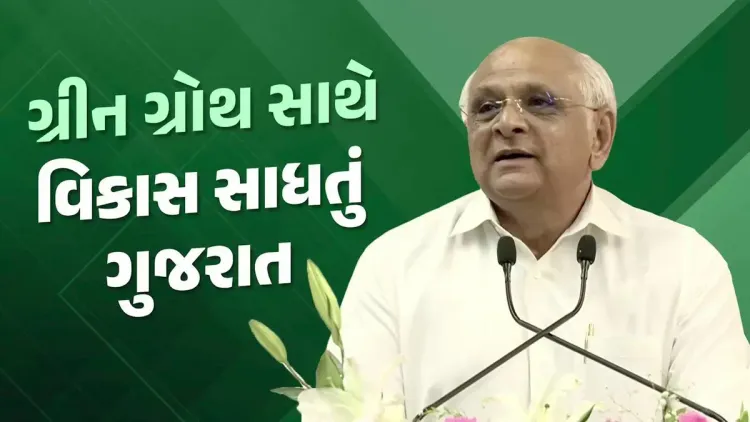
CM Bhupendra Patel Pledges Gujarat's Green Growth Path
Synopsis
Gujarat Chief Minister Bhupendra Patel on June 5, 2026 reaffirmed the state's resolve to pursue a sustainable development model anchored in green growth, crediting PM Modi's guidance, in a post tied to the Surat Navsarjan Parv event on World Environment Day.
Key Takeaways
Gujarat CM Bhupendra Patel publicly committed to a green growth-based sustainable development model on June 5, 2026 .
The pledge was made in the context of the #SuratNavsarjanParv event in Surat , Gujarat's major commercial city.
Patel explicitly credited PM Narendra Modi's vision as the guiding framework for the state's environmental direction.
Gujarat's approach aligns with India's Panchamrit climate strategy announced at COP26 in Glasgow in 2021 , targeting 500 GW non-fossil fuel capacity and net-zero by 2070 .
Key stakeholders include Gujarat's industrial sector and urban planners, especially in Surat, which is undergoing rapid economic expansion.
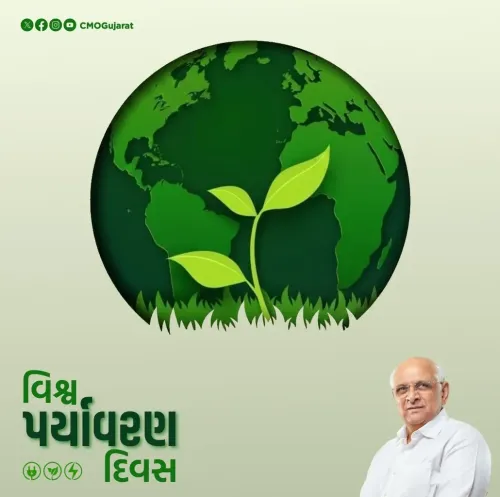
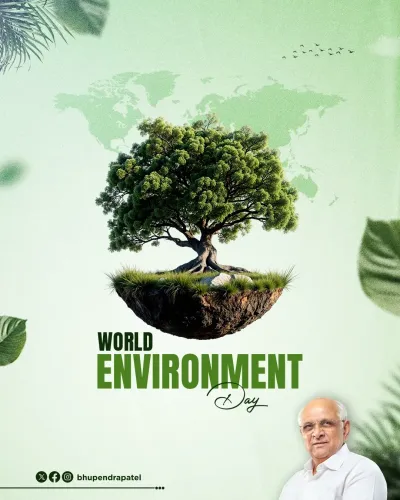
Gujarat Chief Minister Bhupendra Patel reaffirmed the state's commitment to building a sustainable development model rooted in green growth on Friday, June 5, 2026, marking World Environment Day. Speaking through a post on X tied to the #SuratNavsarjanParv event, Patel credited Prime Minister Narendra Modi's vision as the guiding force behind Gujarat's environmental direction.
Context
Patel's post, originally in Gujarati, states: 'Gujarat maananiy Modiji na dishadarshan ma Green Growth sathe nu Sustainable Development model banava sankalpabaddh chhe' — translated as 'Gujarat is committed to building a sustainable development model with green growth under the honourable Modiji's guidance.' The message was shared under the hashtag #SuratNavsarjanParv, linking the pledge to an ongoing event in Surat, one of Gujarat's largest commercial cities.
The post directly tags @narendramodi, framing the state's environmental agenda as an extension of the Prime Minister's national vision. This is consistent with the broader BJP-governed state approach of aligning local policy messaging with central leadership.
Policy Backdrop
India's green growth commitments trace back to the Panchamrit strategy announced by Prime Minister Modi at the COP26 climate summit in Glasgow in 2021. The strategy sets national targets including achieving 500 GW of non-fossil fuel energy capacity and reaching net-zero emissions by 2070.
Gujarat has historically been a frontrunner in India's renewable energy transition, hosting large-scale solar and wind installations and positioning itself as an industrial state that integrates sustainability into its growth model. The state's alignment with central climate goals has been a recurring theme under Patel's tenure as Chief Minister.
Stakeholders and Impact
The commitment to green growth directly affects Gujarat's industrial sector, which includes major manufacturing, textile, and petrochemical hubs — particularly in Surat. Urban planners and industry bodies in the state are key stakeholders as the government moves to embed environmental standards into infrastructure and economic planning.
For Surat, a city undergoing significant urban and economic expansion, a sustainable development framework could shape decisions around energy sourcing, construction norms, and industrial regulation. The #SuratNavsarjanParv event signals a civic renewal focus that may incorporate green urban planning components.
What's Next
Attention will now turn to whether the Gujarat government follows this pledge with specific project announcements — including new renewable energy targets, green infrastructure investments in Surat, or dedicated allocations in the upcoming state budget. Environment summits and state-level policy rollouts in the coming months will be the clearest indicator of how this commitment translates into measurable action.
As India approaches its mid-decade review of Panchamrit targets, state-level endorsements from large industrial states like Gujarat carry weight in demonstrating federal-state coherence on climate goals.
Point of View
Patel reinforces political coherence ahead of potential budget and infrastructure announcements. The reference to Surat — a city synonymous with economic dynamism — is deliberate, signalling that green growth is not being positioned against industrial progress but as its next chapter. The real test will be whether specific, measurable commitments follow this rhetorical groundwork.
NationPress
19 Oct 2026
Frequently Asked Questions
What did Gujarat CM Bhupendra Patel say on World Environment Day 2026?
Gujarat CM Bhupendra Patel declared on June 5, 2026 that Gujarat is committed to building a sustainable development model based on green growth, citing PM Narendra Modi's guidance as the driving vision.
What is the Surat Navsarjan Parv?
Surat Navsarjan Parv is an event associated with Surat city in Gujarat. The exact nature and full programme of the event have not been officially detailed in publicly available records, but CM Patel's post links it to themes of green growth and sustainable development.
What is India's Panchamrit climate strategy?
India's Panchamrit strategy, announced by PM Modi at COP26 in Glasgow in 2021, sets five climate targets including achieving 500 GW of non-fossil fuel energy and reaching net-zero emissions by 2070.
How is Gujarat contributing to India's green energy goals?
Gujarat has been a leading state in India's renewable energy transition, hosting large solar and wind energy projects and aligning its industrial and urban development policies with national climate commitments under the BJP government.
Why is Surat significant in Gujarat's sustainable development plans?
Surat is one of Gujarat's largest and fastest-growing cities, with a major industrial and commercial base. Its inclusion in green growth messaging signals that sustainable development frameworks may shape the city's infrastructure, energy, and urban planning decisions.