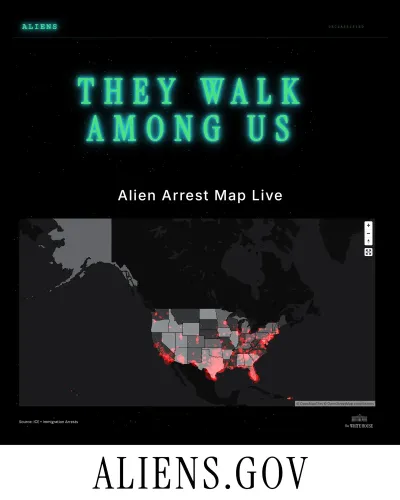
White House Posts Blunt Anti-Immigration Slogan on X
Synopsis
The White House posted a blunt nationalist immigration slogan on X on October 19, 2026, equating large-scale immigration with national decline. The seven-word post carries significant diplomatic and policy implications, particularly for Indian nationals in the US immigration pipeline.
Key Takeaways
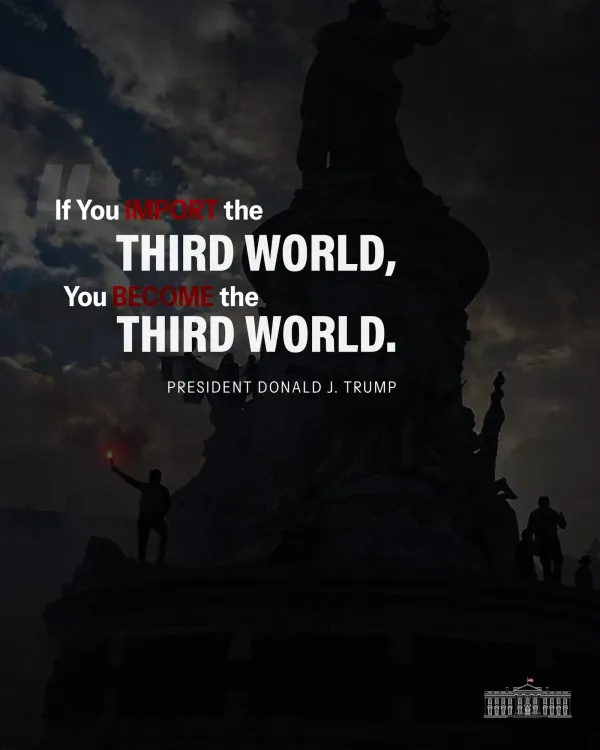
The White House posted 'If you import the third world, you become the third world' on X on October 19, 2026 .
The phrase originates in nationalist and right-wing political circles and has never before appeared as official US government communications.
The term 'third world' is widely considered pejorative and has been retired from formal diplomatic discourse.
Indian nationals are among the largest groups of legal immigrants and high-skilled visa holders in the United States, making any US immigration hardening directly consequential for India.
No accompanying executive order, regulatory change, or policy document was posted alongside the statement.
Analysts and governments will watch closely for follow-up executive action on visa caps, deportations, or legal immigration pathways.
In a single, unsparing sentence, the White House — the official communications account of the Executive Office of the President of the United States — posted a statement on X on Monday, October 19, 2026 that landed like a hammer: a direct equation of immigration with national decline.
The post read: 'If you import the third world, you become the third world.' No policy detail. No attribution. No context. Just the line, broadcast from the most powerful government communications account on the planet.
A Slogan With a Long History in Nationalist Politics
The phrase is not new — it has circulated in right-wing and nationalist political circles in the United States and Europe for years, typically used to argue that large-scale immigration from lower-income nations degrades public services, wages, and civic culture. What is new is its appearance on an official White House account, lending state authority to language that critics have long labelled as dehumanising and racist.
The term 'third world' — a Cold War-era classification for non-aligned, often economically developing nations — has largely been retired from formal diplomatic and development discourse precisely because of its pejorative connotations. Its use here is deliberate and pointed.
Why This Matters Beyond the Culture War
Official White House communications carry weight far beyond domestic politics. Allies read them. Diplomatic cables reference them. Governments in South Asia, Latin America, Africa, and Southeast Asia — nations whose citizens make up a significant share of US immigrants — will parse every word. A post like this, short as it is, functions as a statement of national posture.
For India, the stakes are immediate and specific. Indian nationals constitute one of the largest groups of legal immigrants and high-skilled visa holders in the United States. Any rhetorical or policy hardening on immigration in Washington carries direct consequences for Indian professionals, students, and families navigating the US system.
Enforcement or Rhetoric — What Follows Will Tell the Story
Statements from the executive branch have historically preceded regulatory moves — or amounted to political signalling with no legislative follow-through. The critical question now is whether this post foreshadows concrete executive action: tighter visa caps, accelerated deportation orders, or restrictions on legal pathways that affect millions globally, including a significant Indian diaspora.
A seven-word post from the White House. The policy world will be watching what the next seven days bring.
Point of View
Which has deep economic and diaspora ties to the US immigration system, the absence of any qualifying policy detail is itself the detail — it leaves the threat maximally broad. The line between political rhetoric and enforceable policy has historically been thinner in immigration than in any other area of US governance.
NationPress
20 Oct 2026
Frequently Asked Questions
What did the White House post about immigration?
The White House posted the statement 'If you import the third world, you become the third world' on X on October 19, 2026, with no accompanying policy explanation or attribution.
What does 'third world' mean in this context?
'Third world' is a Cold War-era term for developing or non-aligned nations. It is widely considered outdated and pejorative in modern diplomatic usage; its use here is seen as a deliberate rhetorical choice to frame immigration as a civilisational threat.
How does this affect Indian immigrants in the US?
Indian nationals are one of the largest groups of legal immigrants and H-1B visa holders in the United States. Any policy tightening that follows this rhetoric could directly affect visa approvals, green card processing, and pathways to permanent residency for hundreds of thousands of Indians.
Is this an official US government policy statement?
The post was made on the official White House X account, giving it the character of an official communication, but no executive order or regulatory document accompanied it. Its precise policy implications remain unclear until follow-up action is announced.
Has any US administration used language like this before?
Similar phrases have circulated in nationalist political discourse across multiple administrations, but posting such language on the official White House account as a standalone statement represents an unprecedented escalation in the register of executive branch immigration communications.