White House Declares 'Freedom Will Prevail' in Terse Post
Synopsis
The White House posted a terse three-word declaration — 'Freedom will prevail' — on X on June 26, 2026. The message, carrying no further text, aligns with longstanding US public diplomacy affirming liberty as a core national interest and is being closely watched by democratic allies worldwide.
Key Takeaways
The White House posted 'Freedom will prevail' on X on June 26, 2026 at 9:19 PM UTC .
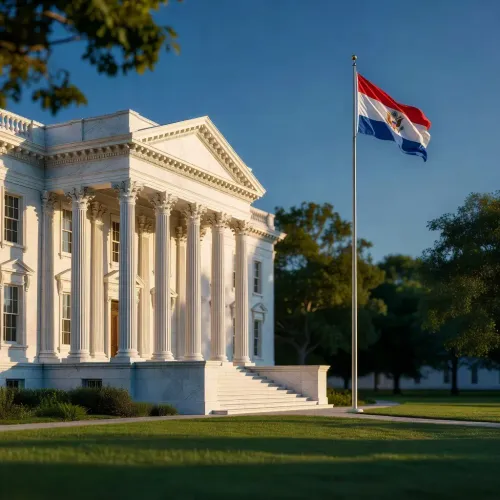
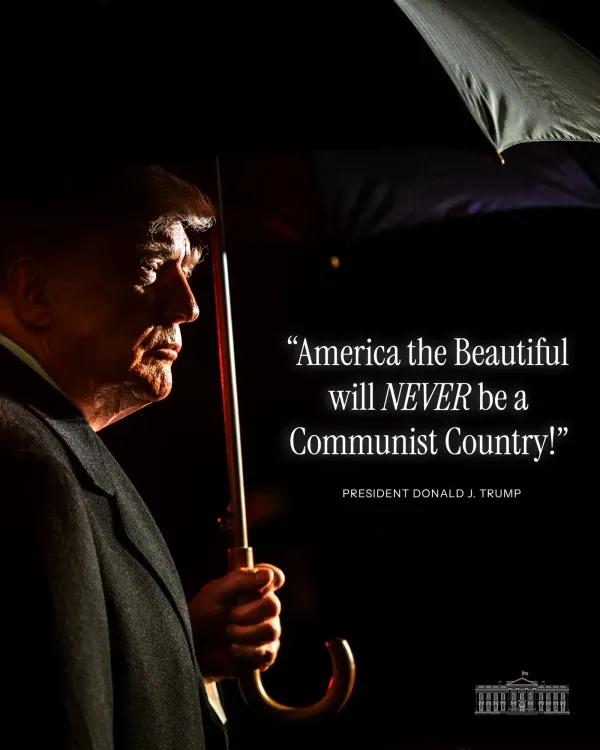
The post contained one image and no additional explanatory text beyond the declaration and a linked URL.
Declaratory freedom statements from the White House are a longstanding tool of US public diplomacy, used across multiple administrations.
Such posts are closely monitored by democratic allies, including India , a Comprehensive Global Strategic Partner of the United States .
Follow-up administration statements or diplomatic engagements are expected to clarify the specific context behind the message.
The White House, the official communications account of the Executive Office of the President of the United States, posted a brief but pointed message on X on Friday, June 27, 2026 (IST), stating simply: 'Freedom will prevail.' The post, accompanied by one image, carried no additional text beyond the declaration and a linked URL.
Context
The three-word statement — 'Freedom will prevail' — is spare by design. Such economy of language from an official White House account is typically deliberate, intended to signal resolve without disclosing the specific trigger. The post was published on June 26, 2026, at 9:19 PM UTC, during a period in which democratic values and geopolitical tensions have remained at the forefront of US foreign policy messaging.
The White House's social media presence is considered an extension of official presidential communications. Messages posted from the account carry the weight of the Executive Office, even when brief, and are monitored closely by governments, diplomats, and analysts worldwide — including in India, a key democratic partner of the United States.
Policy Backdrop
Affirmations of freedom have been a recurring instrument in American public diplomacy across multiple administrations. From the Cold War era through the post-9/11 period and into the present decade, declarations centred on liberty and democratic order have served as both domestic rallying cries and signals to international audiences — allies and adversaries alike.
The current administration has maintained a pattern of issuing pointed, high-visibility statements on social media when international events challenge democratic norms or when allied nations face pressure. Brief, declaratory posts of this nature are often followed by more detailed policy statements, executive actions, or coordinated diplomatic engagement with partner governments.
Stakeholders and Impact
For India, which shares a Comprehensive Global Strategic Partnership with the United States, White House messaging on freedom and democratic order carries direct relevance. Both nations have increasingly aligned on the principle that open societies must present a united front against authoritarian pressures. Indian foreign policy observers routinely parse White House communications for signals about the direction of US engagement in the Indo-Pacific and beyond.
Democratic allies across Europe, Asia, and Latin America are equally attentive to such declarations. A terse but unequivocal statement from the White House can serve as a coordinating signal — reassuring partners, cautioning rivals, and setting the tone for subsequent multilateral diplomacy. Civil society groups and human rights organisations also watch for such posts as indicators of where US attention and potential support may be directed.
What's Next
The brevity of the post leaves the immediate context open to interpretation, and follow-up communications from the administration — whether through press briefings, State Department statements, or further social media activity — will be closely watched for elaboration. Diplomatic engagements in the days following such a declaration often provide the clearest indication of which situation or country the message was intended to address.
As the United States continues to navigate a complex global environment, statements like this one underscore that the language of freedom remains central to American foreign policy identity. Whether this post presages a specific policy move or stands as a broader affirmation of values, its implications will reverberate across capitals that look to Washington for democratic leadership.
Point of View
Projecting confidence without revealing the specific trigger. This fits a well-established pattern in US public diplomacy where economy of language signals resolve to multiple audiences simultaneously: reassuring allies, cautioning rivals, and keeping domestic audiences engaged. For India, which has deepened strategic ties with Washington on the premise of shared democratic values, such declarations reinforce the ideological scaffolding of the bilateral relationship. The absence of specifics, however, means the post's true target and policy consequence will only become clear through the administration's subsequent actions.
NationPress
25 Sept 2026
Frequently Asked Questions
What did the White House post on X on June 26 2026?
The White House posted the message 'Freedom will prevail' on X on June 26, 2026, accompanied by one image and a linked URL, with no additional explanatory text.
Why did the White House say 'Freedom will prevail'?
The specific trigger for the post has not been officially elaborated upon. Such declarations from the White House are a longstanding feature of US public diplomacy, typically issued in response to international challenges to democratic order, and are expected to be clarified by follow-up statements.
What does the White House 'Freedom will prevail' post mean for India?
For India, a Comprehensive Global Strategic Partner of the United States, the post reinforces the shared democratic values that underpin the bilateral relationship. Indian foreign policy observers watch White House messaging closely for signals about US engagement in the Indo-Pacific and on global democratic governance.
Is the White House X account an official US government account?
Yes. The White House X account is the official communications channel of the Executive Office of the President of the United States, and posts from it carry the weight of official presidential communications.
What happens after a White House statement on freedom and democracy?
Such posts are typically followed by more detailed policy statements, press briefings, or coordinated diplomatic engagement with partner governments, which provide clearer indication of the specific situation the administration is addressing.