Trump labels Democratic rivals 'jihadists' in US midterm pitch
Synopsis
Trump opened his midterm campaign pitch by branding Democratic candidates 'jihadists' and communists at the White House — without naming a single individual or citing any evidence. It is a signal that immigration, identity, and institutional dismantlement will be the Republican party's core attack lines heading into the elections.
Key Takeaways
President Donald Trump labelled unnamed Democratic candidates 'jihadists' and communists during a White House press interaction on 11 August .
Trump alleged opponents want to abolish the Supreme Court , the presidency , the Senate , defund the police, and eliminate the military — without providing names or evidence.
He cited a personal contact as the source for the term 'jihadist', saying the friend recommended he adopt the word.
Trump referenced Somalia when criticising immigrant-origin politicians, but named no specific officeholder or candidate.
The US midterm elections determine control of the House and Senate and are widely seen as a referendum on the sitting president.
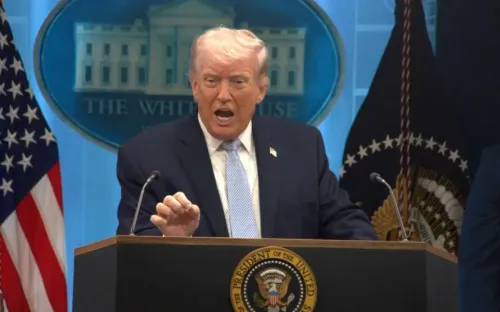
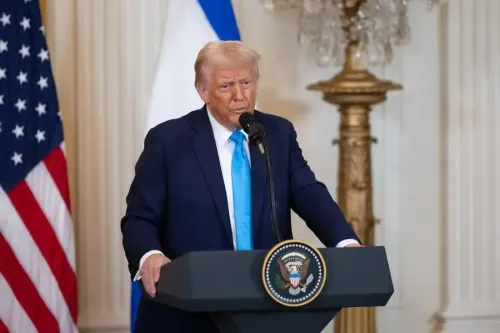
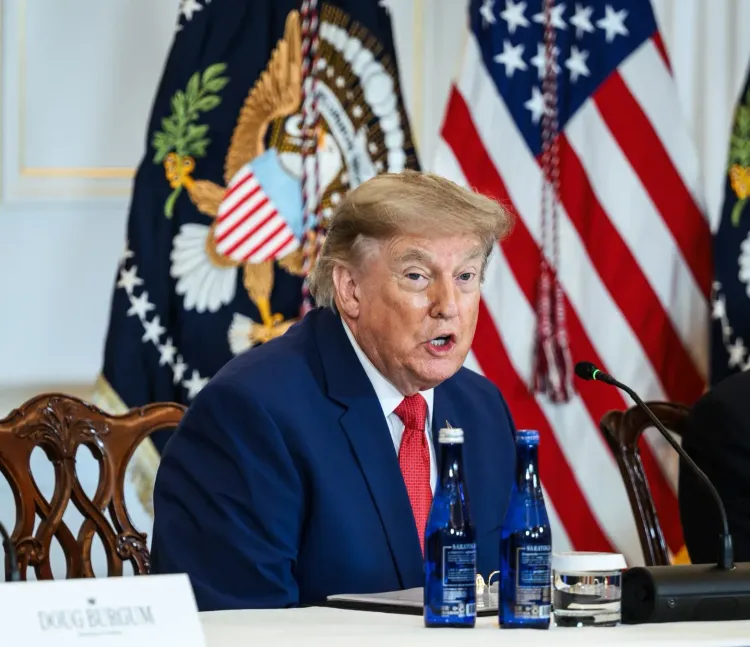
US President Donald Trump on 11 August framed the upcoming US midterm elections as a stark choice between his administration's policies and what he characterised as the radicalism of Democratic candidates, claiming that 'jihadists' and communists were being elected across the country. The remarks, made during a White House interaction with reporters, offered an early glimpse of the rhetorical strategy Trump intends to deploy ahead of the midterms.
What Trump Said
'Well, the one thing is we have jihadists being elected all over the place,' Trump told reporters. He followed up by adding, 'We have this — whether it's communism, jihadism.' Trump did not identify any candidate by name, nor did he specify which races or states he was referring to.
He attributed the term to a personal contact: 'A friend of mine called up and said, you know, really, you should use the word jihadist because that's what's happening,' Trump said. He argued that ordinary voters would reject candidates he described as extreme, saying, 'People don't want to have radical lunatics involved in running our country, and that's what we have.'
Allegations Against Democrats
Trump accused unnamed Democratic candidates of seeking to dismantle foundational American institutions. 'When you look at the radicalism and the craziness of the candidates and the stupidity of what they're suggesting, let's get rid of the Supreme Court, let's get rid of the presidency, let's get rid of the Senate,' he said.
He further alleged that his political opponents wanted to defund the police and eliminate the military, stating, 'They want to defund our police, they want to terminate our military, no military, we don't want any military in our country.' He offered no names or corroborating details for either claim during the exchange.
Remarks on Immigrant-Origin Politicians
Trump also took aim at elected officials who had immigrated to the United States, alleging they were attempting to impose foreign governance models on Americans. 'They come from other failed countries and they come here and they tell us how to run our country,' he said. He specifically cited Somalia as an example — 'They come from, let's say, as an example, Somalia. They come in and then they tell us how to — how our Constitution, how our Declaration of Independence, how it works' — but did not name any Somali-born officeholder or candidate.
Stakes of the Midterms
The US midterm elections determine control of both the House of Representatives and the Senate at the midpoint of a president's four-year term, and also encompass contests for state and local offices nationwide. They are widely regarded as a referendum on the sitting president and his party.
Trump predicted that candidates associated with the positions he criticised would enter the campaign at a disadvantage, though he acknowledged uncertainty: 'I think that they start off — now, I may be wrong, but, you know, they start off with a big disadvantage.' His remarks signalled that immigration, national identity, policing, and military spending are expected to be central themes in the Republican midterm argument to voters.
Point of View
Since he named no candidate and cited no evidence. The strategy mirrors the 2016 and 2020 playbook of elevating the most polarising Democratic voices to define the entire opposition. What is notable is the explicit attribution to a friend rather than any policy document or electoral record, which strips the claim of even rhetorical scaffolding. The midterm battlefield will ultimately be decided on economic conditions and turnout, not on labels — but Trump's opening salvo suggests the Republican message will be cultural and identity-driven rather than policy-centred.
NationPress
25 Sept 2026
Frequently Asked Questions
What did Trump say about Democratic candidates ahead of the US midterms?
Trump claimed that 'jihadists' and communists were being elected across the country, framing the midterms as a choice between his policies and what he called Democratic radicalism. He made the remarks during a White House interaction with reporters on 11 August, without naming any candidate or providing supporting evidence.
Why did Trump use the word 'jihadist' to describe political opponents?
Trump attributed the term to a personal contact, saying, 'A friend of mine called up and said, you know, really, you should use the word jihadist because that's what's happening.' He did not offer any independent justification for applying the label to Democratic candidates.
What institutions did Trump allege Democrats want to abolish?
Trump alleged, without naming anyone, that Democratic candidates wanted to eliminate the Supreme Court, the presidency, and the Senate, and also sought to defund the police and terminate the military. He offered no names or corroborating details during the exchange.
What are the US midterm elections and why do they matter?
The US midterm elections determine control of the House of Representatives and the Senate at the midpoint of a president's four-year term, and also include state and local contests. They are broadly seen as a referendum on the sitting president, making them a critical indicator of political momentum heading into the next presidential cycle.
Did Trump name any specific candidate or officeholder in his remarks?
No. Trump did not identify any candidate by name throughout the exchange. He referenced Somalia as an example when discussing immigrant-origin politicians but named no Somali-born officeholder or candidate specifically.