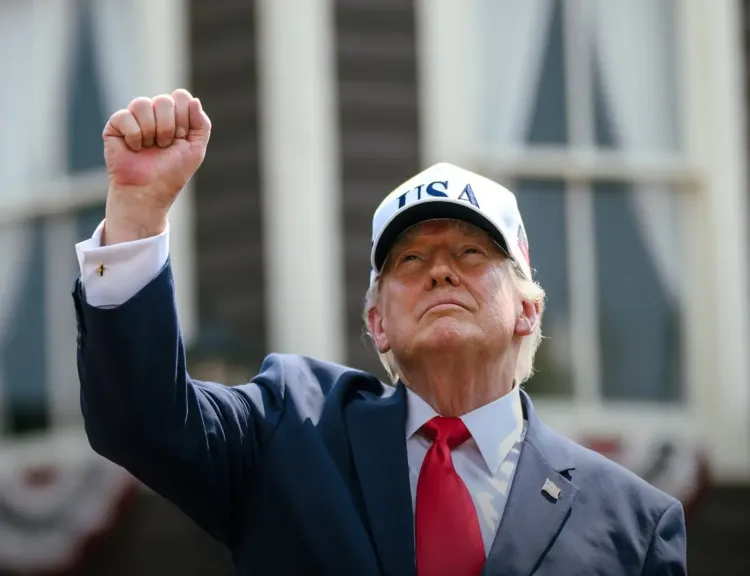
Trump campaigns across 5 states in midterm push, urges voters to 'pretend I'm on ballot'
Synopsis
Donald Trump turned the 2026 US midterms into a one-man show — rallying supporters across five states by phone and urging them to vote as though his own name were on the ballot. With control of the House and Senate in play, the results will determine whether Trump's tax, border, and energy agenda survives the halfway mark of his presidency.
Key Takeaways
Donald Trump held telephone rallies across five states — Georgia, Indiana, South Carolina, Alaska, and New York — on 3 November ahead of US midterm elections.
Trump urged supporters: 'Pretend I'm on the ballot,' framing the midterms as a verdict on his presidency.
Key endorsements included Mike Collins and Rick Jackson in Georgia, Victoria Spartz in Indiana, Dan Sullivan and Nick Begich in Alaska, and Mike Lawler in New York.
Trump warned that Republican losses could reverse his tax cuts, border policies, and gun rights positions.
All 435 House seats and roughly one-third of Senate seats are contested; Trump does not appear on the midterm ballot.
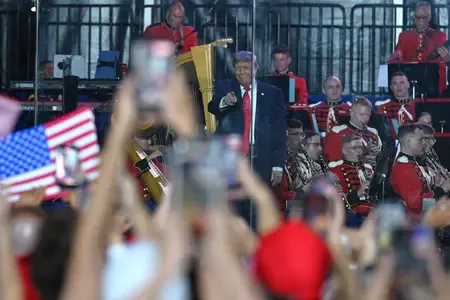
US President Donald Trump launched a five-state telephone rally blitz on 3 November, urging Republican supporters in Georgia, Indiana, South Carolina, Alaska, and New York to vote as though his own name were on the midterm ballot. The calls, aimed at swaying congressional and governor's races, framed the elections as a direct referendum on Trump's presidency and the survival of his legislative agenda.
Trump's Core Message
'So get out and vote tomorrow and pretend I'm on the ballot,' Trump told supporters during the South Carolina call — a line that encapsulated his recurring theme across all five states. He warned that Republican losses could reverse his signature tax cuts, border enforcement measures, and gun rights positions. Trump also repeatedly claimed his presence on a ballot produced a significant increase in votes, though the available transcripts offered no supporting data for that assertion.
State-by-State Endorsements
In Georgia, Trump urged voters to send Mike Collins to the Senate and elect Rick Jackson governor, criticising Democratic Senator Jon Ossoff and arguing that Republican victories were essential to preserve his administration's policies.
In Indiana, Trump endorsed Victoria Spartz in the Fifth Congressional District, praising her backing of his tax and border agenda and crediting her with helping secure more than $200 million for rural healthcare facilities. He attacked her Democratic opponent, JD Ford, over taxes, immigration, and gun policy; the available material contained no response from Ford.
In South Carolina, Trump backed Darline Graham for the Senate and Alan Wilson for governor, praising Wilson's record as attorney general and stating Wilson would eliminate the state income tax if elected.
In Alaska, Trump urged the re-election of Senator Dan Sullivan and Congressman Nick Begich and expressed support for Bernadette Wilson for governor. He repeatedly distinguished the incumbent Sullivan from another candidate he alleged shared the same name, claiming an effort to confuse voters. Trump also urged Alaskans to back a ballot measure he described as ending ranked-choice voting, and credited Sullivan and Begich with advancing oil, gas, and infrastructure projects in the state.
In New York, Trump endorsed Mike Lawler, Mike LiPetri, and Jeanine Driscoll for Congress, singling out Lawler's work on the federal deduction for state and local taxes, known as SALT. During the New York call, Trump also defended military action against Iran and predicted lower oil prices once the confrontation was resolved; the remarks were not supported by any independent forecast in the available material.
Broader Political Stakes
US midterm elections are held halfway through a president's four-year term, with all 435 voting seats in the House of Representatives and roughly one-third of Senate seats contested, alongside state and local offices. Presidents do not appear on the midterm ballot. Trump's framing of these races as a personal verdict on his presidency is a well-established political strategy — one he also deployed ahead of previous midterms — and is intended to drive base turnout in competitive states.
This comes amid ongoing debates over Trump's tax and immigration policies, and as both parties brace for results that will determine the legislative balance of power for the remainder of his term.
What Comes Next
Voting is scheduled for 4 November, with results expected to reshape the composition of Congress and several statehouses. A Republican wave could entrench Trump's agenda; significant Democratic gains could stall or reverse key policies. Both parties are watching closely as the results begin to come in.
Point of View
But it carries a double-edged risk: it raises the personal stakes so high that any Republican underperformance will be read as a rebuke of Trump himself, not just the party. His telephone rally strategy bypasses the traditional campaign trail but narrows the message to core loyalists at a time when swing-district candidates may need broader outreach. Notably, the claims about his ballot-presence boosting vote tallies went unsupported by any data in the available transcripts — a pattern critics will exploit. The real story here is structural: if Republicans hold both chambers despite national headwinds, Trump's grip on the party machinery becomes near-unassailable going into 2028.
NationPress
3 Nov 2026
Frequently Asked Questions
What did Trump say in his midterm telephone rallies?
Trump urged Republican supporters across five states to vote as though his own name were on the ballot, saying 'pretend I'm on the ballot' during the South Carolina call. He endorsed specific candidates in each state and warned that Democratic gains could reverse his tax, border, and gun rights policies.
Which states did Trump target in his midterm push?
Trump held telephone rallies aimed at Georgia, Indiana, South Carolina, Alaska, and New York. Each call included endorsements of Republican candidates for Senate, Congress, or governor, tailored to local issues such as SALT deductions in New York and oil projects in Alaska.
Who are the key candidates Trump endorsed?
Among the candidates Trump endorsed were Mike Collins and Rick Jackson in Georgia, Victoria Spartz in Indiana, Darline Graham and Alan Wilson in South Carolina, Dan Sullivan, Nick Begich, and Bernadette Wilson in Alaska, and Mike Lawler, Mike LiPetri, and Jeanine Driscoll in New York.
What is at stake in the US midterm elections?
All 435 voting seats in the House of Representatives and roughly one-third of Senate seats are contested in the midterms, along with numerous state and local offices. The results will determine whether Republicans retain control of Congress and can continue advancing Trump's legislative agenda.
Does Trump appear on the midterm ballot?
No. US presidents do not appear on the midterm ballot. Trump's call for voters to 'pretend' he is on it is a rhetorical strategy to drive turnout among his base by framing congressional and governor's races as a personal verdict on his presidency.