Trump tells voters 'pretend I'm on ballot' as GOP midterm hopes dim
Synopsis
Trump is running for an election he is not on. By urging voters to 'pretend' he is the candidate, he has turned the November 3 midterms into a verdict on his presidency — one that polls suggest he is currently losing, with a 60% disapproval rating, rising prices, and Republican candidates publicly breaking with him in states he won just two years ago.
Key Takeaways
Donald Trump has urged voters to 'pretend that I am on the ballot' and vote Republican in the November 3, 2026 US midterm elections.
Polls show Trump's job disapproval rating hovering around 60 per cent , with 62.9 per cent believing the country is on the 'wrong track' — RealClear Politics aggregation.
A CBS News poll found 70 per cent of registered voters believe Trump's policies are pushing prices higher; the economy is cited as the primary drag.
Democrats are projected to win the House with up to 229 seats ; the Senate is tied at 46 seats each with 8 toss-up seats to decide control.
Trump warned at a rally: 'If we don't win, they'll end up impeaching me.' Several Republican candidates — including in Ohio , Texas , Michigan , and South Carolina — are distancing themselves from Trump on the Iran war, Russia policy, Canada, and immigration.
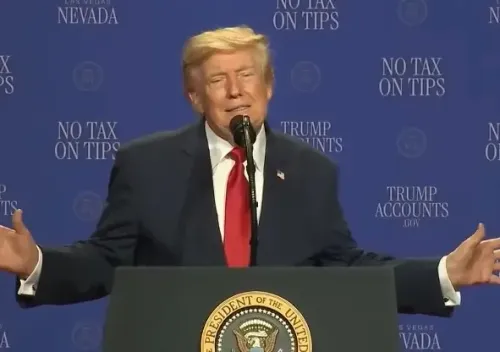
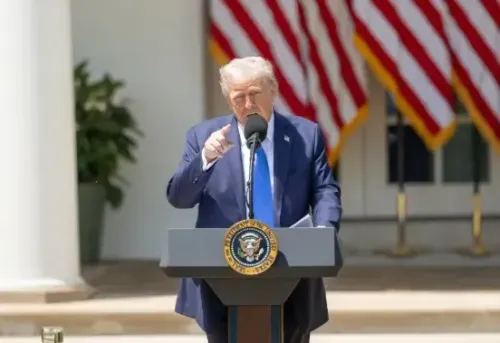
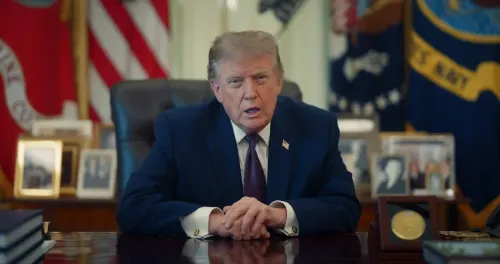
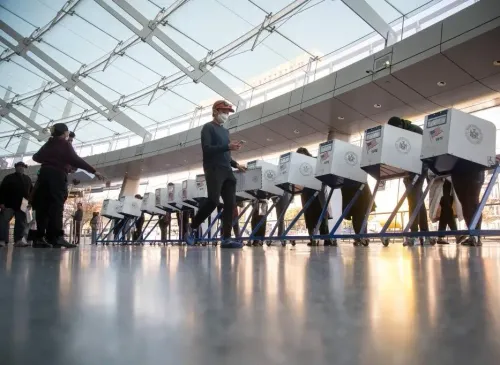
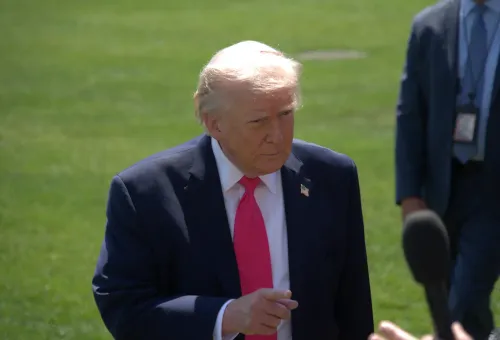
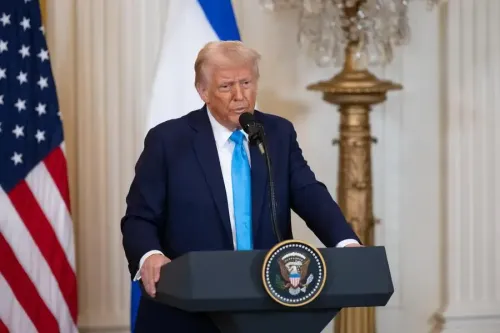
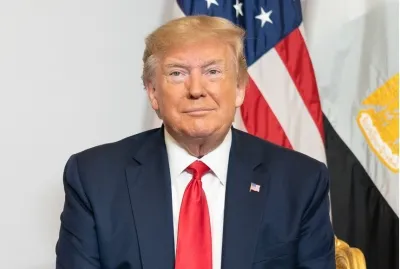
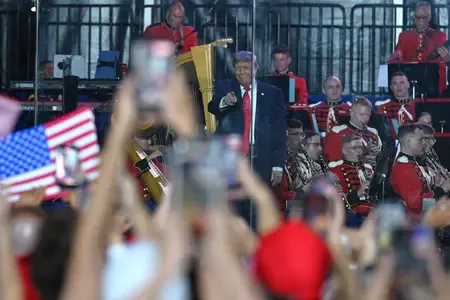
US President Donald Trump, whose name does not appear on any midterm ballot, has urged voters across campaign stops to 'pretend that I am on the ballot' and vote for Republican Party candidates — effectively transforming the November 3 midterm elections into a referendum on his presidency at its turbulent halfway mark.
The Electoral Landscape for Republicans
With a fortnight to go before polling day, the picture looks bleak for the GOP, according to multiple surveys. Polls indicate Democrats are poised to capture the House of Representatives, while the Senate remains a toss-up with razor-thin margins in key races. RealClear Politics' aggregation of House polls projects Democrats winning as many as 227 seats — a nine-seat majority — with Republicans potentially holding 186 seats and 22 seats still in the 'tossup' category. CBS News, based on its own polling, estimates Democrats taking 229 seats against 206 for Republicans.
The Senate contest is less clear-cut. Of the 100 Senate seats, roughly a third face election each cycle given their six-year terms. RealClear Politics currently maps both parties tied at 46 seats each, with eight toss-up seats that could determine chamber control.
Economy and Iran War Drive Trump's Approval Slump
Trump's job disapproval rating is hovering around 60 per cent in several opinion polls, battered primarily by rising prices. The RealClear Politics polling average puts his disapproval at 59.3 per cent, with 62.9 per cent of respondents believing the country is on the 'wrong track'. A CBS News poll released earlier this month found 70 per cent of registered voters said Trump's policies are pushing prices higher.
The economy's drag on Trump is attributed to tariffs and what the source describes as the Iran war — a conflict that has sent energy prices soaring and lifted the cost of everyday goods. Trump, who previously dismissed Democrats' messaging around affordability, now concedes prices are a factor, saying: 'It's a small price to pay for keeping the world safe, keeping our country safe.'
Notably, Trump has sought to rein in prices through a deal with Russia: he called President Vladimir Putin to secure a diesel supply agreement, with Moscow reportedly set to initially deliver 300,000 tonnes of diesel, followed by a further 500,000 tonnes the following month. This comes after Trump, just a year ago, imposed sanctions on India — accusing it of indifference to Ukraine — a sharp reversal that critics say underscores the administration's shifting geopolitical calculus.
Impeachment Threat Looms Over Second Term
Trump has acknowledged that losing the House could revive impeachment proceedings, telling a recent campaign rally: 'If we don't win, they'll end up impeaching me.' While Democrats are considered unlikely to secure the two-thirds Senate majority required to remove him from office, an impeachment trial in the House alone could consume significant political energy. Cabinet officials including Secretary of War Pete Hegseth also reportedly face impeachment threats, with at least one already pending.
Cracks in the Republican Wall
A telling red flag for the GOP is the erosion of support even in states Trump carried comfortably in 2024. In Ohio — a state Trump won by 11.5 per cent — the Republican Senate candidate trails the Democrat by 2.8 per cent, while Republican gubernatorial candidate Vivek Ramaswamy, once considered a near-certainty, is behind his Democratic opponent by 3.5 per cent. In Texas, which Trump won by 14 per cent in 2024, Democrat James Talarico leads Republican Ken Paxton by a narrow 2.2 per cent — a shift that would have been unthinkable in a typical midterm cycle.
Several Republican candidates are putting daylight between themselves and the President. Iowa Senate candidate Ashley Hinson and Ohio Senator Jon Husted have voiced differences over the Iran war, calling for a swift end to the conflict. On Trump's pivot toward Russia, Senate candidates Susie Graham of South Carolina and Mike Rogers of Michigan are distancing themselves. Rogers, whose state has deep economic ties with Canada, has also expressed displeasure at Trump's Canada policy. Even on immigration — historically a core Republican strength — Representative María Salazar has called for restraint, arguing the administration went too far.
The Democratic Strategy and Its Limits
Democrats are tying Republican candidates to Trump, banking on his low approval ratings — particularly on economic issues — to deliver gains. Republicans have countered by linking Democratic candidates to left-wing figures such as New York Mayor Zohran Mamdani, Representative Ilhan Omar of Minnesota, and Representative Alexandria Ocasio-Cortez of New York. Some Democratic candidates have pre-emptively distanced themselves; Cait Conley, a House candidate in New York, declared she would not campaign alongside Mamdani or Ocasio-Cortez. Trump, for his part, has labelled Democrats 'communists' and 'socialists' at rallies.
One caveat running through the analysis is the reliability of polling itself. Surveys have historically overstated Democratic performance, and the generic Congressional ballot — which captures sentiment without drilling into specific constituencies — may not translate cleanly to seat projections. Even Fox News puts the Democratic edge at nine per cent in its latest generic poll. How much of that converts to seats on November 3 will be the defining test of the midterm cycle.
Point of View
The coalition that delivered his second term is visibly fraying. The Russia diesel deal, coming just a year after he sanctioned India over the Ukraine war, also exposes the transactional, poll-driven nature of his foreign policy — a pattern that allies and rivals are increasingly pricing in. If the polls hold and the House flips, the second half of Trump's term will be consumed by procedural warfare rather than legislation.
NationPress
20 Oct 2026
Frequently Asked Questions
Why is Trump asking voters to 'pretend' he is on the ballot?
Trump's name does not appear on any midterm ballot, but he is urging voters to treat the November 3 elections as a referendum on his presidency by imagining he is the candidate. The strategy is designed to drive turnout among his supporters and counter historically lower Republican enthusiasm in midterm cycles.
What do polls say about the US midterm elections 2026?
Multiple polls indicate Democrats are on course to capture the House of Representatives, with projections ranging from 227 to 229 seats — a clear majority. The Senate remains a toss-up, with both parties tied at 46 seats each and 8 seats still in the 'toss-up' column that will likely decide control.
Why is Trump's approval rating so low ahead of the midterms?
Trump's disapproval rating is around 60 per cent, driven primarily by rising prices linked to his tariff policies and the ongoing Iran war, which has sent energy costs higher. A CBS News poll found 70 per cent of registered voters believe his policies are pushing prices up.
Why did Trump seek diesel from Russia, and what does it mean politically?
Trump called President Vladimir Putin to arrange a diesel supply deal — initially 300,000 tonnes, with another 500,000 tonnes to follow — in an attempt to tame the domestic price spiral ahead of the midterms. The move is striking because Trump imposed sanctions on India just a year earlier over its ties with Russia during the Ukraine conflict, highlighting a sharp reversal in his foreign policy stance.
Which Republican candidates are distancing themselves from Trump?
Several GOP candidates have publicly broken with the President on key issues. Iowa's Ashley Hinson and Ohio's Jon Husted want the Iran war ended quickly. South Carolina's Susie Graham and Michigan's Mike Rogers are distancing themselves from Trump's Russia policy, while Representative María Salazar has called for restraint on immigration, arguing the administration's approach went too far.