How Do Recent Election Setbacks Challenge Trump and the Democrats?
Synopsis
In a significant electoral shift, three major elections have raised questions about Trump's future and the Democrats' strategy. With the midterms approaching, both parties face crucial decisions that could determine their political fates. Dive into the implications of these election results and what they mean for Congress control.
Key Takeaways
Democrats retained key positions in recent elections.
Trump faces political challenges following election setbacks.
Redistricting efforts in California could impact Republican representation.
Economic issues are a focal point for both parties.
Internal divisions within the Democratic Party pose additional challenges.
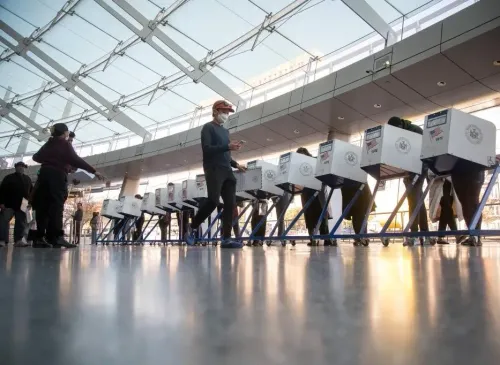
New York, Nov 5 (NationPress) A combination of three significant elections and a referendum has presented challenges for US President Donald Trump, creating dilemmas for both him and the Democrats as they prepare for the pivotal midterm elections next year, where the control of Congress is at stake.
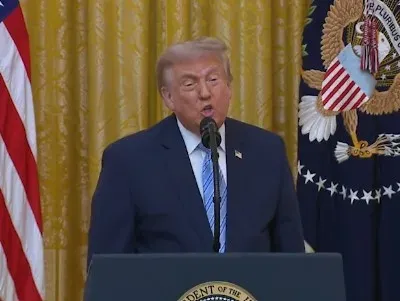
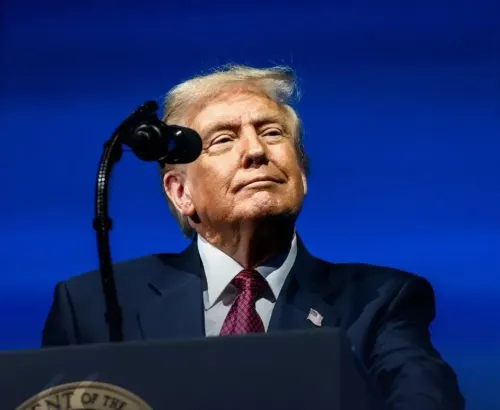
Trump dismissed the outcomes, sharing a post on Truth Social after the voters' decisions were announced Tuesday night, stating, "'TRUMP WASN'T ON THE BALLOT, AND SHUTDOWN, WERE THE TWO REASONS THAT REPUBLICANS LOST ELECTIONS TONIGHT', according to Pollsters".
In the New York City mayoral election and the gubernatorial contest in New Jersey, Democrats successfully maintained their grip on power. Furthermore, Democrats reclaimed Virginia from Republican control.
California voters thwarted the Trump-led initiative to secure additional congressional seats for the Republicans in the upcoming election by approving a redistricting plan that could potentially reduce the Republican count by at least five.
With Republicans holding 219 seats in the House of Representatives compared to Democrats' 213, a loss of just four seats could shift the balance of power.
As Trump noted in his post, these elections occurred during a "shutdown" of the government due to a "Senate stalemate" over funding approval, with both parties blaming each other for the impasse.
Numerous government workers have gone unpaid, including essential service personnel who continue to work during the shutdown.
Moreover, millions of low-income individuals who rely on subsidized food are currently missing out.
The ongoing tariff war initiated by Trump is beginning to impact consumers, with its full effects potentially felt before the elections next November. However, it's premature to draw conclusions solely from the scattered poll results from Tuesday.
The Democrats face their own set of challenges as they attempt to recover from losses sustained in last year's elections. They are struggling to present a unified message to voters, with two competing factions trying to define the party's direction.
In Zohran Mamdani's victory in New York's mayoral race, the Democratic Socialists, a more radical faction of the party, achieved two significant wins.
One victory was against the party's establishment, represented by Mayor Eric Adams and former Governor Andrew Cuomo, who were defeated by Mamdani in the party primaries.
The other was a victory over Trump, who vocally criticized Mamdani and supported the defeated Cuomo, who ran as an independent.
In his victory speech, Mamdani proclaimed a new direction for the party, asserting, "No longer will we have to open a history book for proof that Democrats can dare to be great."
Conversely, both Mikie Sherrill, who won in New Jersey, and Abigail Spanberger, the victor in Virginia, adhered to a more moderate stance.
California Governor Gavin Newsom, who led the referendum effort, is also a moderate and a potential candidate for the Democratic Party's presidential nomination next year.
In various regions, Democrats must appeal to undecided voters in the middle, and a radical agenda that excites constituents in large liberal cities may alienate voters elsewhere. To achieve this, they must ward off the Socialists.
Senate Democratic Party Leader Chuck Schumer and even former President Barack Obama did not support Mamdani, with some opposing him out of concerns that they could lose moderate voters if Republicans associate them with him.
Nevertheless, a shared focus on the economy was evident among the four Democrats, while cultural and identity issues, such as the inclusion of transgender students in school bathrooms, were downplayed.
In the presidential election, Trump emphasized the economy while also addressing some cultural issues.
Though inflation from former President Joe Biden’s administration may have been mitigated, prices have not significantly decreased and continue to rise gradually.
Trump tends to prioritize international matters, strict immigration policies, and confronting his opponents, which may not resonate as strongly with voters compared to financial concerns.
His tariffs and strategies to bring jobs back to the US could reshape the nation, but these changes may not come until after next year's elections, leaving voters to deal with the repercussions of the tariff wars unless he can manage them or offer a compelling message to the electorate.
Point of View
It becomes clear that both Donald Trump and the Democratic Party find themselves at a crossroads. With midterm elections looming, the need for a coherent strategy is paramount for both sides. The outcomes highlight the importance of addressing economic concerns while navigating the complexities of voter sentiment across the political spectrum. NationPress remains committed to providing unbiased coverage of these developments.
NationPress
22 Sept 2026
Frequently Asked Questions
What were the results of the recent elections?
Democrats retained control in the New York City mayoral election and New Jersey's gubernatorial race, while also reclaiming Virginia from Republicans.
How do these elections impact Trump's political strategy?
The election results pose significant challenges for Trump as he prepares for the midterm elections, particularly regarding voter sentiment and party unity.
What challenges do the Democrats face after these elections?
Democrats must navigate internal divisions and develop a cohesive message to attract undecided voters while addressing economic issues.
What role do tariffs play in the current political landscape?
Trump's tariff policies are beginning to affect consumers, and the economic fallout may influence voter perceptions leading up to the elections.
How significant is the upcoming midterm election?
The midterm elections are crucial as they will determine the control of Congress, impacting future legislative agendas for both parties.