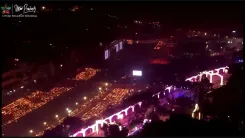
CM Yogi at Deepotsav 2026: 'No one can ban Jai Shri Ram in Ayodhya'
Synopsis
At Deepotsav 2026 in Ayodhya, CM Yogi Adityanath declared himself PM Modi's emissary, vowed no ban on 'Jai Shri Ram,' and warned those threatening women's safety of a 'fate like Ravan's' — blending religious symbolism with a sharp law-and-order message.
Key Takeaways
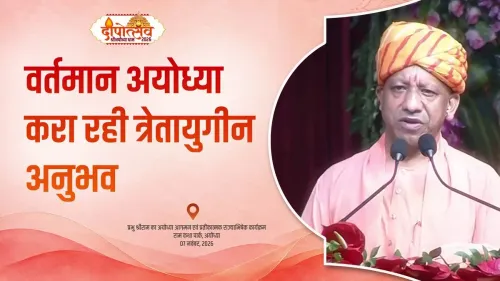
CM Yogi Adityanath addressed the Deepotsav 2026 celebrations in Ayodhya on 7 November 2026 .
He described himself as a messenger of Prime Minister Narendra Modi , assuring that no one can ban the chant of 'Jai Shri Ram' in Ayodhya.
He warned that anyone threatening the safety of women would face a 'fate like Ravan's' — a direct invocation of the Ramayana's central moral narrative.
The statement comes after the consecration of the Ram Temple in January 2024 , which has elevated Ayodhya's political and cultural significance.
Deepotsav, organised annually by the Uttar Pradesh government , has grown into one of India's largest state-organised festivals of lights.
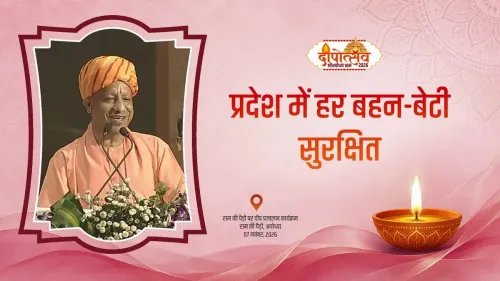
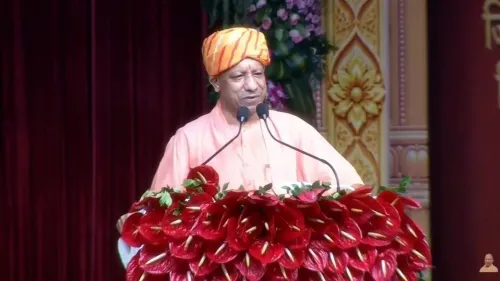
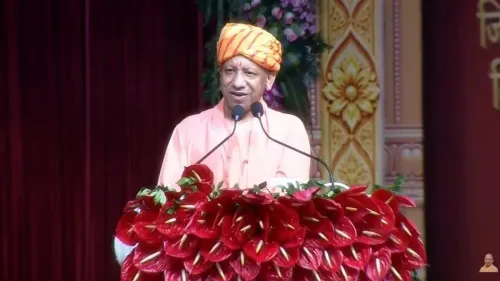
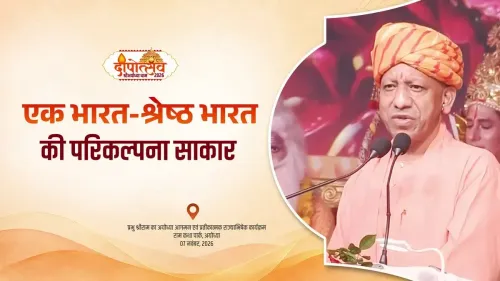
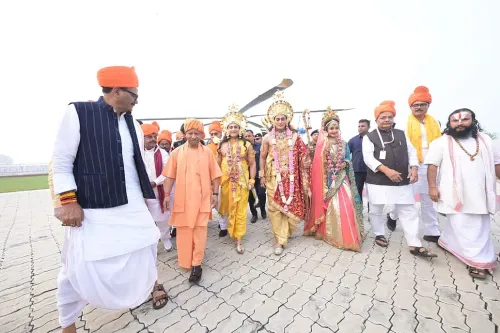
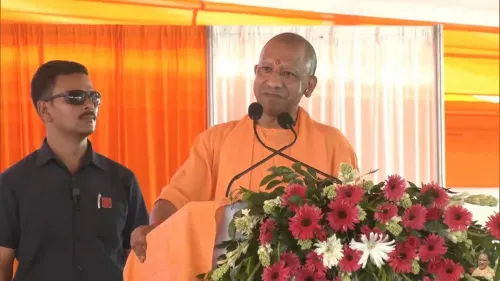
At the heart of Ayodhya on 7 November 2026, during the grand Deepotsav celebrations, Chief Minister Yogi Adityanath delivered a charged address — positioning himself as an emissary of Prime Minister Narendra Modi and declaring that no power could silence the chant of 'Jai Shri Ram' in the holy city.
Speaking at the event, CM Yogi stated: 'Main aaj mananiya Pradhanmantri Shri Narendra Modi ji ka doot bankar yeh aashwasan dene aaya hoon ki ab hamari Ayodhya mein Jai Shri Ram bolne par koi pratibandh nahin laga sakta.' — translated: 'I have come today as a messenger of the honourable Prime Minister Shri Narendra Modi to give this assurance: no one can now impose a ban on saying Jai Shri Ram in our Ayodhya.'
The warning on women's safety and the Ravan reference
The Chief Minister did not stop at religious expression. He issued a pointed warning on the safety of women, declaring that anyone who 'tampers with the security of our sisters and daughters must be prepared to face a fate like Ravan's.' The invocation of the demon king — vanquished by Lord Ram in the very mythology that Ayodhya is built upon — was deliberate, drawing a direct line between the city's sacred narrative and the state's law-and-order posture.
The statement frames women's safety not merely as a governance issue but as a moral imperative rooted in the Ramayana's own moral universe — a rhetorical move that resonates deeply in the context of Deepotsav, a festival that re-enacts Ram's return to Ayodhya.
Deepotsav's rise as Uttar Pradesh's flagship cultural event
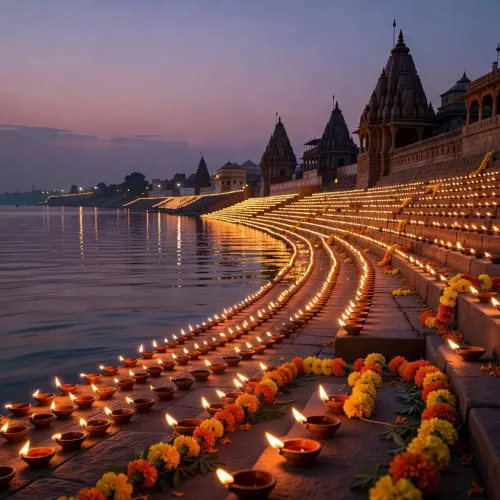
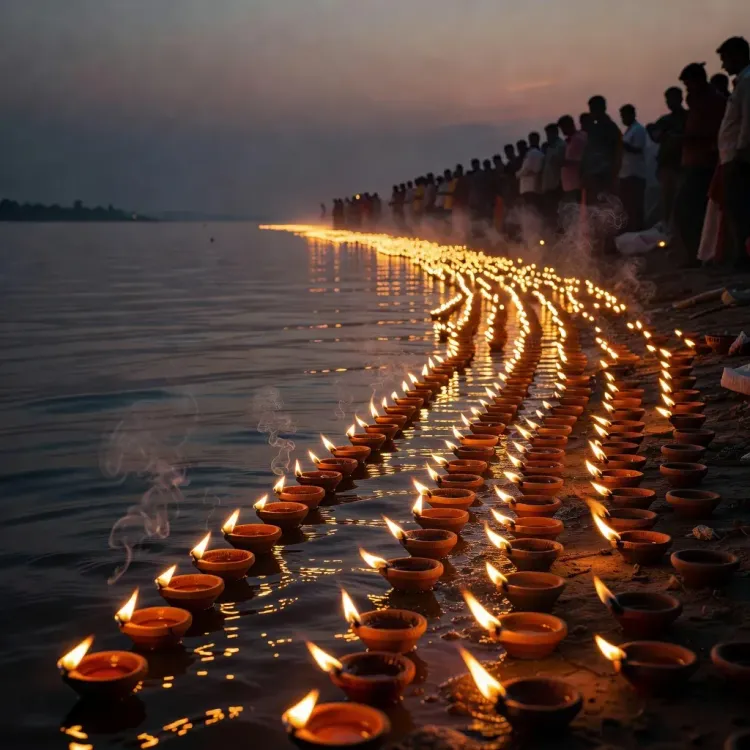
The Uttar Pradesh government has, over successive years, transformed Deepotsav into one of India's most-watched state-organised festivals of lights, timed around Diwali and held on the banks of the Saryu river in Ayodhya. The event has grown in scale and political symbolism each year, serving as a showcase for the state's embrace of Ayodhya's religious identity as a cultural cornerstone.
That momentum intensified sharply after the consecration of the Ram Temple in January 2024 — a moment the ruling dispensation regards as a civilisational milestone. Deepotsav 2026 is the second major edition since that consecration, and the CM's address reflects the elevated stakes the government attaches to Ayodhya's role in India's cultural landscape.
For Yogi Adityanath, who has anchored much of his political identity to the Ram Temple project and Ayodhya's transformation, the festival is as much a policy statement as a cultural one — signalling that the city's new identity is permanent, protected, and non-negotiable.
The lamps of Deepotsav may illuminate the Saryu, but the message from the Chief Minister's podium was unmistakably political: Ayodhya's new chapter, he said, is here to stay — and the state will guard it.
Point of View
Women's safety, and the Ram Temple legacy into a single rhetorical moment. By casting himself as PM Modi's 'messenger,' Yogi reinforces the BJP's unified national-state narrative on Ayodhya, ensuring the city remains a live political asset rather than a settled chapter. The Ravan metaphor is particularly sharp: it weaponises the very mythology the festival celebrates, turning a cultural event into a law-and-order declaration. As the post-consecration Ayodhya takes shape, expect Deepotsav to remain the UP government's most powerful annual platform for this brand of symbolism-heavy statecraft.
NationPress
7 Nov 2026
Frequently Asked Questions
What did CM Yogi Adityanath say at Deepotsav 2026?
CM Yogi Adityanath declared at Deepotsav 2026 in Ayodhya that no one can ban the chant of 'Jai Shri Ram,' and warned that anyone threatening women's safety would face a 'fate like Ravan's.'
What is Deepotsav in Ayodhya?
Deepotsav is an annual festival of lights organised by the Uttar Pradesh government in Ayodhya around Diwali, celebrating Lord Ram's return to the city and showcasing Ayodhya's religious and cultural identity.
When was the Ram Temple in Ayodhya consecrated?
The Ram Temple in Ayodhya was consecrated in January 2024 , a milestone the ruling dispensation regards as a defining moment in India's cultural history.
Why did CM Yogi call himself PM Modi's messenger at Deepotsav?
CM Yogi Adityanath described himself as PM Modi's emissary to signal a unified political assurance from the central and state governments that Ayodhya's religious identity — including the freedom to say 'Jai Shri Ram' — is permanently protected.
What did CM Yogi mean by 'fate like Ravan' for those threatening women?
CM Yogi invoked Ravan — the demon king defeated by Lord Ram in the Ramayana — as a metaphor for the consequences awaiting anyone who endangers women's safety, framing the state's law-and-order stance within the mythology celebrated at Deepotsav.