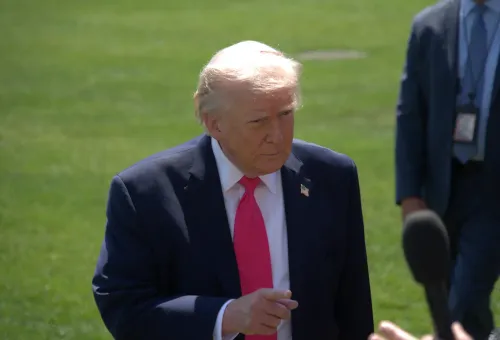
US midterms 2026: Polls project House loss for Trump's Republicans

Synopsis
A week before polling day, the data is bleak for Donald Trump: a 38.2% approval rating, 57% of voters saying his policies hurt their wallets, and every major forecaster projecting a Democratic House majority. With fuel prices more than double his 2024 campaign promise and Republican candidates openly breaking with him, Trump's 'Trumpapaloozas' in safely red states signal a party playing defence, not offence.
Key Takeaways
RealClear Politics puts Trump's job approval at just 38.2 per cent , with 60.2 per cent disapproving, a week before US midterm elections .
57 per cent of voters say Trump's policies have made them financially worse off, with petrol averaging $4.28 a gallon against his $2 a gallon campaign promise.
Cook Political Report projects 220 House seats for Democrats; editor Erin Covey says Republicans' path to retaining the House 'has all but evaporated.' The Senate is a toss-up, with CBS News projecting Democrats at 52 seats to Republicans' 48 if toss-up trends hold.
Trump's Justice Department has filed to block Senate results in Alaska over a ballot naming dispute involving candidate Dan S.
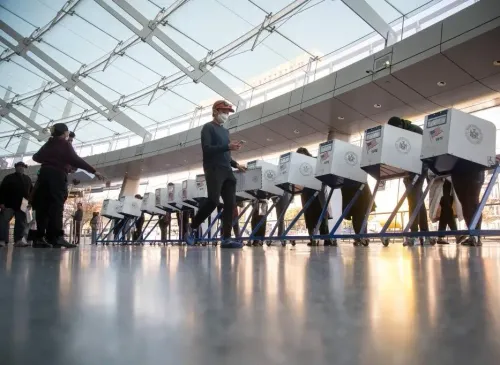
Nearly 30 million Americans had already voted as of Monday , from a pool of 217 million registered voters.
With just one week to go before US midterm elections, polling aggregators are projecting a difficult night for President Donald Trump and his Republican Party, weighed down by the economic fallout of his tariff war, rising fuel prices, and the ongoing Iran conflict. The consensus among major analysts points to Republicans losing control of the House of Representatives, with the Senate outcome remaining a genuine toss-up.
What the Polls Are Saying
RealClear Politics (RCP), which aggregates multiple surveys, reports that only 38.2 per cent of likely voters approve of Trump's job performance, while 60.2 per cent disapprove. More critically, 57 per cent of respondents say Trump's policies have made them financially worse off — a metric that historically drives midterm turnout.
RCP currently projects Democrats winning 227 seats in the 435-member House, even with 25 seats still in the toss-up category. The Cook Political Report, regarded as an authoritative non-partisan source, projects 220 seats for Democrats with 17 toss-ups. Its House elections editor, Erin Covey, said plainly: 'Republicans' path to keeping control of the House has all but evaporated.' CBS News modelling puts Democrats at 229 seats to Republicans' 206, though it adds the caveat that 'Republicans do still have a very narrow path to hold the majority.'
The Economic Drag: Fuel, Tariffs, and Broken Promises
The inflation rate stood at 3.7 per cent last month, up from 3.4 per cent in August, but consumer pain runs deeper than headline figures suggest. Petrol now averages $4.28 a gallon ($1.13 per litre), while diesel has surged to $6.28 a gallon ($1.66 per litre). The contrast with Trump's 2024 campaign promise to bring petrol down to $2 a gallon (53 cents per litre) is being widely cited by Democrats on the trail.
Compounding this, Trump's administration — which at one point imposed a 100 per cent tariff on India — has since lifted sanctions on Russia that were placed over its Ukraine invasion and entered into a deal with President Vladimir Putin to purchase diesel. Critics argue these moves reflect an administration improvising under electoral pressure rather than executing a coherent foreign or economic policy.
Trump's Campaign Strategy: Shoring Up Red Strongholds
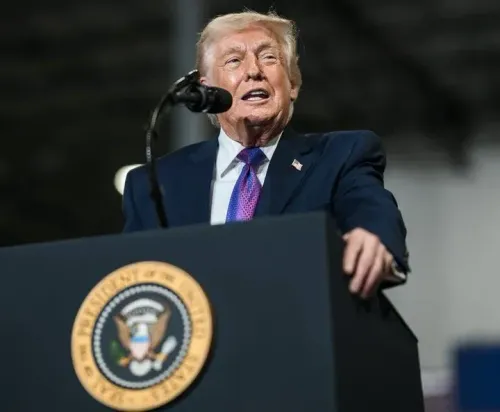
Rather than taking the battle to competitive blue-state seats, Trump has concentrated his campaign rallies — which he calls 'Trumpapaloozas' — in states he won comfortably in 2024. He rallied in Mississippi, which he carried by 24 per cent; Florida, where he led by nearly 13 per cent; Iowa and Michigan. On Tuesday, he is scheduled to hold two rallies in Texas, a state he won by 14 per cent, where his hand-picked Senate candidate Ken Paxton is reportedly trailing Democrat James Talarico by 1.5 per cent — an erosion of roughly 12 percentage points.
'Every single place I go, people that are down are now winning,' Trump told supporters recently, defending his rally strategy. Separately, Trump has offered $5,000 to every American adult contingent on a Republican midterm victory — a pledge that legal analysts say faces significant constitutional and practical hurdles.
Senate Battle: No Clear Winner Yet
The Senate contest is considerably less settled. Only 35 of the 100 Senate seats are on the ballot this cycle, as senators serve six-year terms and roughly a third face election every two years. CBS News, accounting for seats not up for election, tallies 46 seats for Democrats and 44 for Republicans with 10 toss-ups; factoring in toss-up state trends, it projects Democrats ultimately reaching 52 seats to Republicans' 48. Cook Political Report shows 15 seats leaning Republican and 13 leaning Democrat, with seven undecided.
Trump's Justice Department has taken an unusual step in Alaska, filing to block the official declaration of a Senate election result if Republican candidate Dan S. Sullivan loses, citing potential voter confusion with another candidate named Daniel J. Sullivan on the ballot. Critics have described the move as an attempt to pre-emptively contest an unfavourable result.
Early Voting and Historical Context
Voting is already under way. As of Monday, nearly 30 million citizens had cast ballots through postal votes or in-person early voting. Of the country's 217 million registered voters, midterm turnout has historically been lower than presidential cycles — 46.2 per cent in 2022 and 50 per cent in 2018. Democrats flipping the House would align with a near-universal historical pattern of the president's party losing midterm ground. Whether they achieve a large enough majority to seriously constrain Trump's remaining two years in office is what analysts say will determine the practical impact of the result.
Republican candidates in competitive districts have begun publicly distancing themselves from Trump. New Hampshire Senate candidate John Sununu aired an advertisement stating: 'When the president's policies are bad for New Hampshire, I'll oppose them, just like I opposed the war in Iran and the trade war with Canada.' The 2026 midterms are shaping up as a verdict not just on Trump's second term, but on whether the Republican Party can survive a contested lame-duck stretch intact.
Point of View
Not one setting an agenda. The $5,000 voter-incentive pledge and the Alaska court filing are hallmarks of a campaign that has run out of policy levers and is reaching for procedural ones. More significant than the House forecast — which closely tracks the near-universal historical pattern of first-term losses — is the Senate toss-up status; if Democrats take both chambers, the last two years of Trump's second term could become a permanent constitutional standoff. The Republican candidates publicly opposing the Iran war and the trade war with Canada are the ones to watch: they signal that the post-Trump GOP reshaping has already quietly begun, even before election night.
NationPress
27 Oct 2026
Frequently Asked Questions
What do polls say about the 2026 US midterm elections?
Major polling aggregators project that Republicans will lose control of the House of Representatives, with Democrats forecast to win between 220 and 229 seats in the 435-member chamber. The Senate outcome remains a toss-up, with both parties competitive across several key states.
Why is Trump's approval rating so low ahead of the midterms?
Trump's approval stands at 38.2 per cent according to RealClear Politics, with 57 per cent of voters saying his policies have made them financially worse off. Key drivers include rising fuel prices — petrol at $4.28 a gallon versus his $2 campaign promise — the economic fallout of his tariff war, and the ongoing Iran conflict.
What happens if Democrats win the House?
A Democratic House majority would allow the party to obstruct Trump's legislative agenda, launch oversight investigations, and potentially pursue impeachment proceedings, as occurred during his first term. Trump has himself warned supporters this could happen again.
Why is Trump campaigning in red states he already won?
Trump has focused his rallies on states like Texas, Mississippi, Florida, and Iowa — all of which he carried comfortably in 2024 — because polling shows significant erosion of Republican leads there. In Texas, his Senate pick Ken Paxton is reportedly trailing by 1.5 per cent in a state Trump won by 14 per cent.
How many Americans have already voted in the 2026 midterms?
As of Monday, nearly 30 million Americans had cast ballots through postal voting or in-person early voting. There are 217 million registered voters in total; midterm turnout has historically been around 46–50 per cent.