Chhattisgarh CMO Pushes PM Surya Ghar Solar Scheme
Synopsis
The Chhattisgarh CMO on 27 October 2026 highlighted the PM Surya Ghar Muft Bijli Yojana, crediting the BJP's 'double engine' governance for bringing rooftop solar and up to 300 units of free monthly electricity to state households.
Key Takeaways
The Chief Minister's Office of Chhattisgarh promoted the PM Surya Ghar Muft Bijli Yojana on 27 October 2026 .
The scheme offers eligible households up to 300 units of free electricity per month through subsidised rooftop solar installations.
It was launched in February 2024 following its announcement in the Union Budget 2024-25 .
Chief Minister Vishnu Deo Sai has led the BJP government in Chhattisgarh since December 2023 .
The push aligns with India's target of 500 GW of non-fossil fuel capacity by 2030 .
The CMO framed the rollout as a product of the double engine sarkar model of aligned Centre-state governance.
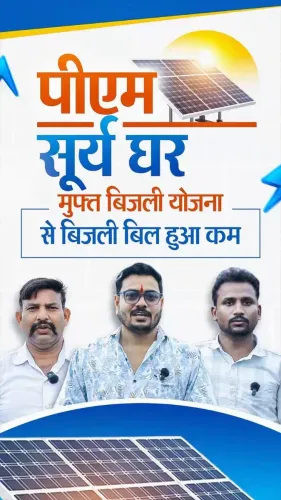
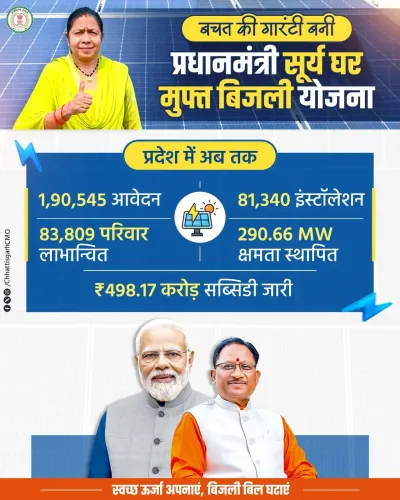
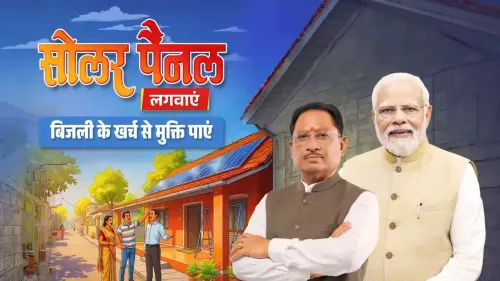
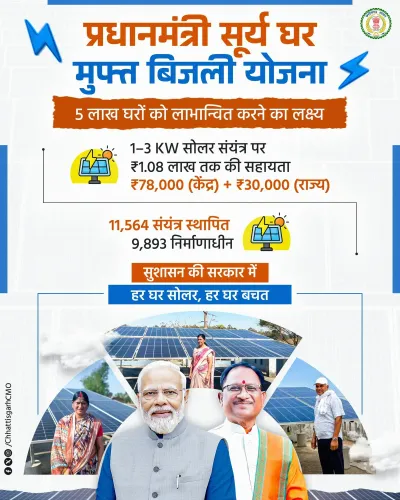
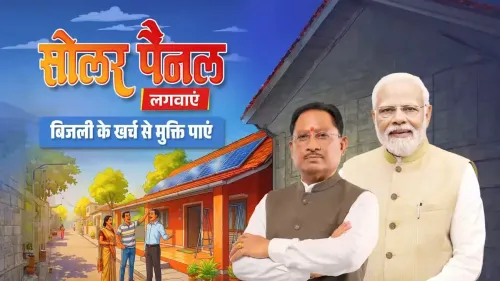
Clean energy is arriving at doorsteps across Chhattisgarh — and the state government wants every household to know it. The Chief Minister's Office of Chhattisgarh posted on Tuesday, 27 October 2026, spotlighting the PM Surya Ghar Muft Bijli Yojana as a transformative opportunity for residents to cut electricity bills, adopt solar power, and move toward energy self-reliance.
The post, shared in Hindi, declared: 'Ghar-ghar tak pahunch rahi swachh urja ki roshni' — 'The light of clean energy is reaching every home' — framing the scheme as the direct fruit of the double engine sarkar, the BJP's term for aligned governance at both the Centre and the state level.
What PM Surya Ghar Promises Chhattisgarh Households
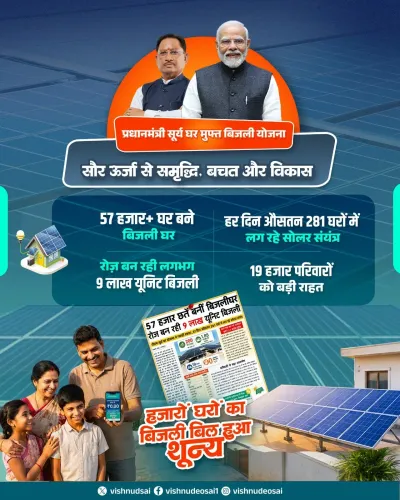
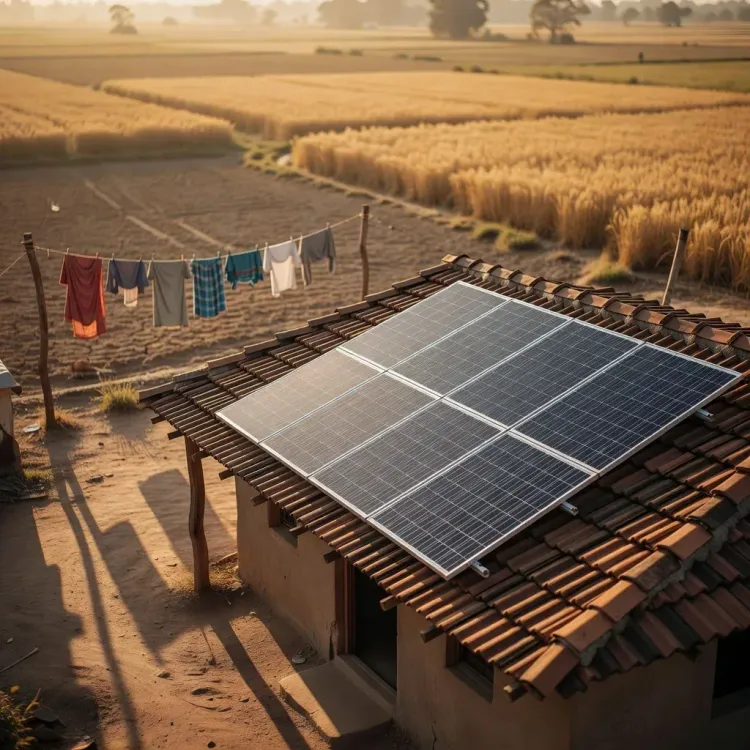
The PM Surya Ghar Muft Bijli Yojana was formally launched in February 2024 by the Government of India, following its announcement in the Union Budget 2024-25. At its core, the scheme subsidises rooftop solar installations and offers eligible households up to 300 units of free electricity per month — a figure that can effectively zero out the power bills of an average Indian home.
For Chhattisgarh, a state historically associated with coal and mineral wealth, the scheme marks a deliberate pivot. The state's electricity consumers stand to benefit directly from reduced bills while the broader grid gains from distributed solar generation — smaller, household-level units feeding back into a cleaner supply mix.
The 'Double Engine' Logic Behind the Push
Chief Minister Vishnu Deo Sai, who has led the BJP government in Chhattisgarh since December 2023, has positioned this as a signature win of coordinated Centre-state governance. The double engine sarkar framing argues that when the same party governs in New Delhi and the state capital Raipur, flagship Central schemes move faster and reach further — and PM Surya Ghar is the current proof of concept.
India's broader renewable energy ambition adds urgency to this message. The country has committed to reaching 500 GW of non-fossil fuel capacity by 2030, and rooftop solar — installed at the household level rather than in large remote parks — is a critical piece of that puzzle. Every subsidised rooftop in Chhattisgarh is a small brick in that national wall.
Atmanirbharta at the Household Level
The CMO's post explicitly invoked aatmanirbhar — self-reliance — the overarching economic philosophy of the current Central government. Applied to energy, it means a household that generates its own solar power is no longer fully dependent on the state grid or subject to tariff fluctuations. That is the pitch: cleaner air, lower bills, and a small but real measure of economic independence, one rooftop at a time.
Whether installation numbers and subsidy disbursement in Chhattisgarh are tracking those ambitions is the question that upcoming state budget announcements and energy department disclosures will need to answer. The political claim has been staked. The ground reality will follow.
Point of View
Tying PM Surya Ghar's promise directly to BJP governance in Raipur. For the Sai government, solar is both policy and politics — a way to own the clean-energy narrative in a state long defined by coal. The timing, nearly two years after the scheme's launch, suggests the state is in active mobilisation mode, likely ahead of a budget cycle or local-body elections where energy costs resonate with voters. The real test — and the political risk — lies in whether subsidy disbursement and installation figures can substantiate the claims being broadcast.
NationPress
27 Oct 2026
Frequently Asked Questions
What is PM Surya Ghar Muft Bijli Yojana?
PM Surya Ghar Muft Bijli Yojana is a Central government scheme launched in February 2024 that subsidises rooftop solar panel installations and provides eligible households with up to 300 units of free electricity every month.
Who is eligible for PM Surya Ghar scheme in Chhattisgarh?
Residential households across Chhattisgarh can apply for the PM Surya Ghar scheme. Eligibility details, subsidy amounts, and application processes are handled through the state electricity department and the national portal set up for the scheme.
Who is the Chief Minister of Chhattisgarh?
Vishnu Deo Sai is the Chief Minister of Chhattisgarh, leading the BJP state government since December 2023.
How does the double engine government model help solar rollout?
The BJP uses the 'double engine' argument to claim that having the same party in power at the Centre and in the state reduces friction in implementing Central schemes, speeds up subsidy disbursement, and allows the state government to add complementary incentives.
What is India's rooftop solar target by 2030?
India aims to achieve 500 GW of non-fossil fuel electricity capacity by 2030, with rooftop solar at the household level forming a significant share of that target under the PM Surya Ghar and related programmes.