HP CM Office to Join Kullu Dussehra Closing Carnival at Dhalpur
Synopsis
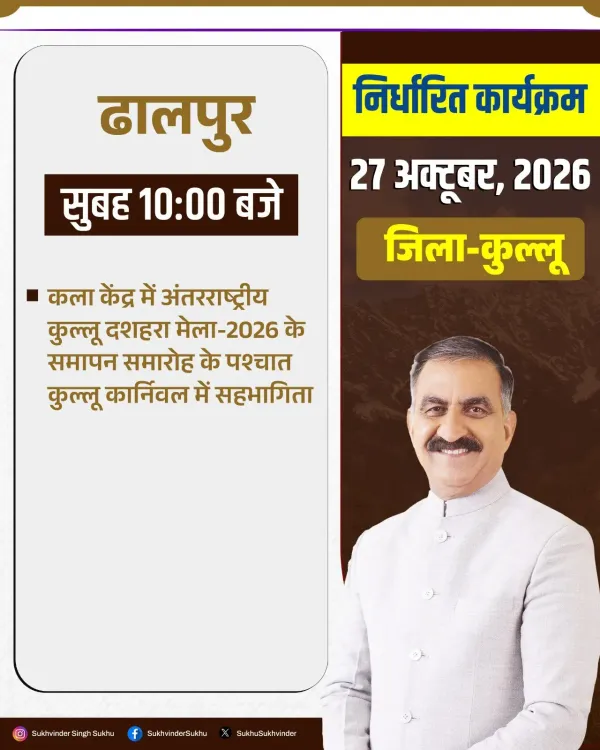
The Chief Minister's Office of Himachal Pradesh announced participation in the Kullu Carnival on 27 October 2026, following the closing ceremony of the International Kullu Dussehra Mela at Dhalpur's Kala Kendra, celebrating the valley's rich folk culture and centuries-old traditions.
Key Takeaways
The International Kullu Dussehra Mela 2026 concludes on 27 October 2026 with a closing ceremony at Dhalpur's Kala Kendra in Kullu.
The Chief Minister's Office of Himachal Pradesh announced participation in the Kullu Carnival immediately after the closing ceremony.
Kullu Dussehra begins on Vijayadasami and runs for a week, featuring processions of village deities paying homage to Lord Raghunath .
The festival is centred on Dhalpur maidan along the Beas river , drawing cultural tourists and devotees from across India and abroad.
Successive HP state governments have consistently participated in Kullu Dussehra's closing events as a mark of support for the valley's intangible cultural heritage.
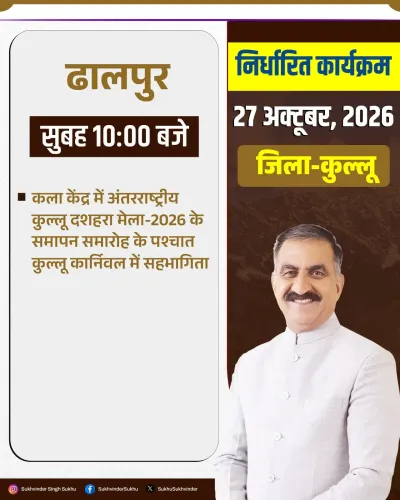
The grand week-long spectacle of the International Kullu Dussehra Mela 2026 draws to a close on Tuesday, 27 October, and the Chief Minister's Office of Himachal Pradesh has announced its participation in the concluding carnival — a signal of the state's enduring commitment to the valley's living cultural heritage.
The Chief Minister's Office of Himachal Pradesh posted on X: 'Aaj Dhalpur, Kullu ke Kala Kendra mein Antarrashtriya Kullu Dussehra Mela-2026 ke samapan samaroh ke pashchat Kullu Carnival mein sahbhagita karunga.' In English: 'Today, after the closing ceremony of the International Kullu Dussehra Mela-2026 at the Kala Kendra in Dhalpur, Kullu, I will participate in the Kullu Carnival. Connecting with folk culture, rich traditions and cultural heritage is a matter of immense joy and pride for me.'
Dhalpur's Dussehra — a festival unlike any other in India
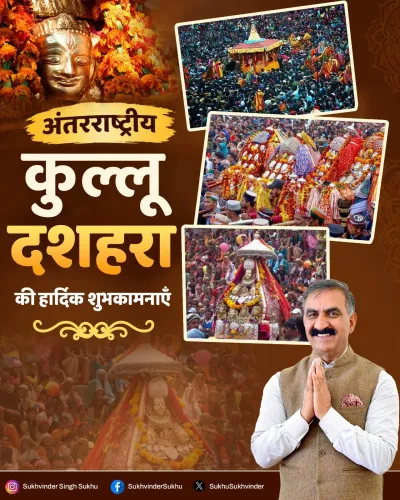
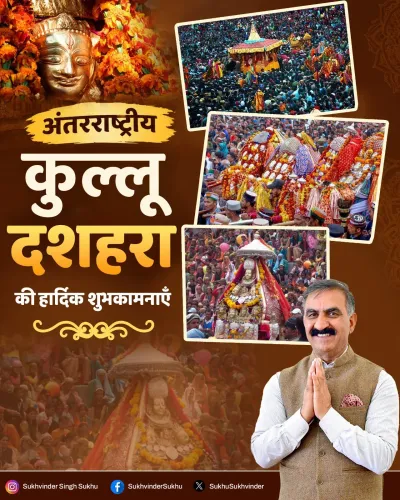
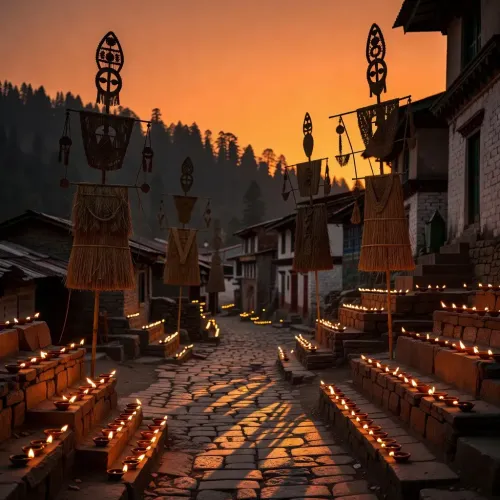
Kullu Dussehra is not the bonfire-and-Ravana pageant seen elsewhere in India. It begins where most Dussehra festivals end — on Vijayadasami — and runs for a full week, centred on the Dhalpur maidan on the banks of the Beas river. The festival's spiritual core is the worship of Lord Raghunath, the presiding deity of the Kullu valley, and draws hundreds of village deities — devtas — carried in ornate palanquins from surrounding hillside shrines to pay homage. The sight of that procession, with the sound of drums and brass horns rolling down the valley, is one of the most distinctive ceremonial spectacles in the Himalayan region.
The Kala Kendra at Dhalpur serves as the cultural stage where folk performances, traditional music, and craft exhibitions run throughout the fair's duration. It is here that the closing ceremony and the Kullu Carnival — a more public, participatory finale — will take place today.
State presence at the closing: routine ritual or deliberate statement?
Successive Himachal Pradesh governments have treated participation in Kullu Dussehra's closing events as both a cultural obligation and a soft tourism signal. The pattern is consistent: senior state representatives attend the finale to project support for the valley's intangible heritage and the tourism economy built around it. Kullu district draws a significant share of Himachal's domestic and international cultural tourists, and the Dussehra period represents one of its peak footfall windows.
The post's phrasing — 'immense joy and pride' — keeps the tone personal and celebratory rather than administrative, underscoring that the participation is framed as cultural immersion, not a policy event. The carnival format, by design, is open and participatory: it belongs as much to the residents of Kullu as to the officials on the dais.
A valley's identity, written in procession and song
What makes Kullu Dussehra's closing particularly resonant is precisely what the post gestures toward — lokasamskriti, folk culture, as a living system rather than a museum exhibit. The deity processions, the nati folk dances, the handloom shawl markets, and the community feasting around Dhalpur ground are not staged for tourists alone; they are the annual renewal of a collective identity that has persisted for centuries in the high Beas valley.
For state governments, showing up at that renewal — and being seen to genuinely participate rather than merely preside — carries its own political and symbolic weight in a region where cultural pride and local identity are deeply intertwined with electoral sentiment.
As the last palanquins return to their hilltop shrines tonight and the Dhalpur ground empties, Kullu's Dussehra of 2026 will have done what it does every year: remind the rest of India that the valley keeps time by its own calendar — and the state is wise enough to show up for it.
Point of View
Rather than just the inauguration, signals continuity of engagement beyond the opening optics. The broader arc here is Himachal Pradesh's ongoing effort to position its festival calendar as a heritage tourism driver while maintaining the goodwill of communities for whom these events are lived faith, not spectacle.
NationPress
27 Oct 2026
Frequently Asked Questions
What is the International Kullu Dussehra Mela?
The International Kullu Dussehra Mela is a week-long annual festival held in Kullu, Himachal Pradesh, beginning on Vijayadasami. It features grand processions of village deities, folk performances, and a large cultural fair centred on the Dhalpur maidan, making it distinct from Dussehra celebrations elsewhere in India.
Where is the Kullu Dussehra Mela held?
The festival is held at Dhalpur , the main open ground in Kullu town along the Beas river. The cultural programmes, including folk performances and the closing carnival, take place at the Kala Kendra on the Dhalpur ground.
Why is Kullu Dussehra different from other Dussehra festivals?
Unlike most Dussehra celebrations that climax on Vijayadasami with the burning of Ravana's effigy, Kullu Dussehra begins on that day and continues for a full week. Its central ritual is the assembly of hundreds of village deities in palanquins who gather to pay homage to Lord Raghunath, the presiding deity of the Kullu valley.
What is the Kullu Carnival at the end of Dussehra?
The Kullu Carnival is a participatory public celebration held at the close of the International Kullu Dussehra Mela. It follows the formal closing ceremony at Dhalpur's Kala Kendra and involves folk performances, cultural showcases, and community festivities marking the end of the festival week.
Does the Himachal Pradesh government regularly attend Kullu Dussehra?
Yes. Successive Himachal Pradesh state governments have consistently sent senior representatives to the opening and closing events of Kullu Dussehra as a mark of state support for the valley's cultural heritage and to promote it as a flagship tourism event.