Mayawati slams 'toxic politics' amid Kharge 'baap' row
Synopsis
Mayawati stepped into the Kharge 'baap' row not to take sides — but to indict the entire political class. Her X post warning of 'caste-driven, violent rhetoric' signals a BSP pivot: with key state elections approaching, the party is positioning itself as the only force above the muck of personal politics.
Key Takeaways
BSP president Mayawati on 27 October condemned personal attacks and 'toxic politics' in India via a post on X .
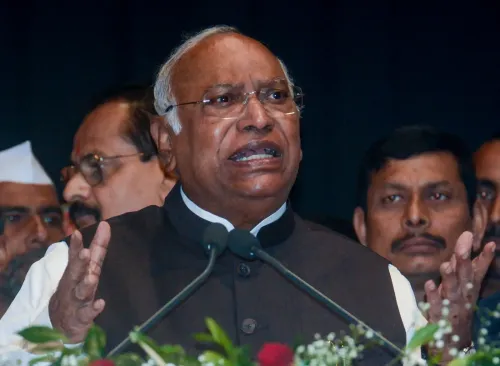
Her remarks were triggered by Congress president Mallikarjun Kharge 's 'Modi ka baap bhi jayega' comment at a party event in Patna on Sunday.
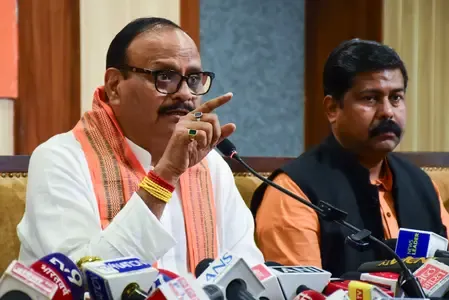
BJP leaders accused Kharge of crossing the limits of political decency by targeting PM Modi 's late father.
Mayawati warned that narrow-minded, anti-poor politics could weaken public faith in India's political system.
The BSP chief urged leaders across party lines to prioritise poverty , unemployment and inflation over personal confrontations.
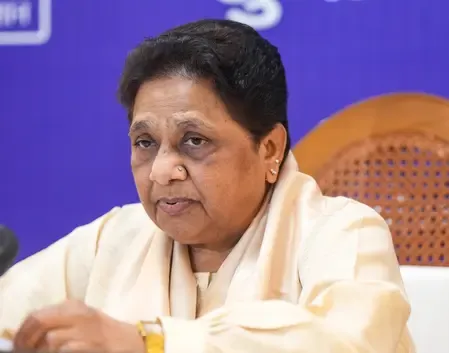
Bahujan Samaj Party (BSP) president Mayawati on Tuesday, 27 October called out the deteriorating standards of political discourse in India, warning that personal attacks, abusive language and toxic politics were neither in the national interest nor conducive to public welfare. Her remarks came directly in the wake of a fresh controversy surrounding Congress president Mallikarjun Kharge's comment targeting Prime Minister Narendra Modi's late father at a party event in Patna.
What Mayawati Said
In a post on X, Mayawati said that mutual distrust, animosity, bitterness and a blame game in Indian politics had deteriorated to an alarming level, with personal attacks increasingly becoming 'unrestrained, unparliamentary, undignified, insulting, narrow-minded and caste-driven,' even extending to violent rhetoric.
'…Those occupying top positions should, if not show proper respect for one another, at least refrain from encouraging objectionable and toxic politics in any form,' she said.
She warned that the growing prevalence of narrow-minded and self-serving politics — particularly that which was anti-poor — could weaken public faith in the country's political system, adding that such erosion 'would not be in the interest of the nation or its people.'
The Kharge 'Baap' Controversy
The political row that prompted Mayawati's intervention erupted during a Congress event in Patna on Sunday. A person in the audience reportedly interrupted Kharge, asserting that Prime Minister Modi would not leave power. Responding in the moment, Kharge said, 'Modi ka baap bhi jayega' (Even Modi's father will have to go), repeating the remark and setting off a sharp political backlash.
Bharatiya Janata Party (BJP) leaders accused the Congress president of crossing the limits of political decency by directing a remark at the Prime Minister's late father. The statement has since drawn condemnation from multiple quarters across the political spectrum.
Broader Concerns Raised by BSP Chief
Mayawati also pointed to what she described as widespread corruption at the government level and growing public unease over questions being raised about the electoral process. 'In such a situation, the ego battles among political leaders are making the situation even more difficult,' she said.
The BSP chief emphasised that citizens wanted political parties and their leaders to focus on resolving pressing problems such as poverty, unemployment and inflation, rather than engaging in personal confrontations. 'Such a trend is inappropriate. It would be better if everyone paid due attention to this,' she added, urging leaders across party lines to exercise restraint.
Political Significance
Notably, Mayawati's intervention positions the BSP at a remove from both the ruling BJP and the opposition Congress, reinforcing her party's long-standing messaging as a third alternative focused on marginalised communities. This comes amid a broader trend of coarsening political rhetoric in the run-up to several state assembly elections, where caste identity and personal attacks have increasingly overshadowed policy debate.
Whether Kharge faces formal disciplinary pressure within Congress, or whether the BJP pushes the controversy further in Parliament, will shape how long this particular row dominates the news cycle.
Point of View
Not spontaneous. By condemning 'toxic politics' without naming the BJP, she implicitly places the burden on Kharge while keeping her distance from the ruling party — a classically ambiguous BSP posture ahead of state elections. What mainstream coverage misses is that this is also a class argument: she explicitly links personal attacks to neglect of poverty, unemployment and inflation, framing elite ego battles as a betrayal of the poor. The deeper story is that political discourse has degraded sharply enough for the leader of a nationally recognised party to issue a public rebuke of the entire political class — and for that rebuke to be entirely credible.
NationPress
27 Oct 2026
Frequently Asked Questions
What is the Kharge 'baap' row?
The controversy erupted when Congress president Mallikarjun Kharge, at a party event in Patna on Sunday, responded to an audience member by saying 'Modi ka baap bhi jayega' (Even Modi's father will have to go). BJP leaders accused him of targeting Prime Minister Modi's late father, calling the remark unparliamentary and indecent.
What did Mayawati say about the Kharge controversy?
Mayawati did not name Kharge directly, but posted on X condemning the rise of personal attacks, unparliamentary language and caste-driven rhetoric in Indian politics. She said those in top positions should at least 'refrain from encouraging objectionable and toxic politics in any form.'
Why does Mayawati's intervention matter politically?
Mayawati's statement positions the BSP above both the BJP and Congress, reinforcing her party's identity as a third alternative focused on marginalised communities. It also comes ahead of state elections where caste-based rhetoric and personal attacks have intensified, giving the BSP a platform to contrast its messaging.
What broader concerns did Mayawati raise beyond the Kharge row?
Beyond the immediate controversy, Mayawati pointed to widespread corruption, electoral integrity concerns and ego battles among leaders as factors deepening public disillusionment. She urged all parties to refocus on poverty, unemployment and inflation instead of personal confrontations.
How did the BJP react to Kharge's comment?
BJP leaders sharply criticised Kharge, accusing the Congress president of crossing the limits of political discourse by making a remark directed at Prime Minister Modi's late father. The remark has drawn condemnation from multiple political voices, including Mayawati.