CM Vishnu Deo Sai Chairs Cabinet Meet at Raipur Residence
Synopsis
Chhattisgarh Chief Minister Vishnu Deo Sai chairs a cabinet council meeting at his official Raipur residence on October 27, 2026, and participates in public-interest programmes across the state capital.
Key Takeaways
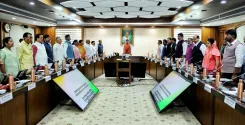
Vishnu Deo Sai chairs a cabinet meeting at the Chief Minister's residence in Raipur on Tuesday, October 27, 2026 .
The Chief Minister also participates in several public-interest programmes in the state capital on the same day.
Sai has served as Chhattisgarh Chief Minister since December 2023 , when the BJP returned to power in the state.
Cabinet meetings at the CM's official residence are a standard governance practice in BJP-ruled states.
The agenda and outcomes of the cabinet session have not been publicly disclosed ahead of the meeting.
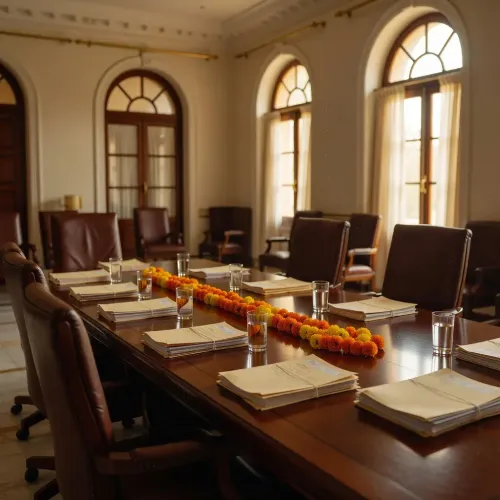
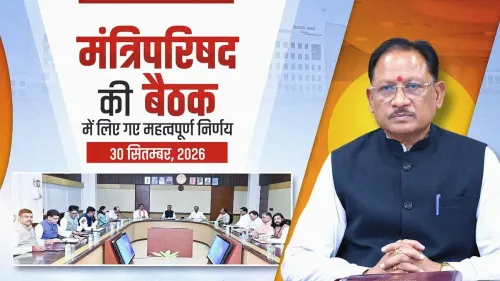
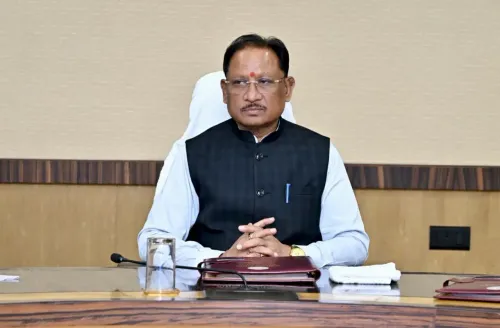
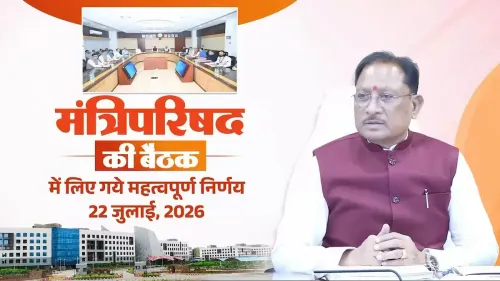
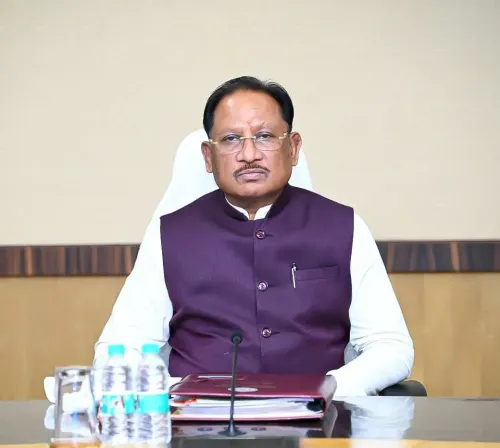
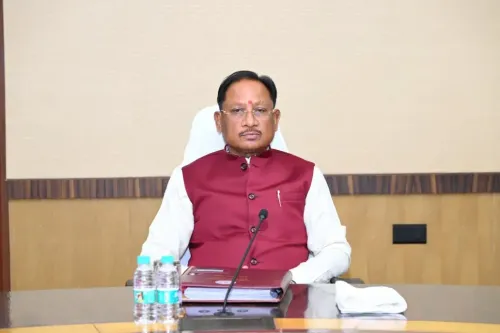
Routine governance, Raipur-style: Chhattisgarh Chief Minister Vishnu Deo Sai is spending Tuesday, October 27 anchored at the state capital, presiding over a cabinet meeting at the Chief Minister's official residence and attending a series of public-interest programmes across the city.
In a post on X, the Chief Minister wrote: 'Aaj Mukhyamantri Nivas Raipur mein mantriparishad ki baithak mein shamil hone ke saath hi rajdhani Raipur mein janhit se jude anya karyakramon mein sammilith rahoonga.' — 'Today, along with attending the cabinet council meeting at the Chief Minister's residence in Raipur, I will also be participating in other public-interest programmes in the capital Raipur.'
Cabinet at the CM's Residence: How Chhattisgarh Governs
Raipur, the capital of Chhattisgarh, is home to both the state secretariat and the Chief Minister's official bungalow, which regularly doubles as a venue for cabinet deliberations. Vishnu Deo Sai, who assumed office as Chief Minister in December 2023, has followed the established practice of convening ministerial councils at the residence — a format common across several BJP-governed states that folds administrative decision-making into the Chief Minister's daily schedule without requiring a formal secretariat setting.
Cabinet meetings at this level typically draw all serving ministers and senior bureaucrats, and serve as the principal forum for approving state policy, spending proposals, and administrative orders. The specific agenda for today's meeting has not been disclosed publicly.
Public Programmes Alongside the Council Session
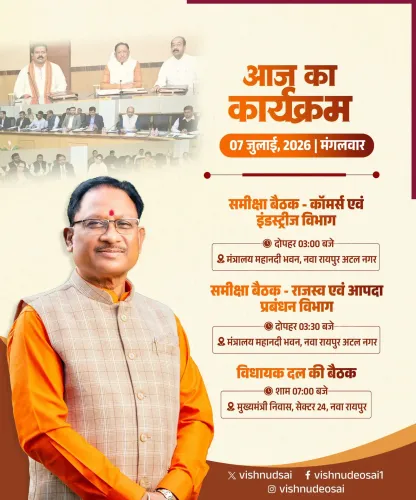
Beyond the cabinet table, Chief Minister Sai's schedule includes unspecified public-interest programmes in Raipur — a pattern Indian state chief ministers use to balance administrative duties with direct citizen engagement. Social-media schedule announcements of this kind have become a standard transparency tool for elected executives, signalling availability and grounding the day's agenda in public accountability.
Any policy decisions or scheme announcements emerging from the cabinet session are likely to be communicated through official state channels later in the day.
In a state where administrative momentum matters, today's twin-track day — council chamber and public square — is governance as usual. What comes out of the room is what counts.
Point of View
Where the BJP recaptured power in late 2023 after a five-year gap, maintaining a visible governance cadence matters as the party looks to consolidate its mandate ahead of the next election cycle. Cabinet meetings at the CM's residence also subtly centralise executive authority, keeping the agenda and pace of decision-making close to the Chief Minister's own schedule.
NationPress
27 Oct 2026
Frequently Asked Questions
What is the cabinet meeting Vishnu Deo Sai is attending in Raipur?
The meeting is a Mantriparishad (cabinet council) session held at the Chief Minister's official residence in Raipur on October 27, 2026, where state ministers convene to discuss and decide on administrative and policy matters.
Where is the Chief Minister's residence in Chhattisgarh?
The Chief Minister's official residence is located in Raipur , the capital city of Chhattisgarh, which also houses the state secretariat and major government offices.
Who is Vishnu Deo Sai?
Vishnu Deo Sai is a BJP leader who has served as the Chief Minister of Chhattisgarh since December 2023 , when the BJP won the state assembly elections.
What public programmes is CM Sai attending in Raipur on October 27?
The Chief Minister's post mentions 'public-interest programmes' in Raipur but does not specify their nature. Details are expected to be released through official state government channels.
How often does the Chhattisgarh cabinet meet?
The Chhattisgarh cabinet meets periodically as required to approve policy decisions, spending proposals, and administrative orders; there is no fixed statutory frequency, though meetings are convened regularly to handle state business.