Trump Signs Executive Order Creating NIH Women's Health Division

Synopsis
President Donald Trump and First Lady Melania Trump signed an executive order on October 19, 2026 establishing a Women's Health Division at the NIH and a White House Women's Health Task Force, targeting decades-old research gaps in women's biomedical care.
Key Takeaways
Trump and First Lady Melania Trump signed an executive order at the White House on October 19, 2026 .
The order creates a new Women's Health Division within the NIH — the primary U.S. federal biomedical research agency.
A separate White House Women's Health Task Force is also established to drive executive-level accountability.
The initiative aims to close research gaps rooted in decades of clinical trial exclusion of women, a problem first formally addressed by the NIH Revitalization Act of 1993 .
The NIH Office of Research on Women's Health was created in 1990 ; this order would mark the most significant institutional expansion since then.
Concrete impact will depend on congressional appropriations to staff and fund both new bodies.
In a move that could reshape the landscape of American biomedical research, President Donald J. Trump and First Lady Melania Trump signed an executive order at the White House on Monday, October 19, 2026, establishing a dedicated Women's Health Division at the National Institutes of Health and a White House Women's Health Task Force. The stated goal: close long-standing research gaps and modernise care for women across the country.
What the executive order creates — and why the gaps exist
The order carves out two new institutional structures simultaneously. The NIH Women's Health Division is designed to sit inside the country's primary federal engine for biomedical research, while the White House Women's Health Task Force anchors political accountability at the executive level. Together, the two bodies are intended to ensure women's health is both studied rigorously and driven from the top of government.
The need for dedicated attention has a documented history. Before the NIH Revitalization Act of 1993, women were routinely excluded from clinical trials, meaning decades of medical standards were built largely on data from male subjects. Conditions like autoimmune diseases, cardiovascular disease, and chronic pain — which disproportionately affect women — were systematically understudied. The NIH Office of Research on Women's Health, created in 1990, was the first structural response to that imbalance. This executive order, if implemented, would represent the most significant institutional expansion of that mission in over three decades.
A pattern of executive action at NIH
U.S. administrations across party lines have periodically used executive authority to steer NIH research priorities when congressional action moved too slowly or narrowly. The difference between an executive order and legislation, however, is durability — the new division and task force will ultimately require congressional appropriations to be staffed and funded at any meaningful scale. Whether lawmakers move to cement these structures into statute will be the critical test of how deep the commitment runs.
Researchers and women's health advocates have long argued that the funding and infrastructure gaps are not merely symbolic. Diseases like endometriosis, polycystic ovary syndrome, and lupus remain chronically under-resourced relative to their disease burden, a disparity that translates directly into delayed diagnoses and limited treatment options for millions of women.
Melania Trump's visible role in the signing
The First Lady's presence at the signing table is notable. Melania Trump, who served as First Lady during Trump's first term from 2017 to 2021, is being positioned as a visible advocate for the initiative — a signal that the administration intends to give women's health a public face beyond the policy brief. Whether she takes on a formal advisory role within the new task force structure remains to be seen from today's announcement.
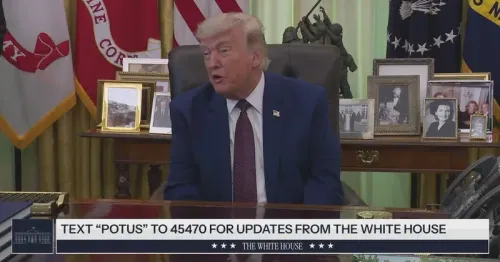
The signing was flagged as a live event for 11 AM EST, indicating the White House planned significant public visibility around the moment — not a quiet regulatory filing, but a deliberate prime-time signal.
For the roughly 167 million women in the United States, the question is no longer whether the government acknowledges the research deficit — it is whether this order becomes the funding, the hiring, and the science that closes it.
Point of View
But its real weight will be measured in dollars and data — congressional appropriations will determine whether the new NIH division becomes a genuine research powerhouse or an unfunded mandate. Positioning Melania Trump alongside the President at the signing suggests a deliberate strategy to broaden the initiative's public appeal beyond the policy community. Historically, women's health reforms have stalled at the implementation stage when institutional momentum faded after the initial announcement; the creation of a White House task force is an attempt to keep political pressure in place. For India and other nations that model health policy partly on U.S. biomedical research output, a better-funded NIH focus on women's conditions could eventually shape global clinical guidelines.
NationPress
19 Oct 2026
Frequently Asked Questions
What did Trump's executive order on women's health do?
The order signed on October 19, 2026 created a Women's Health Division at the NIH and a White House Women's Health Task Force , aiming to close research gaps and modernise care for women in the United States.
What is the NIH and why does it matter for women's health?
The National Institutes of Health (NIH) is the primary U.S. federal agency for biomedical and public health research. Historically, women were underrepresented in NIH-funded clinical trials, skewing medical standards toward male physiology — a gap the new division is meant to address.
What is the White House Women's Health Task Force?
It is a new executive-level body created alongside the NIH division to provide political oversight and accountability for women's health policy, with First Lady Melania Trump participating in the signing.
Has there been a similar initiative before in U.S. history?
Yes. The NIH Office of Research on Women's Health was created in 1990 , and the NIH Revitalization Act of 1993 mandated inclusion of women in federally funded clinical trials. This 2026 order would be the most significant institutional expansion of that mission in over three decades.
Will the new NIH Women's Health Division need Congress to approve funding?
Yes. While the executive order establishes the structures, congressional appropriations and authorising legislation will be required to staff and fund both the NIH division and the White House task force at a meaningful scale.