FLOTUS Signs Executive Order on Women's Health Overhaul
Synopsis
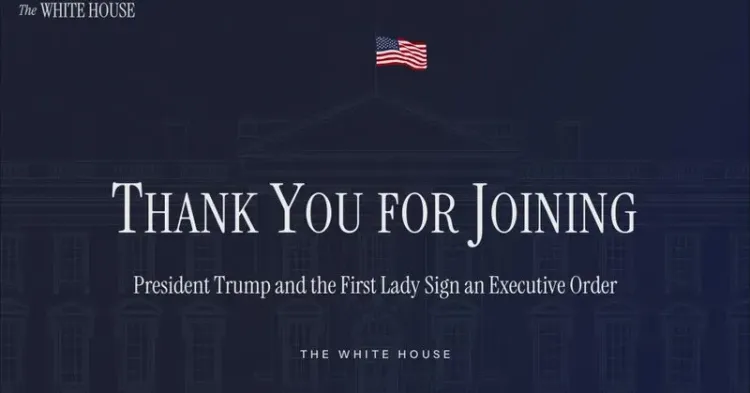
The White House announced live on October 19, 2026, that FLOTUS is issuing an executive order on a women's health overhaul, directing federal agencies to reshape research funding, regulatory guidance, and programme administration without new legislation.
Key Takeaways
The White House broadcast a live announcement on October 19, 2026 of an executive order on women's health.
FLOTUS is the face of the announcement, a high-profile role for a First Lady on formal executive action.
Executive orders on health can redirect NIH, FDA, and HHS funding and regulatory guidance without Congressional approval.
The order is described as an 'overhaul', suggesting structural change rather than incremental adjustment.
Full text of the order and subsequent agency implementation plans — typically due within 30–90 days — will reveal the actual scope.
Key stakeholders include women patients, healthcare providers, and federal health agencies across the United States.
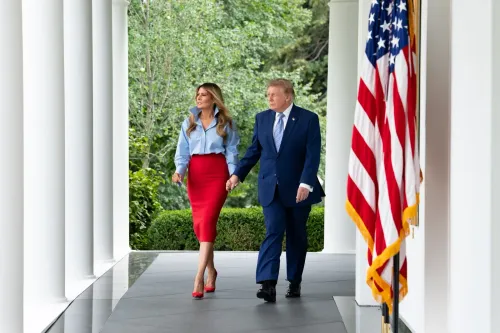
The First Lady of the United States stepped into rare executive territory on Monday, October 19, 2026, as the White House announced — live — that FLOTUS was unveiling an executive order targeting a sweeping overhaul of women's health policy. It is an unusually prominent public moment for a First Lady, and the administration is broadcasting it in real time.
What an executive order on women's health actually does
Executive orders direct federal agencies to act — adjusting research funding, rewriting regulatory guidance, or reshaping how existing programmes are administered — without requiring new legislation from Congress. On women's health, that scope is substantial. Federal agencies such as the National Institutes of Health (NIH), the Food and Drug Administration (FDA), and the Department of Health and Human Services (HHS) collectively control billions of dollars in research grants and clinical-trial mandates, much of which directly governs how diseases affecting women are studied, approved, and funded.
Historically, women's health has been an underfunded corner of biomedical research — a gap that past administrations have acknowledged but rarely addressed through direct executive action. An order framed as an 'overhaul' signals intent to restructure, not merely supplement.
Why FLOTUS is at the centre of this announcement
First Ladies have long championed domestic policy causes — from childhood nutrition to mental health — but formal executive action is typically signed by the President. The White House's decision to position FLOTUS as the face of this announcement suggests the administration is treating women's health as a signature social priority, one with enough political weight to warrant a live, high-visibility rollout rather than a quiet Federal Register entry.
The full text of the executive order, and any accompanying agency guidance or funding directives, will be the critical document to watch. The breadth of an 'overhaul' — whether it touches maternal mortality, chronic disease research, reproductive health, or all three — will determine the order's real-world reach for healthcare providers and the women they serve across the United States.
What comes next: agencies, funding, and enforcement
Once signed, federal agencies typically have between 30 and 90 days to submit implementation plans. Watchpoints include whether new NIH research mandates require female-specific clinical-trial data, whether HHS redirects existing grant pools, and whether the FDA adjusts approval pathways for treatments primarily affecting women. Each of those levers can move faster than legislation — and can be reversed just as quickly by a future administration, which makes the durability of any structural change an open question.
A live White House announcement, a sitting First Lady, and the words 'overhaul' in a presidential executive order: the stage is set — now the text has to match the moment.
Point of View
Meaning the durability of any 'overhaul' depends heavily on how deeply agency funding mandates and regulatory rules become embedded before a potential change of power. For Indian observers tracking US domestic policy, the move is also a signal that women's health infrastructure — long seen as underfunded relative to other biomedical priorities — is becoming a live geopolitical soft-power talking point, with potential downstream effects on global clinical-trial standards and pharmaceutical approval norms.
NationPress
19 Oct 2026
Frequently Asked Questions
What is the FLOTUS women's health executive order about?
The executive order announced on October 19, 2026, targets a broad overhaul of women's health policy in the United States, directing federal agencies to adjust research funding, regulatory guidance, and programme administration.
Can a First Lady sign an executive order?
Formally, executive orders are instruments of the President. The White House's framing of FLOTUS as the announcing official likely means she is the public face of an order signed or authorised by the President, consistent with her role leading this policy initiative.
Which US agencies are affected by a women's health executive order?
Federal agencies such as the National Institutes of Health (NIH), the Food and Drug Administration (FDA), and the Department of Health and Human Services (HHS) are the primary bodies that would implement directives from such an order.
How long does it take for an executive order to take effect?
Agencies typically have 30 to 90 days to submit implementation plans after an executive order is signed. Some provisions take effect immediately upon signing.
How does a US women's health executive order affect India?
While directly a US domestic policy action, shifts in NIH funding mandates and FDA clinical-trial requirements can influence global pharmaceutical research standards, affecting Indian drug manufacturers and clinical research organisations that partner with or seek approval in the US market.