Trump launches IVF fertility benefit and maternal health push
Synopsis
President Trump used a White House event to announce a new employer-based fertility benefit, the launch of Moms.gov, and a $50 billion rural maternal healthcare investment — framing it all as a 'pro-family agenda'. With IVF drug costs reportedly slashed and Senator Katie Britt credited for the push, this is the administration's most direct engagement yet with America's declining birth rate crisis.
Key Takeaways
President Trump announced a new employer-based fertility benefit option through the Department of Labor on Monday, 12 May 2025 .
The administration launched Moms.gov , a federal website centralising maternal health, prenatal, and childcare resources.
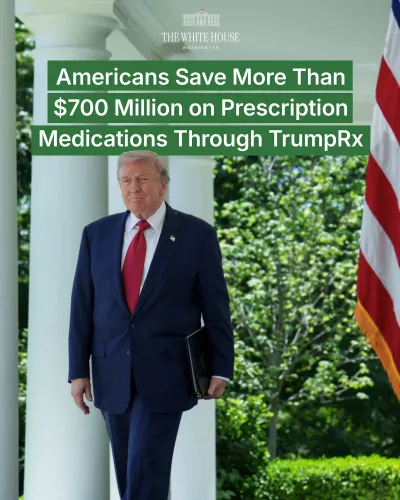
TrumpRx.gov reportedly reduced the cost of one common IVF drug from $966 to $168 .
Dr Mehmet Oz cited a $50 billion rural healthcare investment to address higher maternal mortality rates in rural America.
The "Healthy Moms, Healthy Babies America" campaign aims to cut the US maternal death rate in half within five years .
Health Secretary Robert F.
Kennedy Jr. called declining fertility rates "an existential crisis" for the United States.
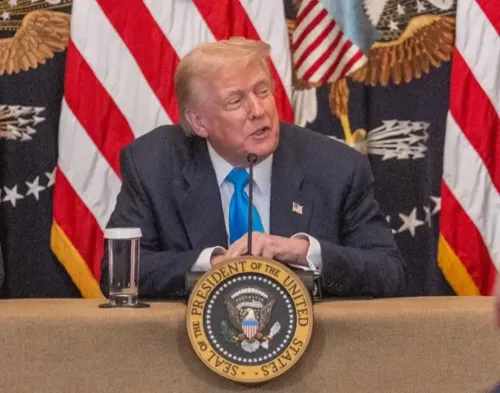
President Donald Trump on Monday, 12 May 2025, announced a sweeping maternal healthcare initiative at the White House, unveiling a new employer-based fertility benefit option and a suite of programmes aimed at expanding access to IVF, childcare, and rural maternal care across the United States. The announcement, framed by the administration as part of a broader "pro-family agenda", marks one of the most comprehensive federal fertility-policy moves in recent memory.
The Fertility Benefit Option
Trump said the Department of Labor would formally create a fertility benefit option that employers could offer outside traditional health insurance plans. The measure is designed as a supplemental coverage pathway for families who currently lack access to fertility treatment through their existing plans.
"Most healthcare plans do not cover these benefits," Trump said. "This will be a supplemental option available to those who need it."
Trump credited Senator Katie Britt with drawing his attention to the issue of IVF access, particularly after an Alabama court ruling created uncertainty around fertility treatment. "She said, sir, we have to do something," Trump said. "And I became the father of fertility."
TrumpRx and Drug Cost Reductions
The administration also highlighted TrumpRx.gov, a prescription drug pricing programme that Trump claimed had sharply reduced the cost of fertility medications. "One drug commonly used in IVF has gone from $966 to $168," Trump said. Officials said the programme was already live and accessible to families navigating fertility treatment costs.
Moms.gov and Federal Resources
Trump announced the launch of Moms.gov, a new federal website designed to centralise resources for mothers and families. The site reportedly includes information on prenatal and postpartum care, childcare support, nutrition guidance, and fertility resources. "I encourage every mom to visit this new page," Trump said.
Rural Maternal Healthcare
Dr Mehmet Oz highlighted the disparity in maternal outcomes between urban and rural America, noting that maternal mortality rates were significantly higher in rural communities. "Your zip code should not determine your mortality rate if you're having a baby," Oz said. He pointed to a $50 billion rural healthcare investment included in the administration's tax package, with states reportedly deploying telehealth and expanded local care systems to improve outcomes.
Olivia Walton, speaking on behalf of the "Healthy Moms, Healthy Babies America" campaign, described the funding as "a transformative opportunity to invest in maternal healthcare" and said the campaign aimed to cut the US maternal death rate in half within five years.
Childcare Reforms and Political Framing
Dr Alex Adams said childcare reforms announced alongside the fertility measures would "bring faith-based providers back to the table" and reduce federal mandates that had driven up childcare costs. "We're restoring parental choice," Adams said.
Health Secretary Robert F. Kennedy Jr. warned at the event that declining fertility rates represented "an existential crisis" for the country. "We now have a president who is trying to encourage childbirth and motherhood in this country," Kennedy said. This comes amid a broader national conversation in the US about falling birth rates and the long-term demographic implications for social security and labour markets.
The administration's maternal health push is expected to face scrutiny over implementation timelines, funding mechanisms, and whether the employer-based fertility benefit option will reach lower-income workers not covered by large employer plans.
Point of View
Drug pricing, rural infrastructure, and childcare — into a single political narrative, which risks obscuring accountability for each. The employer-based fertility benefit option is structurally limited: it will primarily benefit workers at large companies with HR bandwidth to adopt supplemental plans, leaving gig workers and low-income families in the same gap as before. The $50 billion rural healthcare figure is embedded in a broader tax package, meaning its realisation depends on legislative passage. And while TrumpRx drug-cost reductions are striking on paper, independent verification of the $966-to-$168 claim has not yet been provided. The administration deserves credit for elevating maternal mortality — a genuine public health failure — but the gap between announcement and delivery on these kinds of multi-agency health initiatives has historically been wide.
NationPress
23 Sept 2026
Frequently Asked Questions
What is the new fertility benefit option announced by President Trump?
It is a supplemental employer-based coverage option that the Department of Labor will formally create, allowing employers to offer fertility benefits — including IVF-related coverage — outside traditional health insurance plans. It is designed for families who currently lack fertility coverage through their existing plans.
How much has TrumpRx reduced IVF drug costs?
According to President Trump, one drug commonly used in IVF treatments has dropped from $966 to $168 under the TrumpRx.gov prescription drug pricing programme. Independent verification of this figure has not yet been publicly provided.
What is the $50 billion rural maternal healthcare investment?
Dr Mehmet Oz referenced a $50 billion rural healthcare investment included in the administration's tax package, aimed at reducing higher maternal mortality rates in rural America through telehealth expansion and strengthened local care systems. Its disbursement depends on the broader tax package clearing Congress.
Why did Trump announce these maternal health measures now?
The push follows an Alabama court ruling that created legal uncertainty around IVF access, prompting Senator Katie Britt to urge the administration to act. It also comes amid growing national concern over declining US birth rates, which Health Secretary Robert F. Kennedy Jr. described as 'an existential crisis'.