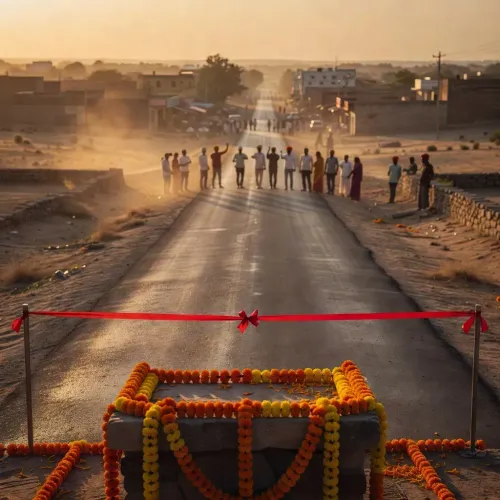
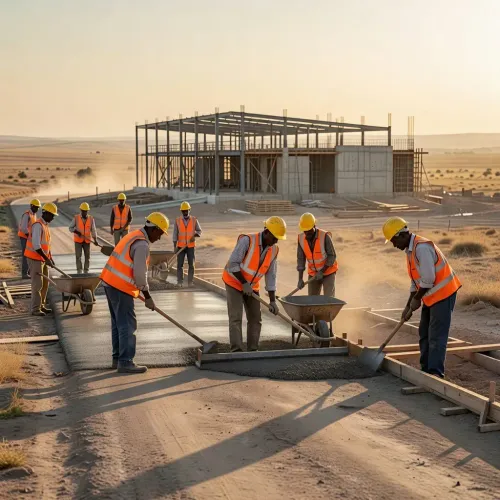
Rajasthan CMO directs all projects be completed on time
Synopsis
The Chief Minister's Office of Rajasthan publicly directed on November 7, 2026, that all development projects must meet their fixed deadlines. The order, tagged to CM Bhajanlal Sharma under the 'Aapno Agrani Rajasthan' banner, underlines the BJP government's ongoing emphasis on execution and administrative accountability.
Key Takeaways
The Chief Minister's Office of Rajasthan issued a public directive on November 7, 2026 mandating completion of all development projects within stipulated timeframes.
The directive was addressed to CM Bhajanlal Sharma and tagged under #आपणो_अग्रणी_राजस्थान ('Our Leading Rajasthan').
Bhajanlal Sharma became Rajasthan's Chief Minister in December 2023 after the BJP's assembly election win.
Project timeline enforcement has been a recurring governance theme for the Rajasthan BJP government since it assumed office.
The directive places public accountability on contractors, executing agencies, and district administrations across the state.
Time-bound completion directly limits cost overruns and supports the government's 'leading Rajasthan' brand positioning.
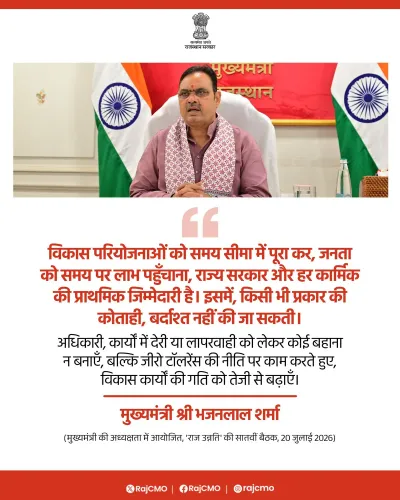
A clear signal from the top — the Chief Minister's Office of Rajasthan on Saturday, November 7, 2026, issued a pointed directive under the #आपणो_अग्रणी_राजस्थान ('Our Leading Rajasthan') banner: every development project in the state must be completed within its fixed deadline, without exception. The message, addressed directly to Chief Minister Bhajanlal Sharma, was both a public commitment and an accountability signal to all concerned departments.
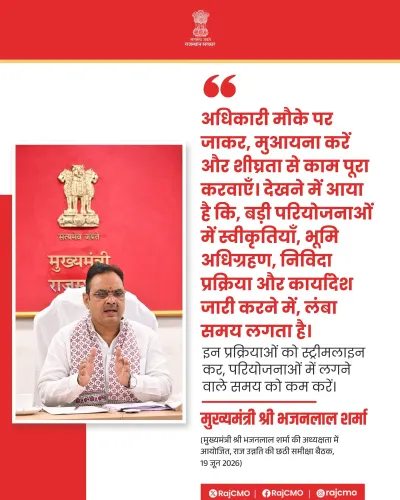
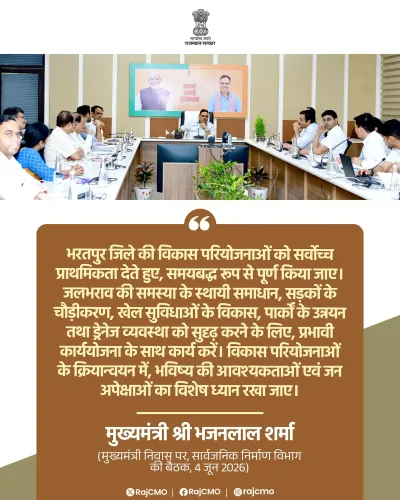
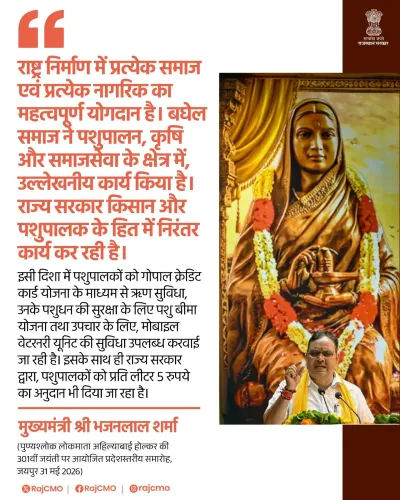
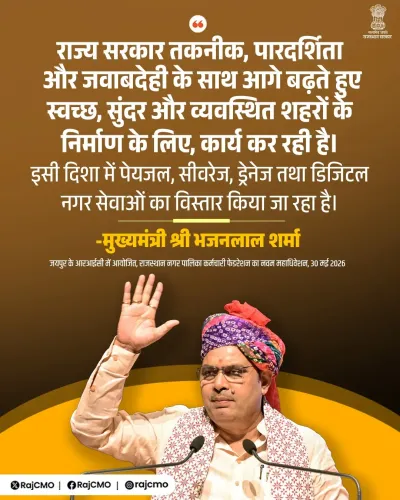
The post, brief but pointed, reads: 'सभी विकास परियोजनाओं को निर्धारित समय सीमा में, पूरा करना सुनिश्चित किया जाए' — 'It must be ensured that all development projects are completed within the stipulated time frame.' No ambiguity, no bureaucratic cushion. A deadline is a deadline.
Bhajanlal government's push on execution since 2023
Bhajanlal Sharma took office as Rajasthan's Chief Minister in December 2023 after the BJP's assembly election victory, inheriting a large pipeline of infrastructure and development works. From early in his tenure, the administration placed execution monitoring — not just project announcement — at the centre of its governance pitch. Departments were directed to accelerate ongoing works and flag slippages before they compounded into cost overruns or public embarrassment.
That emphasis now surfaces again in this November directive. Time-bound completion is not merely an administrative preference — it is a direct cost-control mechanism. Projects that drag beyond their deadlines typically inflate expenditure, disrupt dependent works, and erode public trust in government delivery. For a BJP government keen to demonstrate administrative efficiency in a state that has historically swung between parties, visible, on-time delivery is a political asset.
A pattern seen across Indian states — Rajasthan raises the stakes
Indian state governments routinely issue instructions on project timelines, particularly ahead of review cycles or ahead of the next election window. What gives this directive weight is its public framing under the #आपणो_अग्रणी_राजस्थान campaign — a brand built around the idea of Rajasthan as a frontrunner state. The hashtag ties day-to-day administrative instruction directly to a larger aspirational narrative, making accountability visible to citizens, not just to departmental heads.
Contractors, project-executing agencies, and district administrations across Rajasthan are the immediate audience for this signal. For state residents — particularly in areas awaiting road, water, or infrastructure upgrades — the directive is a public benchmark against which delivery can be measured in the months ahead.
Rajasthan's government has effectively put its project pipeline on a public clock. The question now is which departments answer it — and how fast.
Point of View
Using social media to make administrative standards visible to voters. For the Bhajanlal government, now approaching the midpoint of its term, on-time infrastructure delivery is as much a political deliverable as a governance one — the gap between project announcement and project completion has historically been a key Opposition attack line in Rajasthan. By anchoring this instruction to the 'Aapno Agrani Rajasthan' brand, the CMO is also converting a routine administrative nudge into a marker of competitive state identity, putting Rajasthan in implicit comparison with other states for execution efficiency.
NationPress
7 Nov 2026
Frequently Asked Questions
What did the Rajasthan CMO direct on November 7, 2026?
The Chief Minister's Office of Rajasthan directed that all state development projects must be completed within their fixed deadlines, with the message addressed to CM Bhajanlal Sharma under the 'Aapno Agrani Rajasthan' campaign.
Who is the Chief Minister of Rajasthan in 2026?
Bhajanlal Sharma of the BJP is Rajasthan's Chief Minister. He assumed office in December 2023 following the party's victory in the state assembly elections.
What is #आपणो_अग्रणी_राजस्थान?
'Aapno Agrani Rajasthan' translates to 'Our Leading Rajasthan' and is the Bhajanlal government's campaign brand for projecting Rajasthan as a frontrunner state in development and governance.
Why do Indian state governments emphasise project deadline compliance?
Projects that miss deadlines typically inflate costs, stall dependent infrastructure works, and erode public trust. Timely completion is both a fiscal discipline measure and a visible governance outcome for citizens.
Who is responsible for implementing the Rajasthan CMO's project deadline order?
The directive applies to all relevant state departments, project-executing agencies, contractors, and district administrations across Rajasthan responsible for ongoing development works.