Rajasthan CMO Calls for Jaipur Traffic Action Plan
Synopsis
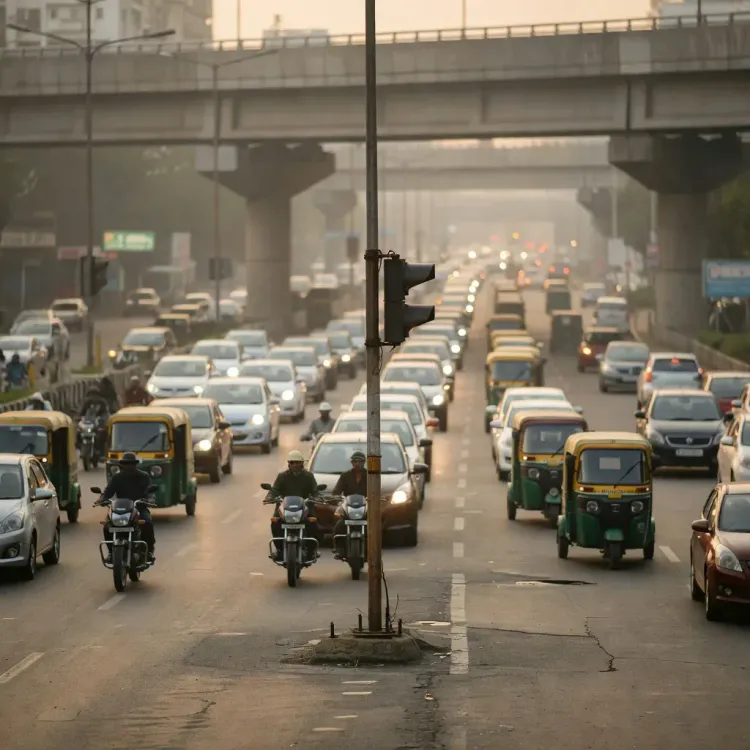
The Chief Minister's Office of Rajasthan on 7 November 2026 publicly directed officials to formulate a concrete traffic action plan for Jaipur, as rapid urbanisation strains the capital city's road network and daily commutes grow harder.
Key Takeaways
Rajasthan's Chief Minister's Office issued a public directive on 7 November 2026 calling for an effective traffic action plan for Jaipur .
The post tagged Chief Minister Bhajanlal Sharma directly, linking him personally to the outcome.
Jaipur faces mounting congestion driven by rapid urbanisation and rising vehicle ownership.
Earlier mobility measures include Jaipur Metro Phase 1 and ongoing Phase 2 planning, though coverage remains limited.
The BJP administration under Bhajanlal Sharma, in office since December 2023 , has prioritised infrastructure upgrades across Rajasthan's urban centres.
Specific projects — flyovers, signal upgrades, or expanded public transport — are yet to be formally announced.
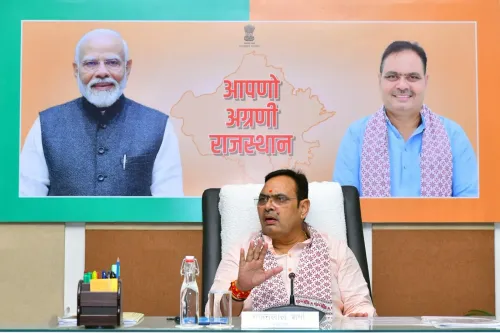
Jaipur is growing faster than its roads can keep up — and Rajasthan's Chief Minister's Office wants that addressed, now. On Saturday, 7 November 2026, the Chief Minister's Office of Rajasthan posted a directive on X calling for an effective action plan to ease rising traffic pressure in Jaipur and make commutes smoother across the capital city, tagging Chief Minister Bhajanlal Sharma directly in the message.
The post, hashtagged #आपणो_अग्रणी_राजस्थान ('Our Leading Rajasthan'), urged authorities to 'यातायात के बढ़ते दबाव के साथ आवागमन को सुगम बनाने के लिए प्रभावी कार्ययोजना' — that is, 'prepare an effective action plan to facilitate movement in step with rising traffic pressure.' The directive is public and pointed: plan, or the city falls further behind.
Jaipur's Congestion Problem Has Been Building for Years
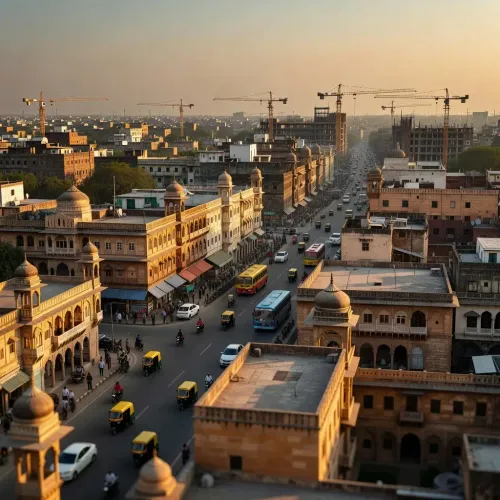
Jaipur, Rajasthan's capital, has undergone rapid urbanisation over the past decade, with surging vehicle ownership stretching road infrastructure far beyond its original design capacity. The city sits at the intersection of industrial corridors, tourism flows, and a growing residential belt — a combination that makes traffic management both economically and logistically critical.
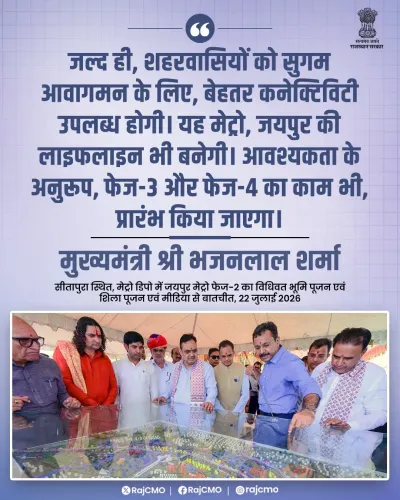
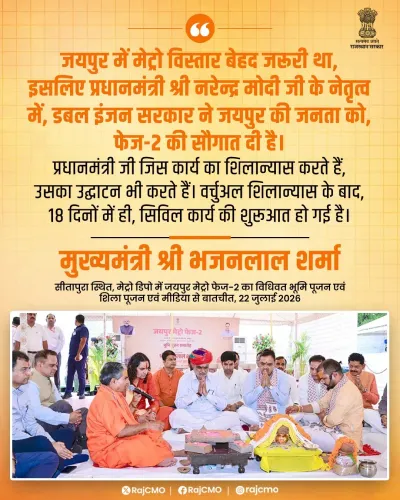
Earlier efforts to address urban mobility included Jaipur Metro Phase 1 operations and the initiation of Phase 2 planning under previous state administrations. But metro coverage remains limited relative to the city's sprawl, and surface traffic on key arteries continues to worsen during peak hours.
BJP Administration's Urban Infrastructure Push
Chief Minister Bhajanlal Sharma, who has led the state since December 2023, has repeatedly signalled infrastructure upgrades as a priority for Rajasthan's major urban centres. The current directive fits that pattern — a formal, public push that places accountability squarely on the administrative machinery to produce a concrete plan.
The CMO's tagging of @BhajanlalBjp in the post is not incidental. It signals that the chief minister is personally associated with the outcome, raising the stakes for the urban local bodies and traffic authorities who must now respond. What form that plan takes — new flyovers, signal upgrades, expanded public transport, or dedicated freight corridors — remains to be formally announced.
For Jaipur's millions of daily commuters, the directive is a first step. The city will be watching for the action plan that follows.
Point of View
Complete with a tag to the chief minister himself, is a calculated use of social media accountability — placing administrative pressure on urban local bodies while signalling to voters that the leadership is engaged with everyday commuter pain. For Bhajanlal Sharma's government, delivering visible urban infrastructure wins in Jaipur ahead of future electoral cycles is strategically important. Yet the gap between a directive and a funded, executed plan has historically been wide in Indian urban governance; the real test lies in whether a concrete, budgeted action plan follows within weeks, not months. Rajasthan's urban mobility record — including stalled metro expansions — means scepticism is warranted until specifics emerge.
NationPress
7 Nov 2026
Frequently Asked Questions
What did Rajasthan's CMO say about Jaipur traffic?
The Chief Minister's Office of Rajasthan on 7 November 2026 directed authorities to prepare an effective action plan to ease rising traffic pressure in Jaipur and make commutes smoother.
Why is Jaipur facing traffic congestion?
Jaipur has experienced rapid urbanisation, rising vehicle ownership, and growing residential and industrial expansion, putting severe strain on its existing road network.
What is Bhajanlal Sharma's role in Jaipur's traffic plan?
Chief Minister Bhajanlal Sharma was directly tagged in the CMO's post, linking him personally to the directive and placing public accountability on his administration to follow through.
What previous steps have been taken for Jaipur urban mobility?
Jaipur Metro Phase 1 is operational and Phase 2 planning was initiated under previous state governments, but metro coverage remains limited relative to the city's size.
What could the Jaipur traffic action plan include?
Potential measures could include new flyovers, upgraded traffic signals, expanded public transport, or dedicated freight corridors, though no specific projects have been formally announced yet.