CM Bhupendra Patel Backs Renewable Energy on World Environment Day
Synopsis
On World Environment Day, Gujarat CM Bhupendra Patel drew a parallel between India's pandemic-era collective resilience and the need to advance renewable energy amid current global tensions, reaffirming Gujarat's position as a national leader in solar and wind power.
Key Takeaways
CM Bhupendra Patel posted on 5 June 2026 — World Environment Day — calling for a collective national push toward renewable energy.
He drew a direct parallel between India's unified response to the COVID-19 pandemic and the need to address present-day global tensions through clean energy.
Gujarat introduced its first solar policy in 2009 and commissioned the Charanka Solar Park in 2012 , positioning itself as a long-standing national leader in the sector.
India targets 500 GW of non-fossil fuel capacity by 2030 under the National Solar Mission framework.
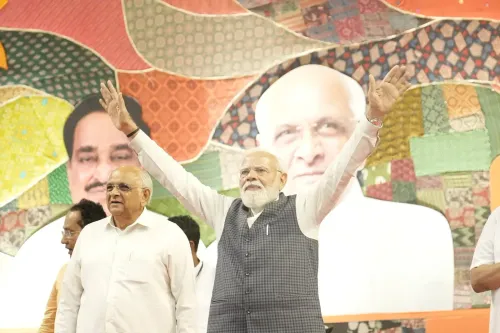
The remarks were made at the Surat Navsarjan Parv programme and tagged Prime Minister Narendra Modi .
Upcoming Gujarat budget allocations for solar and wind infrastructure will be a key indicator of follow-through on these commitments.
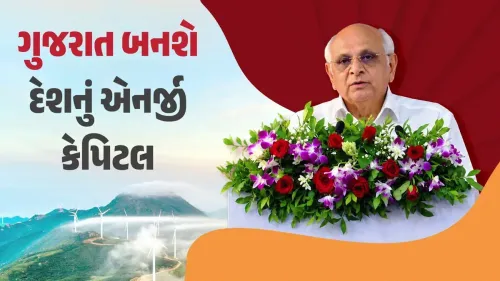
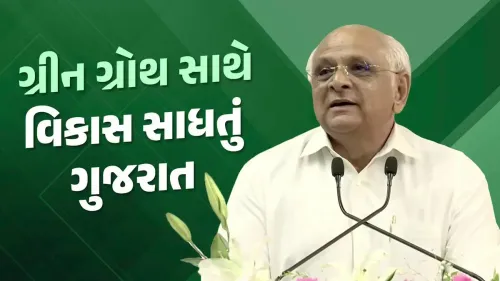
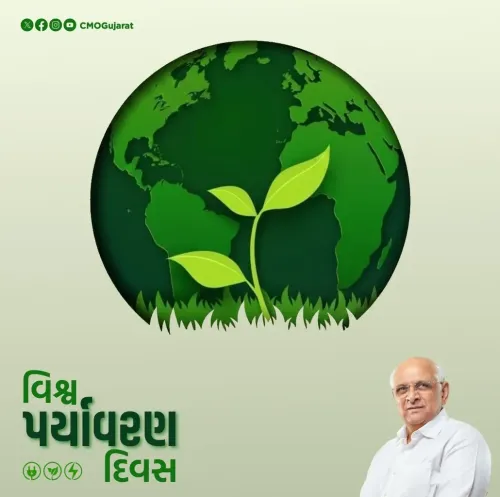
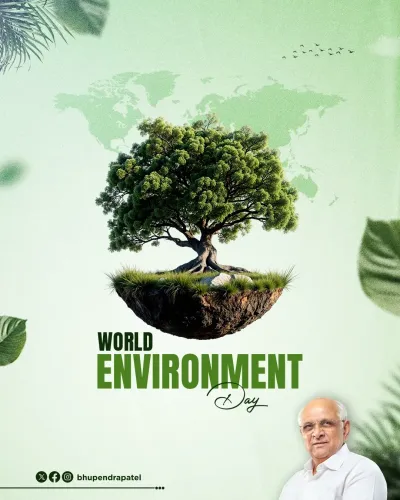
Gujarat Chief Minister Bhupendra Patel on Friday, 5 June 2026 invoked India's collective resilience during the COVID-19 pandemic to argue for a unified national push toward renewable energy, stating that the country must meet today's global tensions with the same solidarity. The remarks were made at the Surat Navsarjan Parv programme and shared on X on the occasion of World Environment Day, tagging Prime Minister Narendra Modi.
Context
In his post, written in Gujarati, CM Patel said: 'વીતેલા વર્ષોમાં કોવિડ મહામારી સહિત જ્યારે-જ્યારે પણ વિશ્વમાં સંકટ આવ્યું ત્યારે ભારતના લોકોએ સાથે મળીને તેનો સામનો કર્યો' ['In past years, whenever a crisis struck the world — including the COVID pandemic — the people of India faced it together']. He added that the current period of global tension must similarly be confronted collectively, and that advancing renewable energy is essential to that effort. Gujarat, he asserted, has led the nation in this sector.
The statement was posted on World Environment Day, observed annually on 5 June under the United Nations framework to promote global environmental awareness. The Surat Navsarjan Parv, referenced in the hashtags, served as the immediate platform for these remarks.
Policy Backdrop
Gujarat has a long track record in renewable energy, having introduced its first solar power policy in 2009 and commissioning the Charanka Solar Park in 2012, which was at the time Asia's largest solar installation. The state has since maintained a leading position in national solar and wind installed capacity, backed by state-level incentives and dedicated infrastructure corridors.
At the national level, India's National Solar Mission, launched in 2010, set progressively higher targets, culminating in the current goal of 500 GW of non-fossil fuel capacity by 2030. Following the pandemic, the central government emphasised green hydrogen and renewable expansion as twin pillars of economic recovery and energy security. CM Patel's framing on Friday echoes this official narrative, linking past national crises to structural shifts in energy policy.
Stakeholders and Impact
Gujarat's renewable energy ambitions directly affect a broad set of stakeholders: industrial consumers in Surat and Ahmedabad who benefit from competitive green power tariffs, renewable energy developers operating solar and wind parks across the state, and agricultural users connected to solar-powered irrigation schemes. The state's policy environment has also attracted significant private investment in the sector.
By framing renewable energy as a response to 'global tensions' — widely understood to refer to geopolitical volatility affecting fossil fuel supply chains and prices — CM Patel aligned the state's energy agenda with the broader national argument for reducing dependence on imported fuels. This framing resonates with industries facing energy cost pressures.
What's Next
Attention will now turn to Gujarat's upcoming state budget allocations for new solar and wind park development, as well as central government updates on renewable purchase obligations ahead of the next major international climate conference. CM Patel's public invocation of renewable energy leadership on a globally observed environmental occasion signals that the state is likely to position this agenda prominently in upcoming policy announcements. Whether the Surat Navsarjan Parv platform yields specific project commitments will be closely watched by energy developers and investors active in western India.
Point of View
He broadens the appeal beyond environmental circles to a general audience primed by lived crisis experience. The tag to PM Modi is not incidental — it signals continuity between Gujarat's early solar leadership under Modi and the current administration's ambitions. With the 2030 renewable capacity deadline approaching, such public positioning also serves to pre-empt any perception that Gujarat is losing its front-runner status to newer entrants like Rajasthan.
NationPress
19 Oct 2026
Frequently Asked Questions
What did Gujarat CM Bhupendra Patel say on World Environment Day 2026?
CM Bhupendra Patel said that just as Indians collectively faced crises like the COVID-19 pandemic, the country must now collectively advance renewable energy to address current global tensions, and that Gujarat has led the nation in this sector.
What is Gujarat's role in India's renewable energy sector?
Gujarat has been a national leader in renewable energy since launching its first solar policy in 2009 and commissioning the Charanka Solar Park in 2012. The state consistently ranks among the top contributors to India's solar and wind installed capacity.
What is India's renewable energy target for 2030?
India has set a target of 500 GW of non-fossil fuel electricity capacity by 2030, a goal supported by the National Solar Mission and state-level policies including those in Gujarat.
What is the Surat Navsarjan Parv?
Surat Navsarjan Parv is a programme held in Surat, Gujarat, at which CM Patel made his World Environment Day remarks on 5 June 2026. The specific details of the event's agenda have not been officially confirmed.
Why did CM Patel tag PM Modi in his World Environment Day post?
CM Patel tagged Prime Minister Narendra Modi, who as former Gujarat CM spearheaded the state's early renewable energy projects, signalling policy continuity and alignment between the state and central government on clean energy goals.