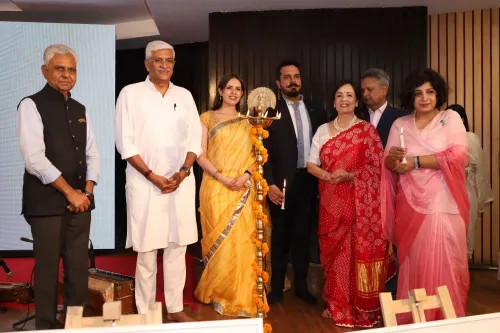
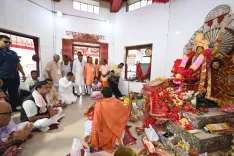
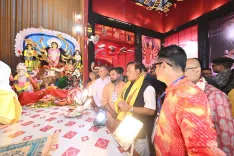
Shekhawat offers prayers at Mehrangarh's Chamunda temple on Navratri
Synopsis
Union Culture and Tourism Minister Gajendra Singh Shekhawat visited Jodhpur's Chamunda Mata Temple inside Mehrangarh Fort on Shardiya Navratri, performing the evening aarti with his wife and daughter and praying for national prosperity.
Key Takeaways
Gajendra Singh Shekhawat travelled from Delhi to Jodhpur on 19 October 2026 for Shardiya Navratri prayers.
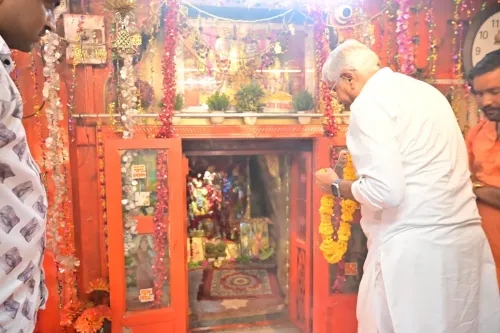
He offered 'dhok' and attended the sandhya aarti at Chamunda Mata Temple inside Mehrangarh Fort .
He was accompanied by wife Smt.
Nonad Kanwar and daughter Suhasini .
The minister prayed for peace, prosperity, and public welfare for the country and Rajasthan.
Mehrangarh Fort is a major heritage monument under the Culture Ministry's purview and a key pilgrimage site during Navratri.
As the lamps of Shardiya Navratri burned bright across Rajasthan, Union Culture and Tourism Minister Gajendra Singh Shekhawat travelled from Delhi to his home constituency of Jodhpur on Monday, 19 October 2026, to offer prayers at the iconic Chamunda Mata Temple inside Mehrangarh Fort.
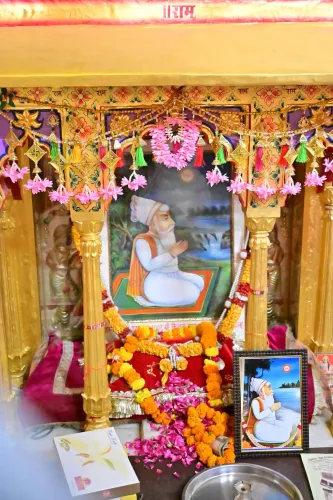
Shekhawat shared on X that he performed 'dhok' — a traditional Rajasthani gesture of reverence — at the goddess's shrine, and participated in the evening 'sandhya aarti' for 'jyot darshan.' He was accompanied by his wife Smt. Nonad Kanwar and daughter Suhasini. The minister prayed for 'sukh-samridhi, khushhali aur jankallyan' — peace, prosperity, happiness and public welfare — for the country and the state.
Mehrangarh's Chamunda Mata — faith built into a fortress wall
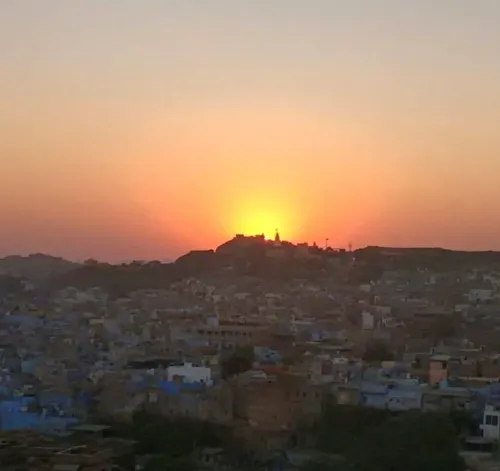
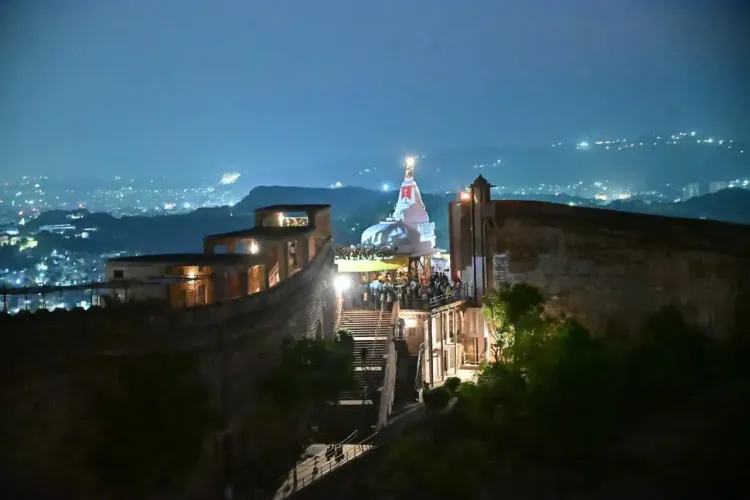
Mehrangarh Fort, a commanding 15th-century citadel that rises nearly 400 feet above the blue city of Jodhpur, is among India's most visited heritage monuments and falls under the purview of the Culture Ministry through the Archaeological Survey of India. The Chamunda Mata Temple within its precincts draws hundreds of thousands of pilgrims annually, and the footfall swells dramatically during Navratri's nine nights. For Jodhpur's residents, the goddess Chamunda is the city's presiding deity — making the temple a living thread between a Rajput-era fortress and contemporary popular faith.
A minister back in his constituency during the festival season
For a Lok Sabha MP, returning home during a major festival is both a personal act of worship and an expression of constituency connect — the two rarely come apart in Indian political life. Shekhawat, who represents Jodhpur in Parliament, has been vocal about promoting Rajasthan's cultural and pilgrimage tourism on the national stage. His ministry oversees heritage conservation and tourism infrastructure across the country, and Mehrangarh sits squarely within that mandate.
Shardiya Navratri — the autumn edition of the nine-night festival dedicated to Goddess Durga — is one of the most widely observed Hindu festivals, celebrated with particular intensity in Rajasthan, Gujarat and across northern India. Temple attendance, fasting, and evening aartis define the period, which culminates in Vijayadashami.
For a Culture Minister photographed at a heritage fort-temple with his family during Navratri, the image carries weight both as private devotion and as a reminder of how India's living cultural traditions and its protected monuments share the same stone floor.
Point of View
A personal pilgrimage to a heritage-listed fort-temple in his own constituency is more than a faith gesture — it reinforces the ministry's implicit narrative that India's living religious traditions and its protected monuments are inseparable assets. Shekhawat's Jodhpur visit during peak Navratri footfall also underlines the BJP's consistent strategy of visible cultural participation by senior leaders during major Hindu festivals. With Rajasthan's heritage tourism on a growth curve, the optics of the Culture Minister at Mehrangarh carry a soft promotional dimension as well. Whether this translates into fresh conservation or tourism announcements for the fort in the weeks ahead is the next signal worth watching.
NationPress
19 Oct 2026
Frequently Asked Questions
Why did Gajendra Singh Shekhawat visit Jodhpur on Navratri 2026?
He travelled from Delhi to Jodhpur to offer prayers at the Chamunda Mata Temple inside Mehrangarh Fort on the occasion of Shardiya Navratri, accompanied by his wife and daughter.
Where is the Chamunda Mata Temple located?
The Chamunda Mata Temple is located within the historic Mehrangarh Fort in Jodhpur, Rajasthan, and is considered the presiding deity's shrine of the city.
What is 'dhok' in Rajasthani tradition?
'Dhok' is a traditional Rajasthani gesture of deep reverence and prostration offered before a deity or elder, commonly performed at temples during festivals.
What is Shardiya Navratri?
Shardiya Navratri is the autumn nine-night Hindu festival dedicated to Goddess Durga, observed across India, with particular fervour in Rajasthan, Gujarat and northern India.
Is Mehrangarh Fort under the Union Culture Ministry?
Mehrangarh Fort is a prominent heritage site in India. The Union Ministry of Culture oversees heritage conservation in the country through the Archaeological Survey of India, and the fort is among India's most significant protected monuments.