CM Bhupendra Patel Plants Trees in Gandhinagar on World Environment Day
Synopsis
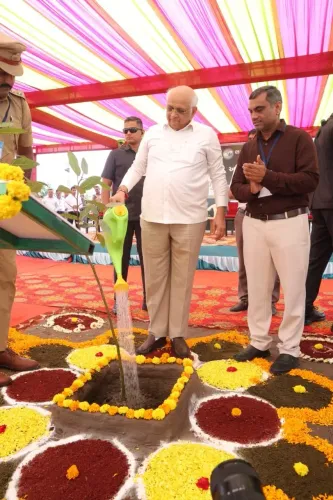
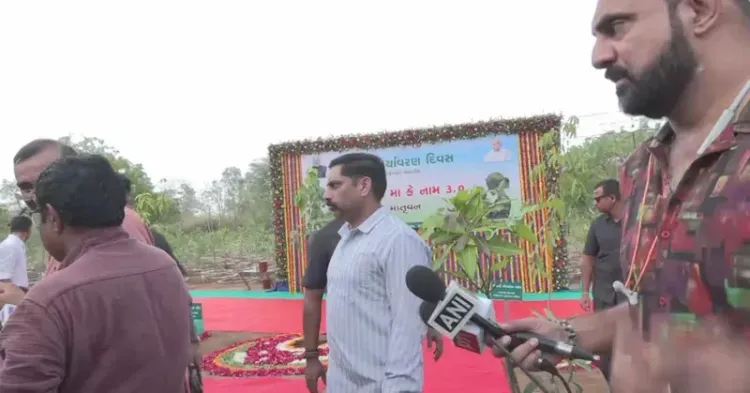
Gujarat Chief Minister Bhupendra Patel joined a live tree plantation drive in Gandhinagar on 5 June 2026, World Environment Day, under the third edition of PM Modi's 'Ek Ped Maa Ke Naam' national afforestation campaign.
Key Takeaways
Gujarat CM Bhupendra Patel participated in a tree plantation event in Gandhinagar on 5 June 2026 .
The event was held under Ek Ped Maa Ke Naam 3.0 , the third annual edition of a national campaign launched by PM Modi on 5 June 2024 .
The occasion was World Environment Day , observed globally every year on 5 June under UN auspices.
The event was broadcast live, indicating a public-participation format beyond just state officials.
Gujarat's plantation drives build on a tradition dating to the 1950s Van Mahotsav programme, now integrated with central missions.
Post-event data on sapling count and survival rates will determine the drive's on-ground impact.
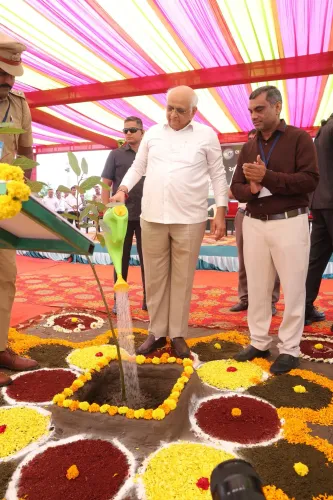
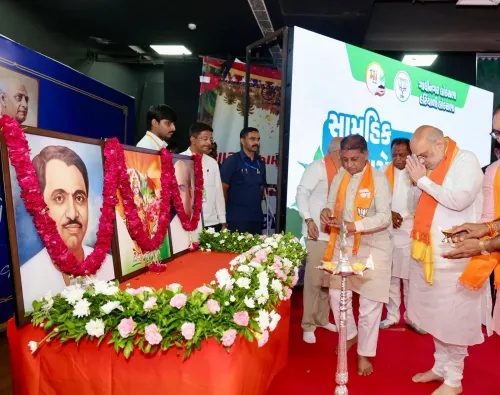
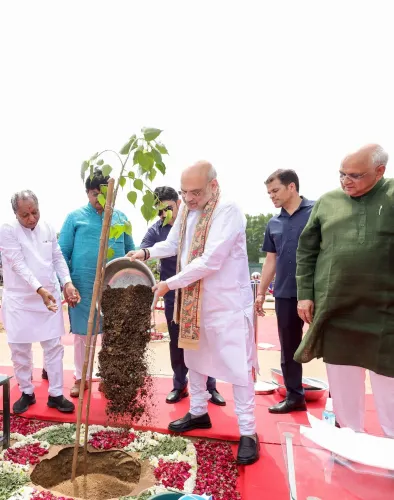
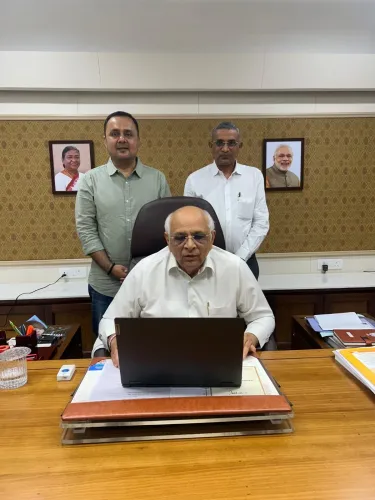
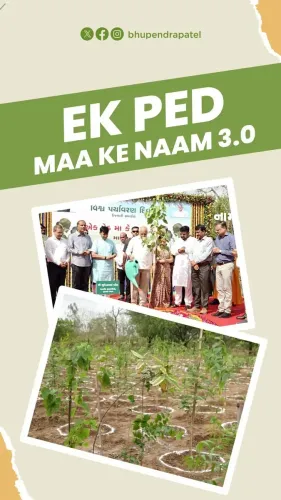
Gujarat Chief Minister Bhupendra Patel participated in a live tree plantation drive at Gandhinagar on Friday, 5 June 2026, marking World Environment Day under the third edition of the national campaign 'Ek Ped Maa Ke Naam 3.0'.
Context
The Chief Minister shared the live broadcast of the event on X, writing in Gujarati: 'વિશ્વ પર્યાવરણ દિવસ નિમિત્તે એક પેડ માં કે નામ 3.0 અંતર્ગત ગાંધીનગર ખાતે વૃક્ષારોપણ' — translated as 'Tree plantation at Gandhinagar under Ek Ped Maa Ke Naam 3.0, on the occasion of World Environment Day.' The event was streamed live, indicating a public-facing, participatory format intended to mobilise citizens alongside state officials.
World Environment Day is observed every year on 5 June under United Nations auspices and serves as the anchor date for India's annual afforestation calendar. Gujarat's participation in a centrally-driven campaign on this date is consistent with the state's longstanding tradition of government-led plantation events.
Policy Backdrop
Prime Minister Narendra Modi launched the Ek Ped Maa Ke Naam campaign on 5 June 2024 — also World Environment Day — calling on citizens across India to plant a tree as a tribute to their mothers. The campaign linked personal sentiment to a national afforestation goal, drawing wide participation from state governments, schools, and civil society in its first edition.
The third edition, Ek Ped Maa Ke Naam 3.0, marks the campaign's continued annual rollout. Gujarat has a decades-old tradition of Van Mahotsav tree plantation programmes dating to the 1950s, which have over time been integrated with central missions including the National Afforestation Programme and the National Mission for Green India. These layered frameworks give state-level events both symbolic and policy weight.
Stakeholders and Impact
The primary stakeholders are Gujarat's citizens and the state forest department, which coordinates logistics for large-scale plantation drives. Events of this nature typically involve volunteers, school children, and local government bodies planting saplings at designated sites across the state capital and beyond.
BJP-governed states have consistently aligned such drives with national campaigns to demonstrate coordination between state and central governments on environmental targets. The live-broadcast format broadens the event's reach beyond physical participants, encouraging viewers to replicate the gesture in their own localities.
What's Next
Attention will now turn to the total number of saplings planted across Gujarat during the 2026 edition of the drive, and whether the state government releases follow-up data on sapling survival rates and maintenance budgets — metrics that determine whether symbolic plantation events translate into lasting green cover. Successive editions of the campaign have faced scrutiny on exactly these questions at the national level.
Point of View
Reinforcing a shared political brand around green governance. The live-broadcast format signals an attempt to shift these events from purely symbolic gestures toward citizen-mobilisation exercises. However, the campaign's credibility increasingly rests on post-plantation accountability — survival audits and maintenance allocations — rather than the planting moment itself. Until those metrics are consistently published, such drives occupy an ambiguous space between genuine afforestation policy and electoral optics.
NationPress
23 Oct 2026
Frequently Asked Questions
What is Ek Ped Maa Ke Naam?
Ek Ped Maa Ke Naam is a national tree plantation campaign launched by Prime Minister Narendra Modi on 5 June 2024 that encourages citizens to plant a tree as a tribute to their mothers, combining environmental action with personal sentiment.
Why did CM Bhupendra Patel plant trees on 5 June 2026?
5 June is observed globally as World Environment Day, and the Gujarat government marked the occasion by participating in Ek Ped Maa Ke Naam 3.0, the third annual edition of the central government's afforestation campaign.
Where did the tree plantation event take place?
The event took place in Gandhinagar, the capital city of Gujarat, and was broadcast live on social media.
What is Ek Ped Maa Ke Naam 3.0?
Ek Ped Maa Ke Naam 3.0 is the third annual edition of PM Modi's tree plantation campaign, held on World Environment Day 2026, continuing the drive that began in 2024.
What is Gujarat's history with tree plantation drives?
Gujarat has conducted Van Mahotsav tree plantation programmes since the 1950s, which have since been integrated with central government missions including the National Afforestation Programme and the National Mission for Green India.