Gujarat to plant 1.25 crore trees on barren land under Gandhinagar Green drive
Synopsis
Gujarat is turning saline wastelands into biodiverse forests — one native tree at a time. The Gandhinagar Green Lok Sabha Project, backed by Home Minister Amit Shah, is targeting 1.25 crore trees across 82 sites, with 24 rare and threatened species among the 121 being planted. The Kanotar model, where invasive scrub was cleared and solar-powered irrigation installed, could become a template for land restoration across drought-prone India.
Key Takeaways
The Gandhinagar Green Lok Sabha Project aims to plant 1.25 crore trees across the Gandhinagar parliamentary constituency in 2025.
Restoration work is under way at 82 plantation sites across Ahmedabad and Gandhinagar districts, covering 540.92 hectares .
The Kanotar village site — a 23-hectare saline grazing land — is being restored with 2.30 lakh trees and a solar-powered borewell.
The Gujarat Forest Department will plant 121 species , of which 80 are native and 24 fall under rare, endangered or threatened categories .
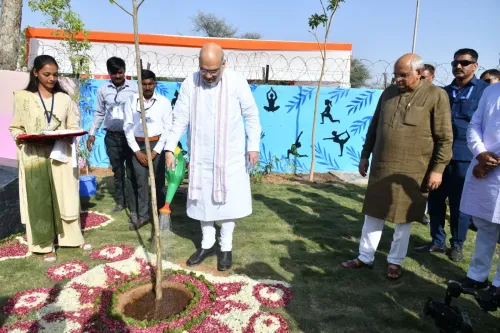
The drive is part of the national 'Ek Ped Maa Ke Naam' campaign led by Prime Minister Narendra Modi and implemented in Gujarat under Chief Minister Bhupendra Patel .
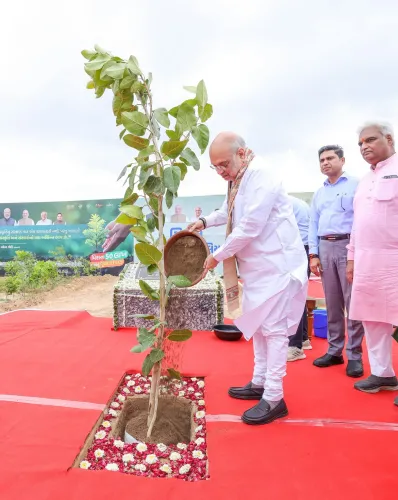
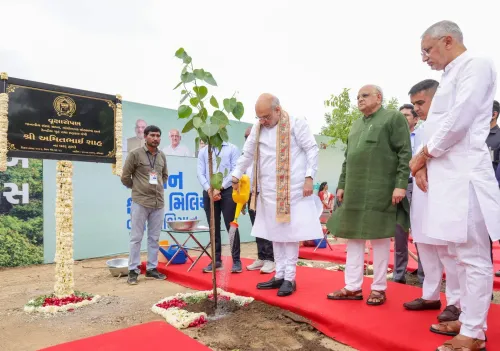
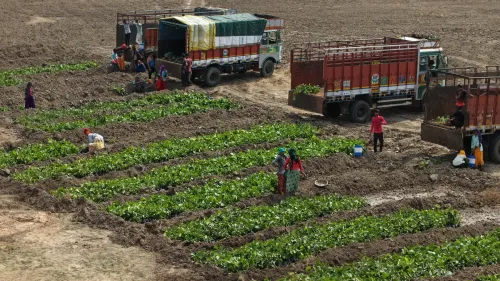
Large stretches of barren and saline land across Ahmedabad and Gandhinagar districts are being reclaimed and transformed into green corridors under a large-scale afforestation initiative targeting 1.25 crore trees across the Gandhinagar Lok Sabha constituency in 2025. The programme, known as the Gandhinagar Green Lok Sabha Project, is being led under the direction of Union Home Minister Amit Shah and focuses on restoring degraded ecosystems through native species plantation.
Ground Zero: The Kanotar Restoration Site
One of the project's flagship sites is a 23-hectare grazing land at Kanotar village, approximately 30 km from Bavla in Ahmedabad district. Until recently, the area was severely affected by salinity and overrun with invasive Prosopis juliflora — locally called gando baval — rendering it largely unproductive.
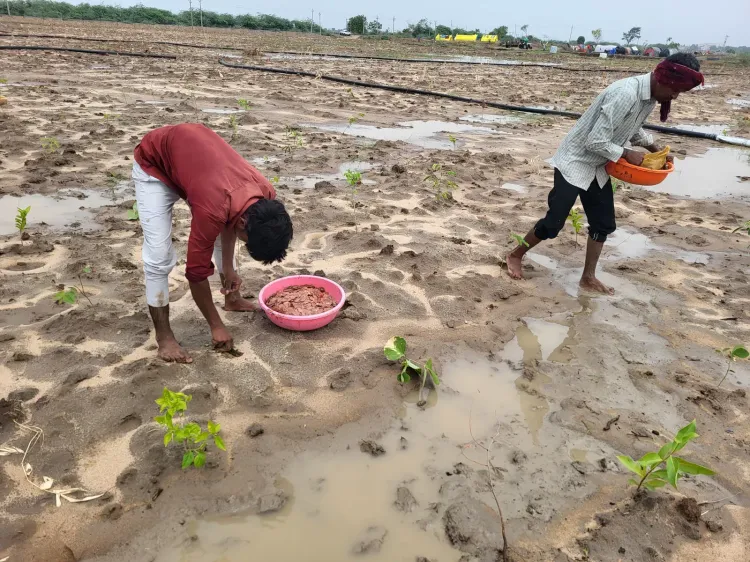
The Gujarat Forest Department has since cleared the invasive vegetation, carried out deep ploughing, and treated the soil with gypsum, farmyard manure, fertilisers, and other soil conditioners to restore fertility. Plantation of 2.30 lakh trees has begun at this site alone, the majority comprising native species. The land has been fenced for protection, and a solar-powered borewell has been installed to support irrigation.
Scale of the Drive Across Two Districts
Kanotar is one of 82 plantation sites spread across Ahmedabad and Gandhinagar districts where similar restoration work is under way. According to the project plan, the Gujarat Forest Department will plant 60 lakh saplings across 540.92 hectares at these locations as part of the overall target. The remaining saplings are being planted at sites across the wider Gandhinagar parliamentary constituency.
The drive is part of the national 'Ek Ped Maa Ke Naam' campaign launched under the leadership of Prime Minister Narendra Modi, which encourages citizen participation in tree planting. In Gujarat, the campaign is being implemented under the guidance of Chief Minister Bhupendra Patel.
Native and Threatened Species at the Core
Vinod Rao, Principal Chief Secretary of the Gujarat Forest and Environment Department, said the project deliberately avoids fast-growing exotic varieties in favour of species suited to local conditions. 'Under this campaign, instead of fast-growing trees, species suitable to the local conditions of Ahmedabad and Gandhinagar districts have been selected. The Forest Department will plant a total of 121 plant species, of which 80 are native species. Moreover, out of more than 6.05 lakh saplings, 24 species belong to rare, endangered and threatened categories,' Rao said.
Native species selected for plantation include Kumkum (Mallotus sp.), Silk Cotton Tree, Kampilo, Kilai, Chamuli, Wild Drumstick, White Siris, Wild Guava, Kanchanar, Yellow Kesudo, Soapnut, White Teak, and White Gambhar, among others.
Biodiversity and Climate Resilience Goals
Rao explained that the choice of native species is intended to rebuild functional ecosystems rather than merely add tree cover. 'Planting native tree species will attract birds, butterflies and insects that depend on these trees, creating a vibrant ecosystem. Native trees provide food, shelter and breeding habitats for local birds, reptiles, butterflies, bees and other pollinators,' he said.
He added that 'the flowers, fruits and leaves of native plants provide nourishment to birds and other insects throughout the year, while dense vegetation creates safe movement corridors for small animals. Restored land, improved moisture retention and enhanced biodiversity make these habitats stronger and more resilient to climate change.'
According to the Forest Department, as the plantations mature, they are expected to improve ecological balance, support pollination networks, and establish self-sustaining ecosystems across the restored landscapes — a long-term bet on climate resilience in a region historically prone to salinity and land degradation.
Point of View
Which routinely boosted tree-count numbers while impoverishing biodiversity. The inclusion of 24 rare and threatened species signals intent beyond carbon optics. The real test will be survival rates three years out: India's plantation programmes have a well-documented gap between saplings planted and trees that survive. Whether the solar-powered irrigation and fencing model at Kanotar is replicated with the same rigour across all 82 sites — or whether it remains a showcase plot — will determine whether this is genuine ecological restoration or another headline number.
NationPress
10 Oct 2026
Frequently Asked Questions
What is the Gandhinagar Green Lok Sabha Project?
It is a large-scale afforestation initiative targeting the plantation of 1.25 crore trees across the Gandhinagar Lok Sabha constituency in 2025. The project is being undertaken under the direction of Union Home Minister Amit Shah and focuses on restoring barren and saline land using predominantly native tree species.
Where is the plantation work being carried out?
Restoration and plantation work is under way at 82 sites across Ahmedabad and Gandhinagar districts, covering a total of 540.92 hectares. One flagship site is a 23-hectare plot at Kanotar village, about 30 km from Bavla in Ahmedabad district.
What makes this afforestation drive different from others?
The project plants 121 species, of which 80 are native to the region and 24 belong to rare, endangered, or threatened categories — a deliberate shift away from fast-growing exotic varieties. Officials say the focus on native species is intended to rebuild functional ecosystems that support birds, pollinators, and small animals.
How is the Kanotar site being restored?
The Gujarat Forest Department cleared invasive Prosopis juliflora (gando baval), carried out deep ploughing, and treated the soil with gypsum, farmyard manure, and fertilisers. A solar-powered borewell has been installed for irrigation, and the land has been fenced for protection. Plantation of 2.30 lakh trees has begun at the site.
Is this connected to any national campaign?
Yes. The drive is part of the 'Ek Ped Maa Ke Naam' campaign launched under Prime Minister Narendra Modi, which encourages public participation in tree planting. In Gujarat, the campaign is being implemented under Chief Minister Bhupendra Patel.