Gujarat's Van Kavach model to cover 1,100 hectares in 2026-27, 600 in Gandhinagar
Synopsis
Gujarat's home-grown Van Kavach model — a locally adapted rival to Japan's Miyawaki technique — is about to more than double its cumulative footprint in a single year, with 1,100 new hectares planned for 2026-27. More than half will land in Amit Shah's own Gandhinagar constituency, making this as much a political statement as an ecological one.
Key Takeaways
Gujarat's Van Kavach model will expand to 1,100 hectares of new plantations in 2026-27 , the largest annual push since its launch in 2023 .
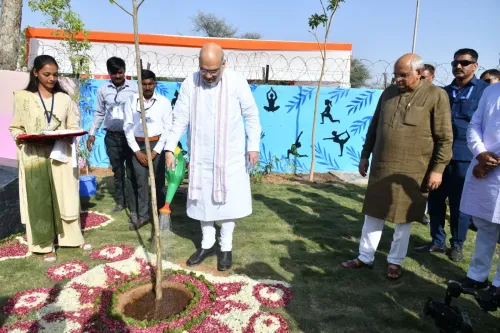
600 hectares across 82 sites will be developed in the Gandhinagar Lok Sabha constituency under Union Home Minister Amit Shah's Green Lok Sabha initiative.
Gujarat's largest plantation cluster — the 'Maha Van Kavach' — spans over 100 hectares at Godhavi village near Ahmedabad.
1.25 crore saplings are planned across the Gandhinagar constituency; around 60 lakh will be planted by the Forest Department using the Van Kavach model.
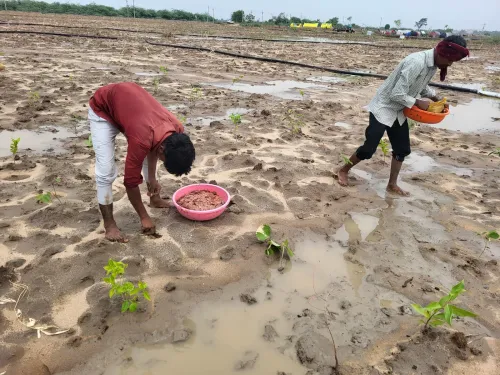
The model uses approximately one tree per square metre and prepares 10,000 pits per hectare , differing from the Miyawaki method's denser planting approach.
Cumulative Van Kavach coverage reached 600 hectares by 2026, growing from 100 hectares at launch in 2023 .
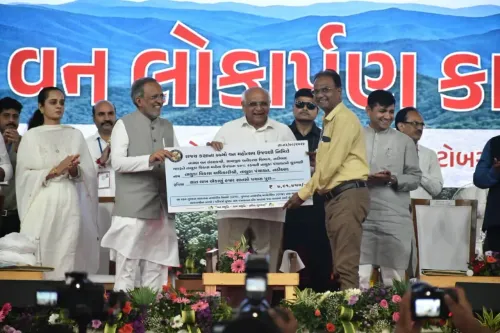
Gujarat's indigenous Van Kavach afforestation model is set to expand to 1,100 hectares during 2026-27, with more than half — 600 hectares — concentrated in the Gandhinagar Lok Sabha constituency under Union Home Minister Amit Shah's Green Lok Sabha initiative, according to the state Forest Department. The scale-up marks the model's most ambitious annual push since its introduction in 2023.
Key Developments
Principal Secretary of the Forest and Environment Department, Vinod Rao, confirmed that 82 Van Kavach sites spanning 600 hectares will be developed across Ahmedabad and Gandhinagar districts under the Green Lok Sabha project. Among these, Gujarat's largest plantation cluster — a 'Maha Van Kavach' of over 100 hectares — is being developed at Godhavi village near Ahmedabad.
Under the broader Green Lok Sabha campaign, 1.25 crore saplings are planned across the Gandhinagar parliamentary constituency, of which around 60 lakh will be planted by the Forest Department in Ahmedabad and Gandhinagar districts using the Van Kavach model.
How Van Kavach Has Grown
The Van Kavach model was first deployed across more than 100 hectares in 2023. Coverage was scaled to 200 hectares in 2024-25 and further to 400 hectares in 2025-26. By 2026, the cumulative area under the model had reached 600 hectares. The 500 new Van Kavach sites planned for 2026-27 would more than double that cumulative footprint in a single year.
The initiative is positioned within a wider national framework. The state government has linked it to Prime Minister Narendra Modi's nationwide 'Ek Ped Maa Ke Naam' tree plantation campaign, while Gujarat has also run parallel plantation drives through the Van Mahotsav programme under Chief Minister Bhupendra Patel.
Van Kavach vs the Miyawaki Method
The Van Kavach model was developed by the Gujarat Forest Department as a locally adapted alternative to Japan's Miyawaki afforestation technique. While the Miyawaki method typically plants three to five saplings per square metre to drive rapid growth through natural competition, Van Kavach uses approximately one tree per square metre — greater spacing designed to suit the broad canopies and extensive root systems of India's indigenous species.
Site preparation also differs: Van Kavach prepares only individual planting pits rather than replacing soil across the entire site. Around 10,000 pits are prepared per hectare, with pit sizes varying by species. Officials say this allows roots to penetrate undisturbed soil, improving tree stability against storms and strong winds.
Ecological Design and Biodiversity Goals
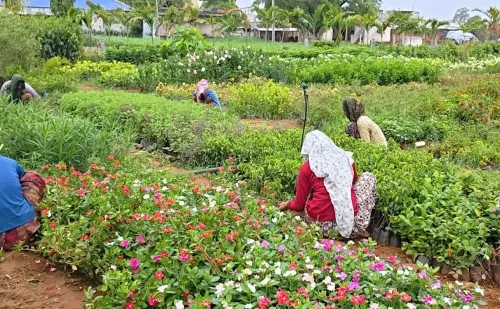
Van Kavach plantations are structured to replicate natural forests, incorporating upper-canopy, middle-storey, and lower-storey vegetation. The department says this layered design is intended to improve habitats for birds, butterflies, pollinating insects, reptiles, mammals, and soil microorganisms.
The model prioritises indigenous species naturally suited to Gujarat's climate, requiring limited external inputs. Long-term objectives include restoring degraded land, increasing carbon sequestration, enhancing soil health, conserving moisture, and strengthening climate resilience, according to the Forest Department.
What Comes Next
With 500 new sites and 1,100 hectares of fresh plantations planned statewide in 2026-27, the Van Kavach model's trajectory will be closely watched as a potential template for other states seeking locally adapted, biodiversity-focused afforestation at scale.
Point of View
And degraded land requiring restoration is not uniformly distributed around parliamentary boundaries. The model's long-term test will be survival rates and biodiversity outcomes a decade from now — metrics that rarely make headlines but determine whether these are forests or photo opportunities.
NationPress
9 Oct 2026
Frequently Asked Questions
What is Gujarat's Van Kavach afforestation model?
Van Kavach is an indigenous afforestation model developed by the Gujarat Forest Department as a locally adapted alternative to Japan's Miyawaki technique. It uses approximately one tree per square metre — wider spacing than Miyawaki — and prepares individual planting pits rather than replacing soil across entire sites, to suit the growth characteristics of India's native tree species.
How does Van Kavach differ from the Miyawaki method?
The Miyawaki method plants three to five saplings per square metre to drive rapid growth through competition, while Van Kavach uses roughly one tree per square metre to allow indigenous species with broad canopies and deep root systems to develop more naturally. Van Kavach also preserves the soil's natural condition by preparing only planting pits, rather than replacing soil across the full site.
Why is 600 of the 1,100 new hectares being developed in Gandhinagar?
The 600-hectare allocation in Gandhinagar falls under Union Home Minister Amit Shah's Green Lok Sabha initiative, which targets 1.25 crore saplings across the Gandhinagar parliamentary constituency. Of these, around 60 lakh will be planted by the Forest Department using the Van Kavach model across Ahmedabad and Gandhinagar districts.
What is the 'Maha Van Kavach' at Godhavi village?
The Maha Van Kavach at Godhavi village near Ahmedabad is described as Gujarat's largest single Van Kavach plantation, spanning over 100 hectares. It is being developed as part of the 82 Van Kavach sites planned under the Gandhinagar Green Lok Sabha Project.
How has the Van Kavach model grown since its launch?
The Forest Department first deployed Van Kavach across more than 100 hectares in 2023. Coverage grew to 200 hectares in 2024-25 and 400 hectares in 2025-26, reaching a cumulative 600 hectares by 2026. The 1,100 hectares of new plantations planned for 2026-27 would more than double that cumulative total in a single year.