CM Sukhu Launches Robotic Surgery in 4 HP Medical Colleges
Synopsis
CM Sukhvinder Singh Sukhu announces robotic surgery at four Himachal Pradesh government medical colleges, launches SRships at IGMC Shimla and Tanda, and proposes bond-rule relief for MOs pursuing postgraduate degrees — targeting a chronic specialist shortage in the hilly state.
Key Takeaways
Robotic surgery has been introduced in four government medical colleges in Himachal Pradesh, with CM Sukhu stating no such facility exists in other North Indian government hospitals.
The initiative is designed to give postgraduate medical students hands-on training in advanced surgical technology, improving specialist quality.
Senior Residency (SRship) positions are being launched at IGMC Shimla and Tanda Medical College in Kangra district.
The state government is considering relaxing bond rules for MOs selected for PG courses, allowing them to finish their degree before serving the bond period.
The package of measures targets Himachal Pradesh's long-standing challenge of retaining specialist doctors in a geographically difficult, mostly rural state.
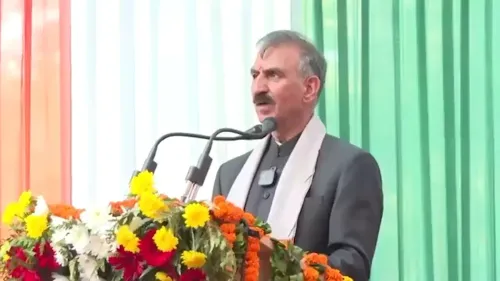
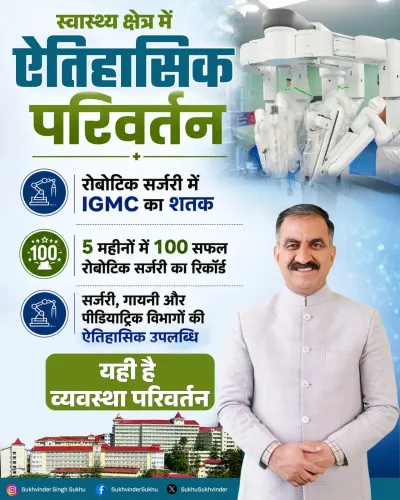
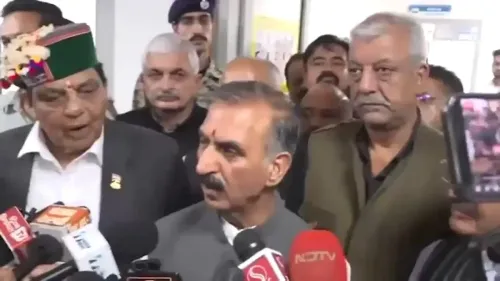
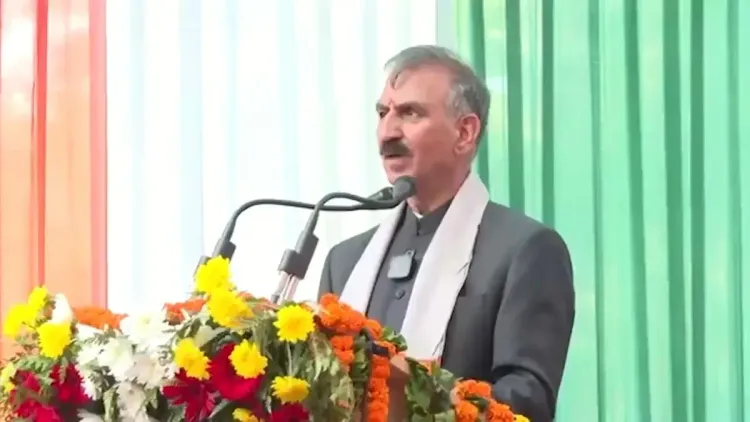
A state government in the hills has just leapfrogged its bigger neighbours in the operating theatre. Himachal Pradesh Chief Minister Sukhvinder Singh Sukhu announced on Tuesday, 27 October 2026, that robotic surgery has been introduced in four government medical colleges across the state — a capability he says is currently unavailable in any other government hospital in North India.
Robotic theatres where few governments dare
Posting in Hindi, CM Sukhu framed the move squarely as a training dividend: 'इससे हमारे PG के विद्यार्थियों को आधुनिक तकनीक सीखने और बेहतर विशेषज्ञ बनने का अवसर मिलेगा' — 'This will give our postgraduate students the opportunity to learn modern technology and become better specialists.' Robotic-assisted surgery allows surgeons to operate through tiny incisions with camera-guided precision; for trainees, hands-on access to such systems during residency can define the arc of an entire career. Himachal Pradesh, a hilly state where geography has long complicated healthcare delivery, is betting that equipping its own colleges will produce specialists who stay.
SRship at IGMC and Tanda — and the bond-rule rethink
The announcement bundled two further moves. Senior Residency positions — known as SRships — are being launched at Indira Gandhi Medical College (IGMC) in Shimla and at Dr. Rajendra Prasad Government Medical College in Tanda, Kangra district, two of Himachal's most prominent public teaching hospitals. SRships are a critical post-MD/MS training rung that deepens clinical expertise and fills a structural gap between newly qualified specialists and senior faculty.
Equally significant is the proposed relief on bond rules for Medical Officers (MOs) who have been selected for postgraduate courses. Under current norms, government doctors on bond are obligated to serve the state for a fixed period; the revised proposal would let them complete their PG degree first, serving the bond period afterwards. The Chief Minister said this is 'विचाराधीन' — under consideration — signalling a policy shift is in motion, though not yet formalised.
The specialist shortage behind the headline
Himachal Pradesh's moves sit inside a wider national pattern. Smaller states with difficult terrain consistently struggle to retain specialist doctors in the public system — candidates qualify, complete bonds, and migrate to private practice or better-resourced cities. Robotic surgery suites raise the prestige and training value of government postings. Bond relaxations reduce the immediate career cost of choosing a government PG seat. Together, they attack the specialist drought from two sides: attraction and retention.
Several Indian states have piloted robotic surgery in select government institutes, but the rollout has been concentrated in large metro hospitals. Himachal's claim to four colleges simultaneously — in a state of roughly 7.5 million people spread across mountainous terrain — is an unusually aggressive push for a government health system of its size.
Specific rollout timelines for the four facilities and any formal gazette notification on bond-rule amendments remain to be confirmed by the state health department. What is already on the table, however, is a clear signal: Himachal Pradesh is willing to spend political and financial capital to make government medicine attractive enough to compete.
Point of View
The state raises the training prestige of government postings to a level that rivals private medical centres — a direct counter to the brain-drain pull. The proposed bond-rule relaxation is equally strategic: it removes the career-penalty that currently discourages government MOs from pursuing PG seats, which means more state-trained specialists, not fewer, will cycle back into public service. Taken together, the moves reflect a Congress government in Shimla trying to turn healthcare infrastructure into a political differentiator ahead of the next electoral cycle, while genuinely addressing a structural deficit that no party has fully cracked in smaller Indian states.
NationPress
27 Oct 2026
Frequently Asked Questions
Which medical colleges in Himachal Pradesh have robotic surgery now?
CM Sukhu announced robotic surgery in four government medical colleges in Himachal Pradesh, including IGMC Shimla and Tanda Medical College in Kangra. The exact names of all four institutions have not been officially listed in the announcement.
What is an SRship and why is it being launched at IGMC and Tanda?
A Senior Residency (SRship) is a post-MD/MS training position that gives newly qualified specialists deeper clinical experience. Launching SRships at IGMC Shimla and Tanda Medical College creates structured pathways for specialist development within Himachal Pradesh's own government hospitals.
What is the bond rule for government doctors in Himachal Pradesh?
Government Medical Officers in Himachal Pradesh are required to serve the state for a fixed bond period. Under the proposed change, MOs selected for postgraduate courses would be allowed to complete their PG degree first and serve the bond period afterwards, rather than interrupting their studies.
Is robotic surgery available in any other North Indian government hospitals?
CM Sukhu has claimed that robotic surgery is not currently available in other North Indian government hospitals. This specific claim cannot be independently verified from publicly available data.
Why is Himachal Pradesh facing a specialist doctor shortage?
Like many hilly and geographically dispersed states, Himachal Pradesh struggles to retain specialist doctors in the public system. Doctors often leave for better-paying private practice or urban postings after completing their bond period, leaving rural and semi-urban government hospitals under-served.