HP CM Office: Robotic Surgery Launched in 4 Medical Colleges
Synopsis
Himachal Pradesh has launched robotic surgery at four government medical colleges, with the state's Chief Minister's Office claiming it is the first such deployment in public hospitals across North India, aimed at advancing postgraduate medical training.
Key Takeaways
The Chief Minister's Office of Himachal Pradesh announced robotic surgery at four government medical colleges on October 27, 2026 .
The state claims this is the first deployment of robotic surgical facilities in government hospitals across North India .
PG medical students are a stated primary beneficiary, gaining hands-on exposure to advanced surgical technology during training.
India's public-sector robotic surgery rollout has historically lagged in northern states compared to southern ones, with central institutes like AIIMS being early exceptions.
Specific college names, vendor details, and patient access timelines have not yet been disclosed by the state government.
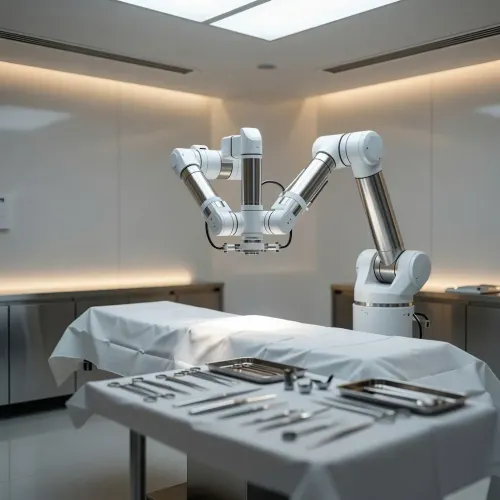
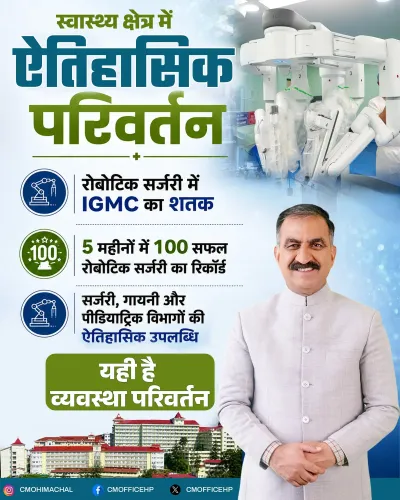
A quiet revolution is underway in Himachal Pradesh's public hospitals. The Chief Minister's Office of Himachal Pradesh announced on Tuesday, October 27, 2026 that the state has launched robotic surgery facilities across four government medical colleges — a first for the public health sector in northern India, according to the state government.
The post, shared in Hindi, states: 'हमने हिमाचल प्रदेश के चार मेडिकल कॉलेजों में रोबोटिक सर्जरी शुरू की है, जबकि उत्तर भारत के सरकारी अस्पतालों में यह सुविधा उपलब्ध नहीं है।' ('We have started robotic surgery in four medical colleges of Himachal Pradesh, while this facility is not available in government hospitals of North India.') The announcement goes on to highlight that postgraduate medical students will now have direct access to advanced surgical technology, shaping them into more capable specialists.
Why PG Students Stand to Gain the Most
Robotic-assisted surgery demands a distinct skill set — one that has historically been confined to elite private hospitals and a handful of premier central institutes. For PG medical students in Himachal Pradesh's government colleges, proximity to this technology during their formative training years closes a gap that has long separated graduates of well-funded private institutions from those in state systems. The state government's framing is deliberate: this is as much an education upgrade as a patient-care upgrade.
Across India, robotic surgery entered the public sector incrementally — early deployments at institutes like AIIMS New Delhi set the benchmark, and southern states moved faster than northern ones in rolling out similar systems at the government level. Himachal Pradesh's claim, if borne out, would mark a meaningful inflection point for the Hindi-belt public health ecosystem.
Northern India's Public-Sector Gap in Surgical Technology
The state's assertion that no comparable facility exists in government hospitals across North India underscores a persistent structural divide: advanced surgical robotics in the public sector has largely been a southern and western story. States like Tamil Nadu and Karnataka have seen earlier adoption, while large northern states have lagged, leaving patients who cannot afford private care with limited access to precision procedures.
Himachal Pradesh — a smaller, mountainous state with a relatively contained public health network — has positioned itself as an outlier in this geography. The rollout across four medical colleges simultaneously suggests a deliberate policy push rather than a pilot at a single flagship institution.
What the State Has Not Yet Said
Details that would sharpen the picture — the names of the four colleges, the technology vendor or vendors involved, the surgical specialties initially covered, and a timeline for patient access — have not been specified in the announcement. Outcome data and capacity figures will be the real test of impact. Watchers of Himachal Pradesh's health policy will track whether this translates into measurable gains in surgical outcomes and specialist retention within the state.
For now, the signal is clear: Himachal Pradesh has made a calculated bet that equipping its public medical colleges with cutting-edge surgical robotics will both attract and produce a new generation of specialists — and in doing so, has raised the bar for every northern state still on the sidelines.
Point of View
Nimbler states using targeted infrastructure upgrades to leapfrog larger neighbours on specific health metrics. The explicit framing around postgraduate training — rather than just patient outcomes — signals a dual strategy: improve care while also retaining and attracting specialist talent within the state system. If the claim of a North Indian public-sector first holds, it creates political and policy pressure on larger states like Uttar Pradesh and Punjab to accelerate similar investments. The announcement's impact, however, will ultimately be measured by utilisation data and specialist retention figures, not the launch itself.
NationPress
28 Oct 2026
Frequently Asked Questions
Which four medical colleges in Himachal Pradesh have robotic surgery?
The Chief Minister's Office has not yet named the four specific government medical colleges where robotic surgery has been launched. Further details are awaited from the state health department.
Is robotic surgery available in government hospitals in North India?
According to the Himachal Pradesh government's announcement, no other government hospital in North India currently offers robotic surgery — though this claim has not been independently verified.
How does robotic surgery benefit PG medical students?
Robotic-assisted surgery exposes postgraduate students to precision technology during training, equipping them with advanced skills that have historically only been accessible in elite private institutions or select central institutes.
Which Indian states already have robotic surgery in government hospitals?
Southern states like Tamil Nadu and Karnataka, along with central institutes such as AIIMS New Delhi, have been earlier adopters of robotic surgery in the public sector. Northern states have generally lagged behind.
What is the significance of Himachal Pradesh launching robotic surgery in government colleges?
It represents a significant infrastructure leap for public healthcare in North India, narrowing the technology gap between government and private medical institutions and potentially improving both training quality and patient outcomes.