HP CM Office Greets Doctors, Flags Robotic Surgery Push
Synopsis
The Chief Minister's Office of Himachal Pradesh marked National Doctors' Day on 1 July 2026 by greeting physicians and highlighting the state's push to introduce robotic surgery and MRI facilities in government medical colleges to modernise and broaden healthcare access.
Key Takeaways
National Doctors' Day is observed on 1 July every year in honour of Dr.
Bidhan Chandra Roy , since 1991 .
The Himachal Pradesh CMO used the occasion to publicly reaffirm the state's healthcare modernisation agenda.
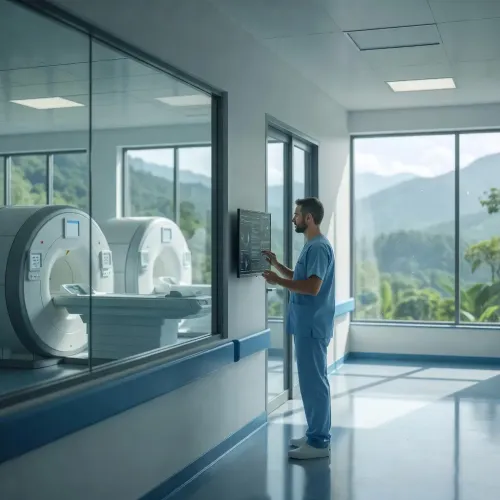
The government cited plans to introduce robotic surgery and MRI scanners in state medical colleges.
Himachal Pradesh operates government medical colleges at Shimla , Tanda , Hamirpur , and other locations.
The initiative aligns with the National Health Policy 2017 emphasis on technology-enabled tertiary care in public institutions.
Operationalisation timelines and funding details for the advanced equipment remain to be confirmed officially.
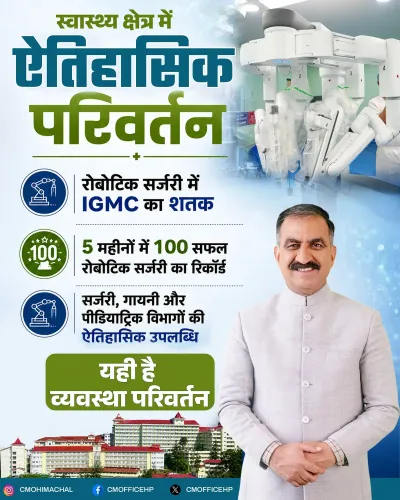
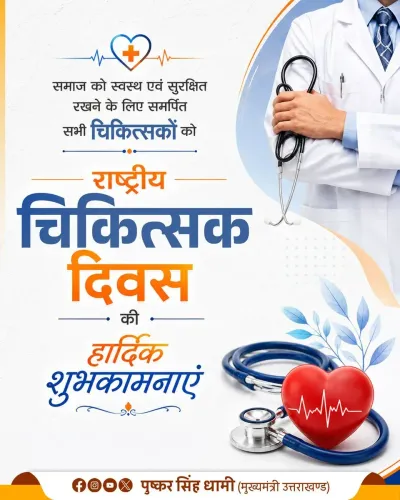
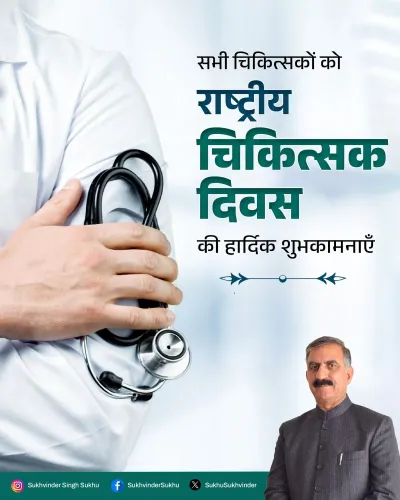
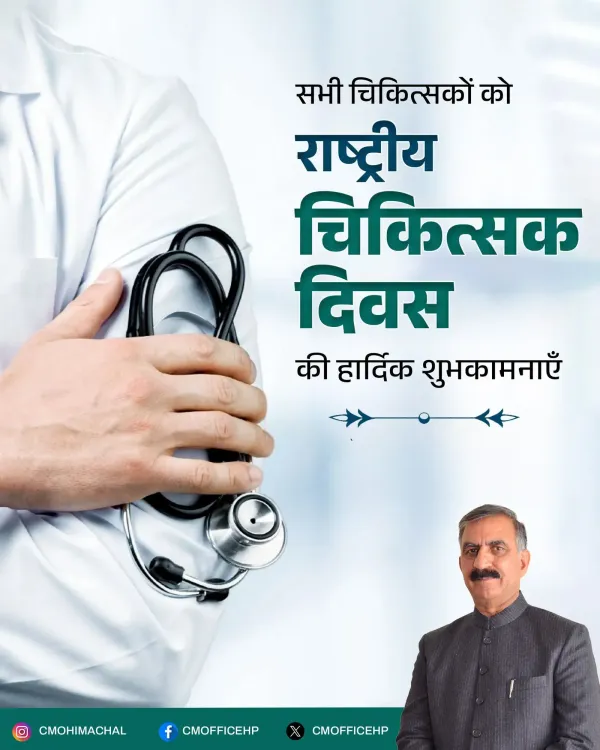
The Chief Minister's Office of Himachal Pradesh on Wednesday, 1 July 2026, extended greetings to all physicians on National Doctors' Day and highlighted the state government's drive to equip its medical colleges with robotic surgery platforms, MRI scanners, and other advanced technologies to make healthcare more robust, accessible, and modern.
The post, shared in Hindi, conveyed: 'Manav seva ko sarvochch dharm maankar apna jeevan samarpit karne wale sabhi chikitsakon ko Rashtriya Chikitsak Divas ki hardik shubhkamnayein' — 'Heartfelt greetings on National Doctors' Day to all physicians who have dedicated their lives to the service of humanity as the highest calling.' It went on to note that efforts are under way in the state to strengthen, make accessible, and modernise health services through facilities including robotic surgery and MRI in medical colleges.
Context
National Doctors' Day is observed across India every year on 1 July to honour the memory of Dr. Bidhan Chandra Roy — eminent physician, freedom fighter, and former Chief Minister of West Bengal — whose birth and death anniversary both fall on this date. The observance has been held nationally since 1991. It serves as an occasion for governments at the Centre and in the states to acknowledge the public-service role of the medical community and to announce or reiterate healthcare commitments.
Policy Backdrop
Himachal Pradesh, a hilly northern state with challenging terrain and dispersed populations, has incrementally built out its government medical college network since the mid-2000s, with institutions at Shimla, Tanda, Hamirpur, and other locations. The flagship Indira Gandhi Medical College, Shimla functions as the apex referral centre and has historically been the entry point for advanced clinical technologies in the state system.
The push to introduce robotic surgery and high-end imaging such as MRI in public medical colleges aligns with a broader national pattern. State governments across India have been investing in these platforms to reduce patient referrals to metropolitan hospitals, retain specialist physicians outside large cities, and fulfil the technology-enabled secondary and tertiary care goals set out in the National Health Policy 2017.
Stakeholders and Impact
The primary beneficiaries of upgraded facilities would be patients in Himachal Pradesh's hilly and remote districts, who currently face long travel distances to access specialist care. Medical college faculty and resident doctors would also gain training exposure to robotic-assisted surgical techniques, strengthening the specialist pipeline within the state.
For the broader medical community, the government's public acknowledgement on National Doctors' Day of ongoing infrastructure investment signals continued institutional support — a message of particular relevance given recurring concerns in public health circles about specialist retention in non-metro postings.
What's Next
Attention will now turn to budget allocations and tendering timelines for robotic surgery systems in the newer medical colleges, as well as any partnership frameworks with equipment manufacturers covering training and long-term maintenance. The government's stated intent to make services 'sudriddh, sulabh evam aadhunik' — 'robust, accessible, and modern' — will be measured against the pace at which these capital investments are operationalised on the ground.
Point of View
The symbolism carries practical weight. The announcement fits a nationwide pattern of state governments using high-visibility medical technologies to assert capability and compete for specialist talent. Whether the capital investment follows through at the pace implied will be the real test of the commitment.
NationPress
29 Sept 2026
Frequently Asked Questions
Why is National Doctors' Day celebrated on 1 July in India?
National Doctors' Day in India is observed on 1 July every year to mark the birth and death anniversary of Dr. Bidhan Chandra Roy , the eminent physician and former Chief Minister of West Bengal. The observance has been held since 1991 .
Which medical colleges in Himachal Pradesh are getting robotic surgery facilities?
The Himachal Pradesh government has indicated plans to introduce robotic surgery and MRI in state medical colleges, including institutions at Shimla , Tanda , and Hamirpur . Specific operational timelines have not yet been officially confirmed.
What did the Himachal Pradesh CM Office say on National Doctors' Day 2026?
The Chief Minister's Office of Himachal Pradesh extended greetings to all physicians on 1 July 2026 and highlighted the state's efforts to make healthcare 'robust, accessible, and modern' through robotic surgery and MRI facilities in medical colleges.
What is the National Health Policy 2017 and how does it relate to robotic surgery in public hospitals?
The National Health Policy 2017 emphasises technology-enabled secondary and tertiary care in public health institutions. States introducing robotic surgery and advanced imaging in government medical colleges are broadly aligned with this policy direction to reduce referrals to metro hospitals.
What is Indira Gandhi Medical College Shimla?
Indira Gandhi Medical College (IGMC), Shimla is the premier state-run medical institution in Himachal Pradesh and serves as the apex referral centre for the state, historically the first point for introducing advanced clinical technologies in the public health system.