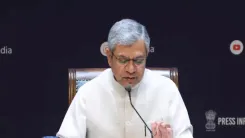
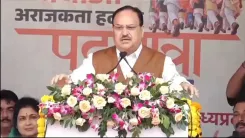
Nadda backs Amit Shah's 'Detect, Delete, Deport' on infiltrators
Synopsis
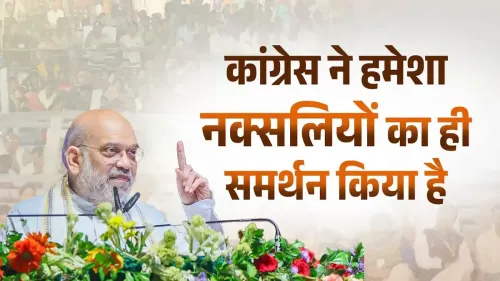
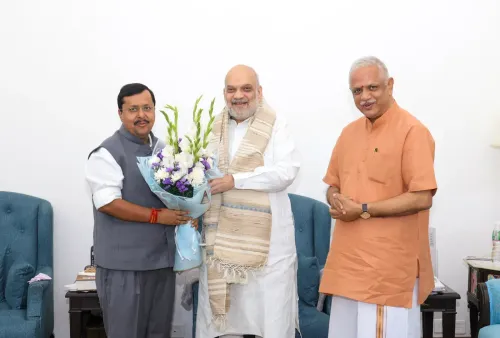
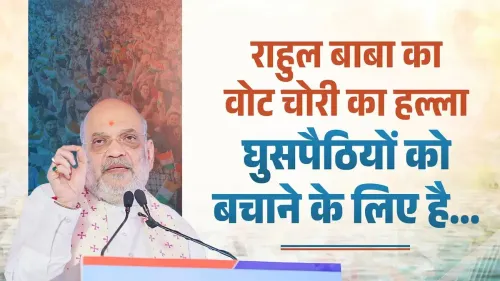
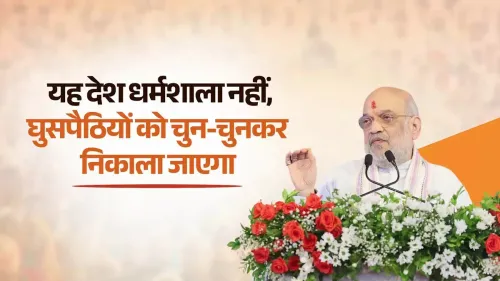
Union Health Minister J. P. Nadda amplified Amit Shah's 'Detect, Delete, Deport' message on illegal immigrants, sharply contrasting BJP's deportation stance with what he called Congress and INDIA Alliance policies that normalise infiltrators for political gain.
Key Takeaways
Nadda on 4 November 2026 publicly backed Amit Shah 's 'Detect, Delete, Deport' formulation on illegal immigrants.
Nadda accused the Congress and INDIA Alliance of seeking to normalise, identify, and politically integrate infiltrators.
The post is anchored to BJP's existing policy toolkit: the Citizenship Amendment Act (2019) , the Assam NRC (2019) , and the Assam Accord of 1985 .
The hashtag #SaveDemocracyRemoveAnarchy frames immigration enforcement as a democratic-order issue, not merely a security one.
The debate remains most politically charged in Assam and West Bengal , where illegal immigration has influenced elections for decades.
Three words cut through the noise on illegal immigration — and Union Health Minister J. P. Nadda made sure they landed. On Wednesday, 4 November 2026, Nadda amplified Union Home Minister Amit Shah's hardline formulation on infiltrators: 'Detect, Delete, Deport' — a crisp three-point doctrine that the BJP is now holding up as the defining contrast between its governance philosophy and what it describes as the opposition's accommodationist approach.
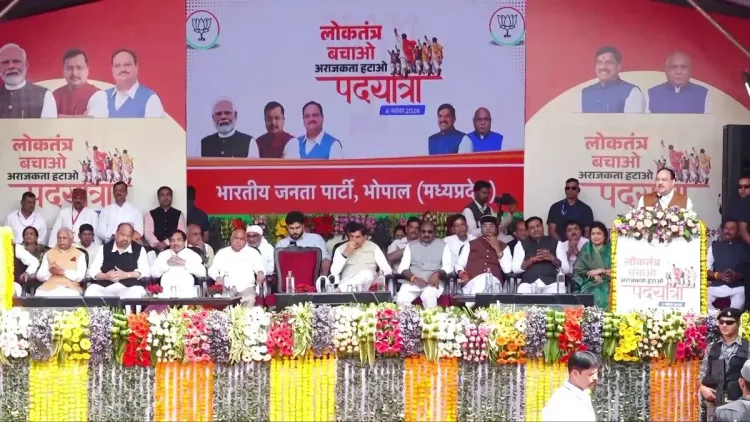
Posting under the hashtag #SaveDemocracyRemoveAnarchy, Nadda drew a sharp, unambiguous line. Shah's message, he wrote, is clear — identify infiltrators, remove them, deport them. The Congress and the INDIA Alliance, he charged, want to 'normalise infiltrators, give them identity, and make them part of the political system.' The prescription, Nadda argued, is to reject those policies outright in the interest of national security.The 'Detect, Delete, Deport' doctrine and its BJP lineage
The three-word formulation is the latest iteration of a policy posture the BJP has pursued through two landmark instruments. The Citizenship Amendment Act (CAA), enacted in 2019, created a fast-track citizenship pathway for non-Muslim refugees from Afghanistan, Bangladesh, and Pakistan. That same year, the National Register of Citizens (NRC) exercise in Assam — conducted under Supreme Court oversight — was completed, its explicit purpose being to filter out post-1971 migrants. Both moves flow from the Assam Accord of 1985, which fixed 24 March 1971 as the cut-off date for identifying and deporting illegal entrants from across the eastern border.
Together, these form the scaffolding behind Nadda's post. The BJP frames the issue as existential for border states: demographic pressure, strained public resources, and what it calls a security threat. That framing has been especially resonant in Assam and West Bengal, where the politics of infiltration has shaped elections for decades.
The charge against Congress and the INDIA Alliance
Nadda's attack on the Indian National Congress and the INDIA Alliance is not new, but the framing is sharpening. The BJP's long-running accusation is that successive Congress-led governments looked the other way on illegal immigration — not out of negligence, but out of calculated electoral interest, particularly in Assam and West Bengal. Nadda's post crystallises that charge into a binary: one side detects and deports; the other integrates and enfranchises.
The opposition has consistently rejected this framing, arguing that the NRC and CAA combination targets Muslim citizens and creates a discriminatory citizenship architecture. That counter-narrative is not reflected in Nadda's post, which stays entirely within the BJP's security-and-sovereignty framing.
What the hashtag signals
#SaveDemocracyRemoveAnarchy is a campaign signal as much as a policy statement. It places the illegal immigration debate inside a larger BJP narrative about democratic order versus what the party characterises as opposition-enabled disorder. For Nadda, who wears two hats — Union Cabinet Minister and BJP National President — the post is both governance communication and party mobilisation rolled into one.
With state-level deportation drives and potential fresh NRC discussions on the horizon in border states, the 'Detect, Delete, Deport' phrase is likely to become a recurring BJP rallying cry heading into coming electoral cycles.Point of View
The party's national president signals that illegal immigration will remain a frontline issue in upcoming state contests, particularly in border states. The framing deliberately casts the INDIA Alliance's civil-liberties counter-arguments as political cover for vote-bank politics — a charge the BJP has used to effective electoral effect in Assam since 2016. The convergence of Nadda's ministerial authority and party-president role in one post underlines how tightly the BJP integrates government messaging with organisational mobilisation ahead of electoral cycles.
NationPress
4 Nov 2026
Frequently Asked Questions
What is Amit Shah's 'Detect, Delete, Deport' policy on illegal immigrants?
'Detect, Delete, Deport' is Union Home Minister Amit Shah 's stated three-step approach to illegal immigration: identify infiltrators, remove them from records or settlements, and deport them. It builds on existing frameworks like the NRC in Assam and the Assam Accord's 1971 cut-off date .
What did J. P. Nadda say about Congress and the INDIA Alliance on infiltrators?
Nadda alleged that the Congress and INDIA Alliance want to normalise illegal immigrants, give them identity documents, and integrate them into the political system — contrasting this with the BJP's deportation-first stance.
What is the NRC and how does it relate to this debate?
The National Register of Citizens (NRC) , updated in Assam in 2019 under Supreme Court supervision, was designed to identify residents who entered after 24 March 1971 — the cut-off set by the Assam Accord — and exclude them as illegal immigrants.
What is the Citizenship Amendment Act and why is it controversial?
The Citizenship Amendment Act (CAA) , enacted in 2019 , offers fast-track citizenship to non-Muslim refugees from Afghanistan, Bangladesh, and Pakistan . Critics argue its religion-based criterion is discriminatory; the BJP frames it as protection for persecuted minorities.
Why is illegal immigration such a big issue in Assam and West Bengal?
Both states share a long border with Bangladesh and have historically seen large-scale migration. The BJP argues decades of illegal immigration have altered demographics, strained resources, and created security risks — charges that have been central to electoral politics in both states since at least the 1980s .