Amit Shah in Kolhapur: Congress, Uddhav rely on infiltrators as vote bank
Synopsis
Home Minister Amit Shah used a Kolhapur rally to directly accuse Congress and Uddhav Thackeray of surviving on an infiltrator vote bank — and pledged to identify and remove every illegal entrant through Bengal's borders. The speech blended border-security hardball with a sweeping defence of Modi's 12-year record, signalling the BJP's Maharashtra playbook ahead of the next electoral cycle.
Key Takeaways
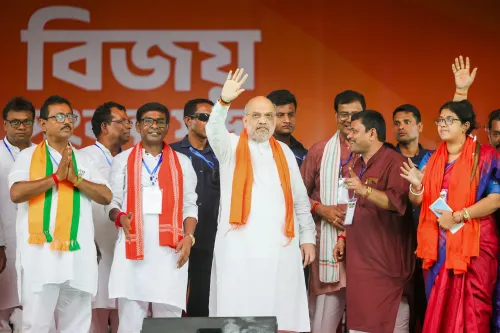
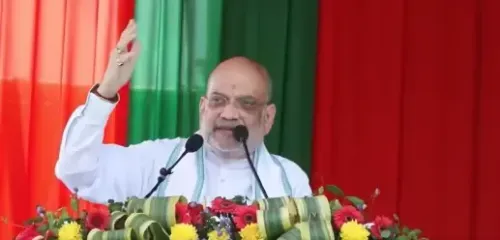
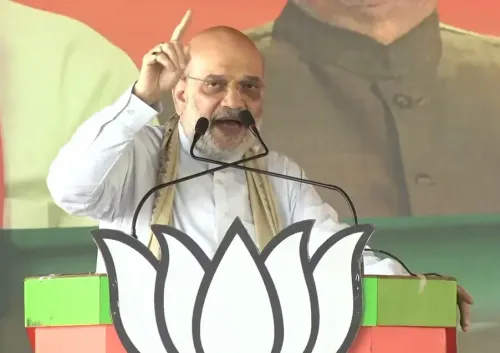
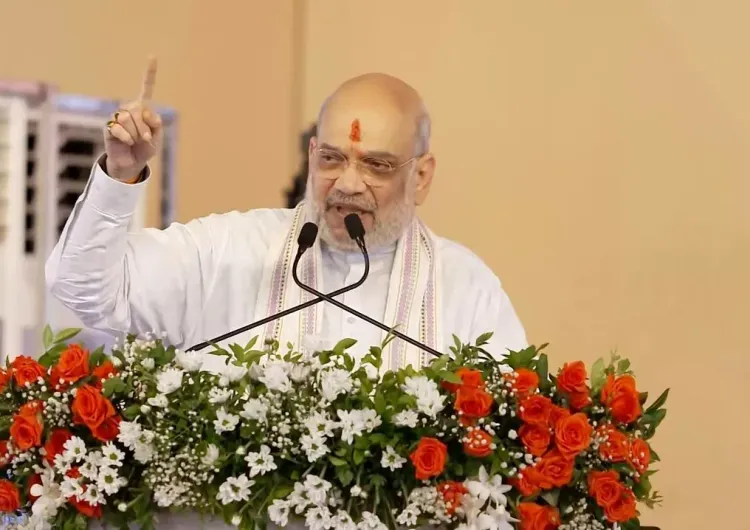
Amit Shah addressed a public rally in Kolhapur, Maharashtra on 20 June , targeting Congress and Shiv Sena (UBT) chief Uddhav Thackeray over alleged reliance on infiltrators as a vote bank.
Shah pledged that infiltration through Bengal's borders will be stopped and every infiltrator 'identified and removed one by one.' He credited PM Modi with being India's longest-serving elected Prime Minister and said the past 12 years will be remembered for Viksit Bharat , cultural renaissance, and global prestige.
Shah highlighted temple redevelopment projects including the Ram Temple in Ayodhya , Kashi Vishwanath Corridor , and the Amba Bai Corridor in Kolhapur as part of the 'Vikas Bhi, Virasat Bhi' agenda.
The rally signals the BJP-led Mahayuti alliance's early campaign strategy in Maharashtra ahead of upcoming elections.
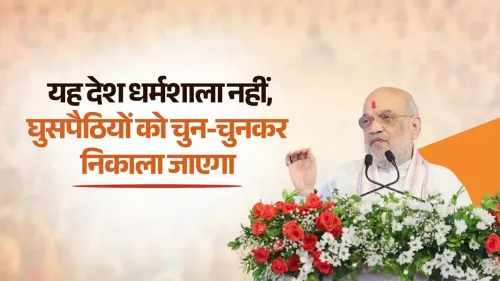
Union Home Minister Amit Shah on Saturday, 20 June launched a sharp attack on the Congress and Shiv Sena (UBT) chief Uddhav Thackeray at a public rally in Kolhapur, Maharashtra, accusing both of depending on illegal infiltrators to sustain their political survival. Shah asserted that India is not a 'Dharamshala' and that the Narendra Modi government is committed to securing every dimension of the country's borders.
Shah's Charge Against the Opposition
Addressing the Kolhapur gathering, Shah directly named Congress and Uddhav Thackeray, alleging they have converted infiltrators into a consolidated vote bank — a charge the opposition has not yet formally responded to. The Home Minister drew a clear contrast, stating that the Bharatiya Janata Party (BJP)-led National Democratic Alliance (NDA) has, over 12 years, expanded its footprint from Somnath to Ganga Sagar and across every state.
He specifically highlighted West Bengal, noting that voters there extended support to the BJP in the last election — a development he described as a significant shift. 'The people of Bengal have given us their blessings, and PM Modi and the BJP owe a debt to the people of Bengal,' Shah said.
Pledge on Border Infiltration
Shah issued a direct assurance on the question of cross-border infiltration, particularly through Bengal's borders. 'I assure you that not only will infiltration across Bengal's borders be stopped, but every infiltrator will also be identified and removed one by one,' he said. The statement carries political weight in Maharashtra, where the ruling Mahayuti alliance has sought to frame illegal immigration as a national security issue ahead of future electoral contests.
Modi's 12-Year Record, Shah's Assessment
Shah credited Prime Minister Modi with setting the record for the longest-serving elected Prime Minister in independent India. He argued that the past 12 years will be remembered in history for three pillars: the building of a Viksit Bharat, a cultural renaissance, and India's rising global stature. He cited rural and urban development, empowerment of the cooperative and dairy sectors, PLI-driven manufacturing growth, and India's emergence in semiconductors, quantum engineering, software, and data centres as markers of that record.
Cultural Renaissance and Temple Redevelopment
A significant portion of Shah's address focused on what he described as a cultural revival under the 'Vikas Bhi, Virasat Bhi' vision. He invoked the construction of the Ram Temple in Ayodhya, the Kashi Vishwanath Corridor, the reconstruction of Kedarnath and Badrinath Dhams, and the redevelopment of the Somnath Temple in gold. He also mentioned the under-construction corridor for Maa Kamakhya and confirmed that work on the Amba Bai Corridor in Kolhapur has begun. 'All Jyotirlingas and Shakti Peethas are being reconstructed in Maharashtra. This is a matter of great pride for all of us,' he said.
Political Context
The rally comes at a time when Maharashtra's political landscape remains sharply contested following the split in the original Shiv Sena and the NCP. Shah's dual messaging — targeting the opposition on infiltration while projecting the BJP's governance and cultural credentials — reflects the ruling alliance's broader strategy to consolidate Hindu nationalist sentiment alongside a development narrative. With assembly elections on the horizon, Kolhapur — a region with historical significance and a strong cooperative economy — is considered a key battleground.
Point of View
But deploying it in Kolhapur — a Congress-leaning region with a strong Maratha base — signals that the ruling alliance sees an opening there. Notably, the pledge to remove infiltrators 'one by one' is specific in rhetoric but vague on mechanism; the Home Minister offered no legislative or administrative detail. With the Shiv Sena and NCP splits still reshaping loyalties, the BJP's ability to convert this nationalist framing into votes in western Maharashtra will be the real test.
NationPress
19 Sept 2026
Frequently Asked Questions
What did Amit Shah say about Congress and Uddhav Thackeray at the Kolhapur rally?
Shah accused both Congress and Shiv Sena (UBT) chief Uddhav Thackeray of depending on illegal infiltrators as a vote bank to survive in politics. He made the remarks at a public rally in Kolhapur, Maharashtra, on 20 June.
What did Amit Shah pledge regarding infiltration from Bengal?
Shah assured the gathering that infiltration through Bengal's borders would be completely stopped, and that every infiltrator would be identified and removed one by one. He framed it as part of the Modi government's commitment to India's security.
Why did Shah say India is not a 'Dharamshala'?
Shah used the term to reject any notion that India provides open refuge to illegal immigrants. He said that under PM Modi's leadership, every aspect of India's security is being actively ensured, and that the country will not tolerate unchecked infiltration.
What is the 'Vikas Bhi, Virasat Bhi' vision Shah referred to?
It is the BJP government's dual-track development philosophy combining economic growth with cultural heritage revival. Shah cited temple redevelopment projects — including the Ram Temple in Ayodhya, Kashi Vishwanath Corridor, and the Amba Bai Corridor in Kolhapur — as examples of this vision in action.
What is the political significance of Shah's Kolhapur rally?
Kolhapur is a key battleground in Maharashtra, historically competitive for Congress and important to the Maratha community. Shah's rally signals the BJP-led Mahayuti alliance's early campaign push in the region, blending border-security rhetoric with a 12-year governance record ahead of upcoming assembly elections.