BJP MLA credits anti-infiltration agenda for party's Bengal surge

Synopsis
As BJP trends ahead in West Bengal, party MLA Nand Kishor Gurjar has pointed squarely at the anti-infiltration campaign as the electoral engine — crediting Modi's agenda-setting and Amit Shah's enforcement record for the result. The claim signals that national security framing is no longer just a Union-level play; it is now a primary state-election lever for the BJP.
Key Takeaways
BJP was leading in early trends from the West Bengal Assembly elections as of 4 May .
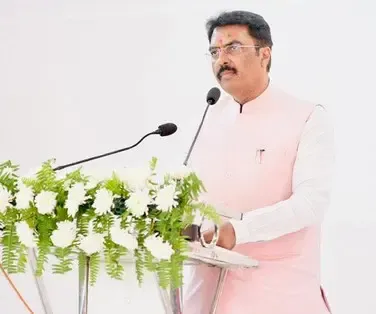
Ghaziabad MLA Nand Kishor Gurjar credited the anti-infiltration campaign as a key reason for the party's performance.
Home Minister Amit Shah was cited for enforcement action against infiltrators in Assam , Delhi (Loni), and other areas.
Defence Minister Rajnath Singh was credited for strengthening border fencing to curb illegal entry.
Gurjar asserted that the future West Bengal Chief Minister will deport infiltrators from Pakistan , Myanmar , and Bangladesh .
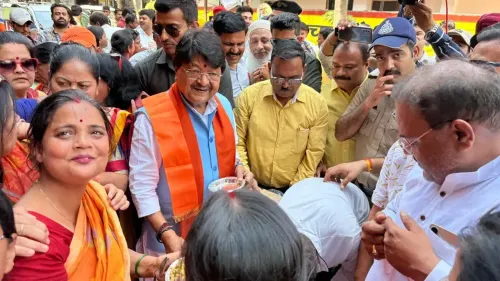
As early trends indicated the Bharatiya Janata Party (BJP) leading in the West Bengal Assembly elections, senior party leaders on 4 May pointed to the anti-infiltration campaign and a strong national security pitch as key drivers behind the party's performance in the state. The assessment came from multiple BJP voices, including Ghaziabad MLA Nand Kishor Gurjar, who spoke to reporters as results trickled in.
What BJP Leaders Said
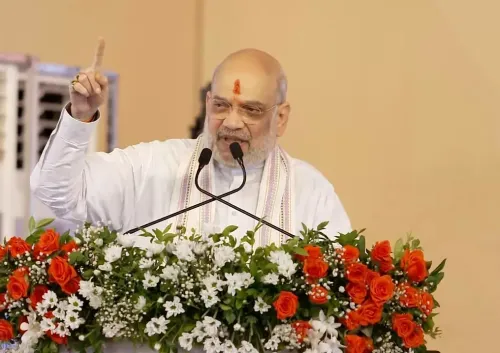
Speaking to IANS, Gurjar credited Prime Minister Narendra Modi for raising the infiltration issue as a central campaign agenda, and Union Home Minister Amit Shah for translating that rhetoric into on-ground action. "Prime Minister Narendra Modi raised infiltrators issue during the elections as an important agenda, and the Union Home Minister Amit Shah is known for taking strict and decisive action. Assam is an example, and Delhi is also an example during drives against infiltrators in areas like Loni, the Delhi Police identified and deported several individuals," Gurjar said.
He further noted that such matters had previously gone unaddressed by local authorities. "The Home Minister has built a strong internal security network and shown firm determination. Because of this, it can be said with certainty that what he says, he implements. The government's resolve to eliminate Naxalism has also been achieved ahead of time," Gurjar added.
Border Security and Defence Measures
Gurjar also credited Defence Minister Rajnath Singh for reinforcing border fencing, which he argued has significantly curbed illegal entry into India. He described the poll trends as a matter of national pride and framed them as a direct answer to opposition criticism, including from the Indian National Congress (Congress) and the Samajwadi Party. "This is a moment of pride. It is an answer to those leaders who go abroad and criticise the country," he remarked.
Bangladesh Infiltration Acknowledgement Cited
Gurjar referred to statements reportedly made by Bangladesh's National Citizen Party (NCP), which, he claimed, acknowledged large-scale infiltration into India. "No country can accept unchecked infiltration. For the sake of national integrity, it is necessary that every infiltrator be identified and deported," he said. This comes amid heightened political sensitivity around cross-border migration, particularly from Bangladesh and Myanmar, which has featured prominently in BJP's recent electoral messaging across multiple states.
What Happens Next in West Bengal
Gurjar expressed confidence that the incoming Chief Minister of West Bengal — whoever that may be — would take firm action on the issue. "No infiltrators will be allowed to stay in the state, regardless of whether they are from Pakistan, Myanmar, or Bangladesh. They will be sent back, and strict action will be ensured," he told IANS. The anti-infiltration plank, if it indeed contributed to the BJP's showing, signals that national security framing is increasingly central to the party's state-level electoral strategy — a pattern visible in recent campaigns across Assam, Delhi, and now West Bengal.
Point of View
Delhi, and now Bengal — and attributing victory to it, even before final results, reinforces the narrative for the next electoral cycle. What deserves scrutiny is whether the infiltration agenda translated into a verifiable policy programme or remained a campaign motif; the gap between enforcement rhetoric and ground-level deportation data has rarely been bridged in public discourse. If BJP does form or influence government in Bengal, the MLA's unequivocal promise on deportations will be a clear accountability benchmark.
NationPress
11 Oct 2026
Frequently Asked Questions
Why is BJP crediting the anti-infiltration campaign for its West Bengal performance?
BJP leaders, including MLA Nand Kishor Gurjar, argue that Prime Minister Modi's focus on infiltration as a campaign issue and Home Minister Amit Shah's enforcement record resonated strongly with voters in West Bengal. They cite actions in Assam and Delhi as evidence of the government's credibility on the issue.
What action did BJP leaders promise on infiltrators in West Bengal?
Gurjar stated that whoever becomes Chief Minister of West Bengal will ensure that infiltrators from Pakistan, Myanmar, and Bangladesh are identified and deported, with no exceptions allowed to remain in the state.
What role did Rajnath Singh play according to BJP leaders?
Defence Minister Rajnath Singh was credited by Gurjar for strengthening border fencing, which the MLA said has helped curb illegal entry into India from neighbouring countries.
What did BJP say about Bangladesh's National Citizen Party?
Gurjar claimed that Bangladesh's National Citizen Party (NCP) had acknowledged large-scale infiltration into India, which he used to argue that the scale of the problem is recognised even across the border and justifies India's strict deportation stance.
How does the anti-infiltration agenda fit into BJP's broader electoral strategy?
The anti-infiltration and national security pitch has been a recurring theme in BJP campaigns across multiple states including Assam and Delhi. West Bengal, given its long border with Bangladesh, has been a particularly prominent arena for this messaging in recent election cycles.