CM Hemant Soren Tells Banks: Go Beyond Salaried, Serve the Poor
Synopsis
Chief Minister Hemant Soren has called on banks in Jharkhand to serve the poor, tribal communities, and backward classes — not just salaried government employees — urging institutions to step outside conventional rule-bound approaches and take genuine responsibility for economic empowerment.
Key Takeaways
CM Hemant Soren publicly challenged banks in Jharkhand to extend services beyond salaried, government-linked customers on 4 November 2026 .
He specifically cited the need to serve tribal communities and backward classes who sustain the state's traditional social fabric.
Soren urged banks to operate beyond the boundaries of rules in fulfilling their responsibility to the poor.
Jharkhand has a substantial tribal and rural population underserved by formal credit and financial products despite the Jan Dhan Yojana drive since 2014.
The statement aligns with the Jharkhand Mukti Morcha government's consistent focus on protecting traditional livelihoods and tribal economic rights.
Follow-up state-level banking coordination or relaxed priority-sector lending proposals would be the concrete next step to watch.
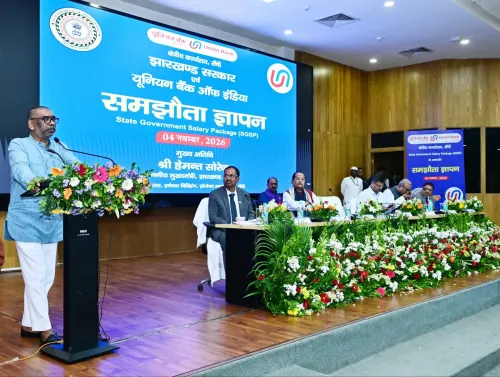
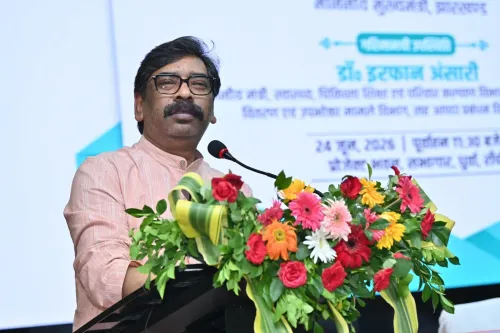
Banks in Jharkhand must step outside their comfort zones and become genuine engines of economic empowerment for the poor, the marginalised, and the communities holding together the state's traditional social fabric — that is the direct challenge Chief Minister Hemant Soren put to the banking sector on Wednesday, 4 November 2026.
Speaking in his capacity as head of the Jharkhand government, Soren declared that banks should not limit their responsibility to government salary-account holders alone. His message, as shared by the Chief Minister's Office of Jharkhand, was pointed: 'niyamon ke dayre se bahar nikalkar zimmedari nibhaye' — 'step beyond the boundaries of rules and fulfil your responsibility' — specifically toward the poor and backward classes who form the economic backbone of the state.
Who Is Being Left Behind — and Why It Matters in Jharkhand
Jharkhand's population includes a significant share of tribal communities, Scheduled Castes, and other backward classes whose livelihoods are rooted in traditional occupations — forest produce, small farming, artisanship, and local trade. These groups are largely outside the formal salaried economy that banks conventionally serve with the most confidence. Soren's statement directly names this gap: the people sustaining 'Jharkhand ke paramparik samajik tane-bane' — 'the traditional social fabric of Jharkhand' — are being underserved.
India's national financial inclusion drive, anchored by the Pradhan Mantri Jan Dhan Yojana since 2014, opened basic bank accounts for crores of previously unbanked citizens. But account ownership and genuine access to credit, insurance, and tailored financial products remain two very different things — a gap that tribal-heavy, rural states like Jharkhand feel acutely.
Soren's Push for Flexible Banking Norms
The Chief Minister's demand that banks go 'beyond the boundaries of rules' is a call for proactive, need-based banking rather than passive compliance. It reflects a recurring tension in Indian financial policy: the same norms designed to protect banking stability can effectively exclude informal-economy workers who lack salary slips, credit histories, or collateral.
State governments across India have periodically pressed banks on priority-sector lending and relaxed documentation for rural borrowers. Soren's framing goes further — he frames it as a matter of institutional responsibility toward communities that maintain the social and cultural order of the state, not just an economic metric to be managed.
The Jharkhand Mukti Morcha-led government has consistently positioned tribal welfare and protection of traditional livelihoods as core policy pillars. This latest statement extends that lens into the banking sector, signalling that financial institutions operating in Jharkhand will face continued pressure to deepen their reach into the state's most underserved communities.
Whether the call is followed by concrete state-level banking coordination proposals or fresh guidelines for priority-sector norms in Jharkhand will be the real test of its ambition.
Point of View
Tribal and backward-class economic empowerment is both an ideological cornerstone and an electoral compact. The challenge for the administration is translating this rhetoric into actionable policy instruments, such as relaxed documentation norms or state-backed credit guarantee schemes, since banking regulation ultimately sits with the Centre. The statement sharpens pressure on public-sector banks in Jharkhand while also reminding voters that the Soren government views formal financial institutions as accountable to local social realities, not just RBI compliance checklists.
NationPress
4 Nov 2026
Frequently Asked Questions
What did Hemant Soren say about banks in Jharkhand?
Chief Minister Hemant Soren said banks should not limit their services to government salary-account holders but must actively work to economically empower the poor, tribal communities, and backward classes — even if it means stepping beyond conventional rule-bound norms.
Which communities is Hemant Soren asking banks to serve in Jharkhand?
Soren specifically mentioned the poor, backward classes, and communities maintaining Jharkhand's traditional social fabric — primarily tribal populations and others outside the formal salaried economy.
What is financial inclusion in Jharkhand?
Financial inclusion in Jharkhand refers to ensuring that tribal communities, backward classes, and rural populations have genuine access to banking services, credit, and financial products — not just basic accounts opened under national schemes.
What is the Jan Dhan Yojana and how does it relate to Jharkhand?
The Pradhan Mantri Jan Dhan Yojana, launched in 2014, aimed to give every Indian household a basic bank account. While it improved account ownership in tribal-heavy states like Jharkhand, meaningful access to credit and tailored financial services for informal-economy workers remains limited.
What is JMM's position on tribal welfare and banking?
The Jharkhand Mukti Morcha, led by Hemant Soren, consistently prioritises tribal welfare and protection of traditional livelihoods as core governance goals. Soren's latest statement extends this to the banking sector, pressing financial institutions to actively serve communities outside the formal wage economy.