CM Hemant Soren at Jharkhand Farmer Fair: Govt, Farmers Must Share Responsibility
Synopsis
Chief Minister Hemant Soren addressed a farmer fair in Jharkhand on June 16, 2026, calling for equal responsibility between the government and farmers. He pledged a personal stall-by-stall review of the mela to identify strengths and fix shortcomings, framing joint effort as the key to agricultural progress in the state.
Key Takeaways
CM Hemant Soren spoke at a Krishi Mela in Jharkhand on June 16, 2026 , stressing shared responsibility between government and farmers.
Soren stated the government will shoulder half the responsibility for agricultural progress, with farmers bearing the other half.
He declared that when both sides work together, 'no one can defeat the farmers of Jharkhand.' The Chief Minister announced a personal, detailed walkthrough of all stalls at the farmer fair.
Strengths observed at the mela will be scaled up; identified gaps will be addressed through corrective action.
The event reflects Jharkhand's continued use of agricultural fairs as a policy feedback and rural outreach mechanism.
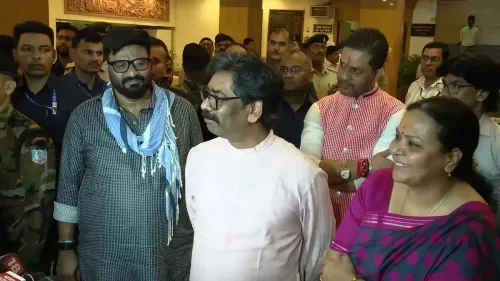
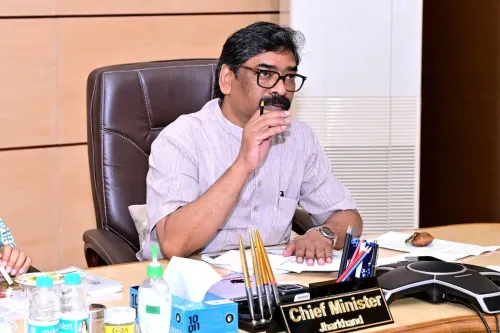
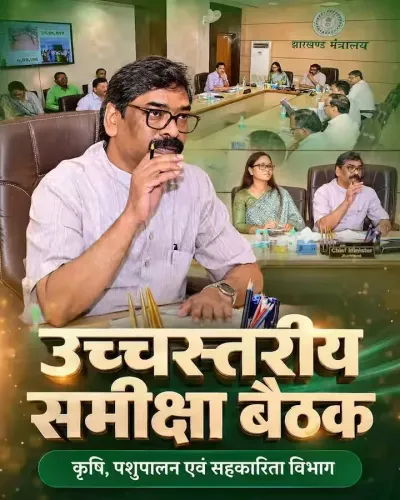
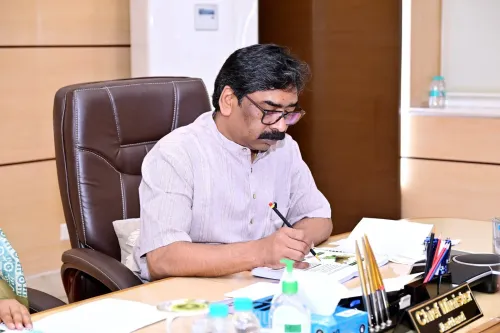
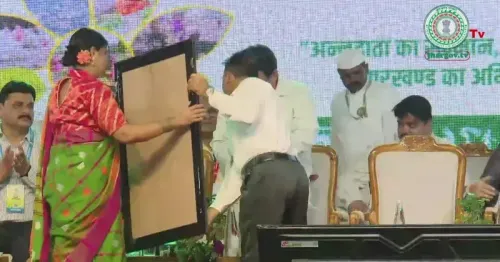
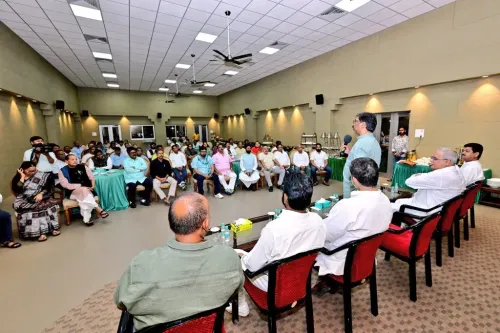
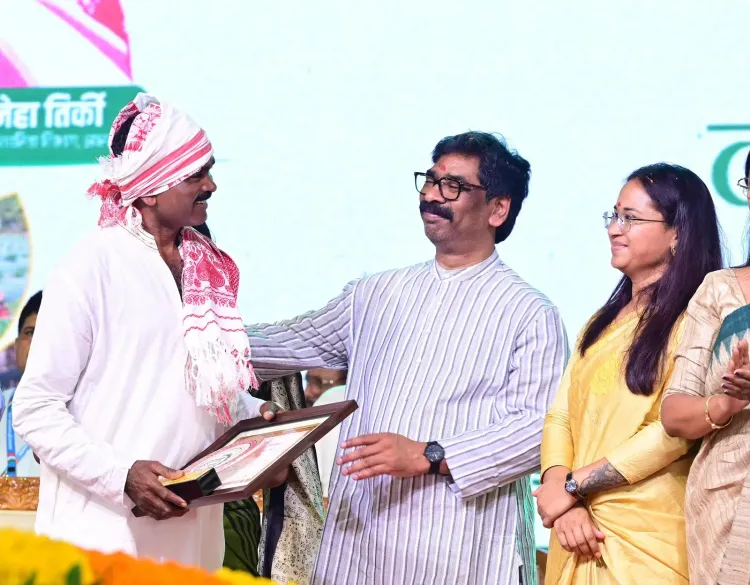
The Chief Minister's Office of Jharkhand on Tuesday, June 16, 2026, shared remarks by Chief Minister Hemant Soren at an ongoing farmer fair (Krishi Mela), where he called for a shared-responsibility model between the state government and Jharkhand's farming community to drive agricultural progress.
Context
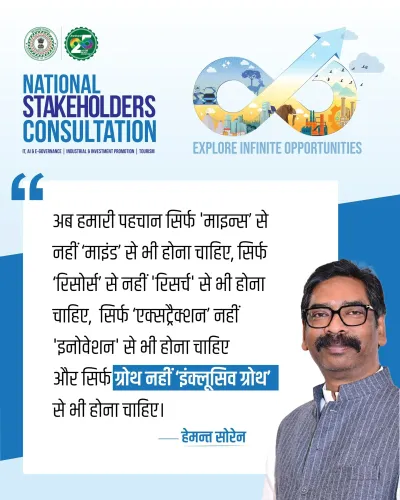
Speaking at the mela, CM Soren said: 'Aadhi zimmedaari sarkar uthayegi aur aadhi zimmedaari kisaanon ko uthaani hogi' ('Half the responsibility will be borne by the government and half must be borne by the farmers'). He added that when both sides work together, 'no one can defeat the farmers of Jharkhand.' The remarks were accompanied by seven images posted by the official Chief Minister's Office account on X.
Soren also announced that he would personally conduct a detailed walkthrough of the stalls at the fair. He stated that strengths identified during the visit would be built upon and any shortcomings would be addressed.
Policy Backdrop
Jharkhand is an eastern Indian state with a significant tribal population and a predominantly rural, agriculture-dependent economy. Successive state governments have held Krishi Melas — agricultural fairs — as platforms to showcase ongoing schemes, gather ground-level feedback, and connect with small and marginal farmers.
The shared-responsibility framing invoked by CM Soren echoes a broader pattern seen across eastern and central Indian states, where governments blend direct subsidies and scheme delivery with expectations of active farmer participation. This approach has been a consistent feature of Jharkhand's rural outreach under the Jharkhand Mukti Morcha (JMM)-led administration.
Stakeholders and Impact
The primary beneficiaries of such outreach are Jharkhand's small farmers and tribal cultivators, who form the backbone of the state's rural economy. Agricultural fairs of this kind serve as a direct interface between the administration and farming households, allowing scheme awareness to reach districts where institutional access may be limited.
CM Soren's commitment to personally review each stall signals that the event is being treated as a policy feedback exercise, not merely a ceremonial occasion. Observations from the walkthrough could inform modifications to existing agricultural support programmes in the state.
What's Next
Following his stall-by-stall review, CM Soren indicated that corrective steps would be taken based on gaps identified at the fair. District-level follow-up reviews or targeted adjustments to ongoing agricultural schemes are the likely next steps, consistent with how such mela feedback has historically been processed by the Jharkhand government.
The emphasis on joint government-farmer effort positions this event as a marker in the administration's broader rural outreach calendar, with the outcomes of the stall review likely to shape near-term agricultural policy directions in the state.
Point of View
Softening the government's exposure to failure while simultaneously positioning the JMM administration as a proactive partner. The personal stall-review pledge elevates the event beyond routine optics, suggesting the administration intends to use mela feedback as live policy intelligence. In the broader arc of Jharkhand politics, where tribal and rural voters are the decisive constituency, such visible engagement with farming communities reinforces the JMM's core electoral identity. Whether the promised corrective action materialises into tangible scheme modifications will be the real test of this outreach.
NationPress
19 Sept 2026
Frequently Asked Questions
What did CM Hemant Soren say at the Jharkhand farmer fair?
CM Hemant Soren said the government will bear half the responsibility for agricultural progress and farmers must bear the other half, adding that joint effort would make Jharkhand's farmers unbeatable.
What is a Krishi Mela in Jharkhand?
A Krishi Mela is an agricultural fair organised by the state government to showcase farming schemes, demonstrate best practices, and gather direct feedback from farmers across Jharkhand's districts.
What did Hemant Soren promise at the Krishi Mela on June 16 2026?
He promised to personally conduct a detailed walkthrough of all stalls at the mela, with a commitment to build on identified strengths and address any shortcomings found.
How does Jharkhand government support farmers?
The Jharkhand government has historically supported farmers through agricultural fairs, state subsidy schemes, and rural outreach programmes, with particular focus on small and tribal cultivators.
Why is shared responsibility important for Jharkhand agriculture?
Jharkhand has a large tribal and rural farming population; a shared-responsibility model encourages active farmer participation alongside government support, which is seen as essential for sustainable agricultural productivity in the state.