CM Hemant Soren attends Jharkhand Krishi Vyapar Mela 2026
Synopsis
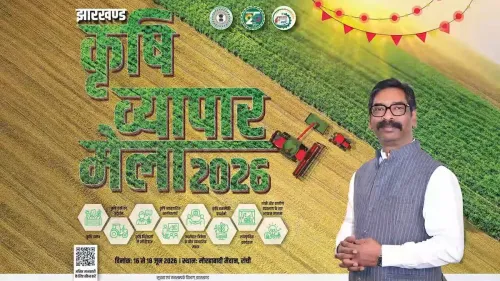
Jharkhand Chief Minister Hemant Soren attended the state-organised Jharkhand Krishi Vyapar Mela 2026 in Ranchi on 16 June, a three-day agriculture trade fair aimed at improving market access for farmers and agri-traders in the tribal-majority state.
Key Takeaways
CM Hemant Soren personally attended the Jharkhand Krishi Vyapar Mela 2026 in Ranchi on 16 June 2026 .
The fair is a three-day event organised by the Jharkhand government to connect farmers with traders and buyers.
The event serves as a platform to publicise state and central schemes on crop insurance, irrigation and marketing reforms.
Jharkhand's economy is heavily dependent on agriculture and mining, with tribal and small farmers forming the core beneficiary group.
The JMM -led government has been in power since 2019 , with agricultural outreach a stated policy priority.
Outcomes to watch include MoUs signed, new scheme announcements and subsequent budget allocations for agricultural infrastructure.
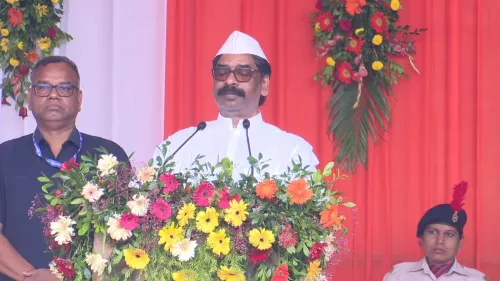
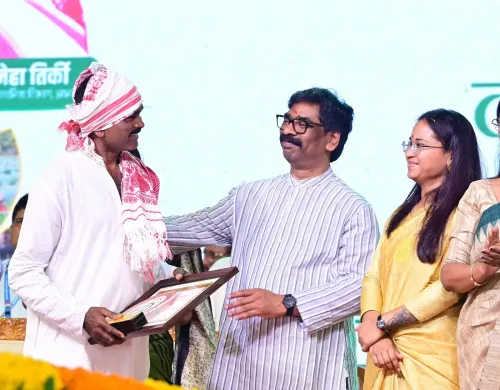
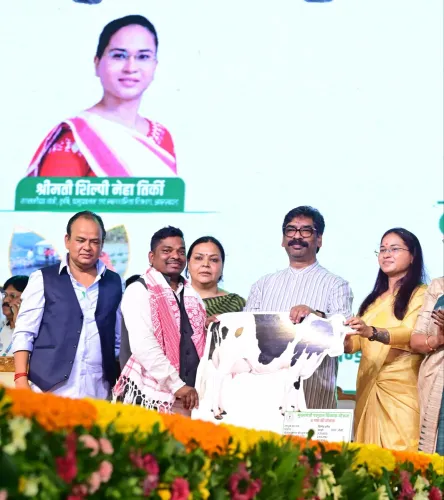
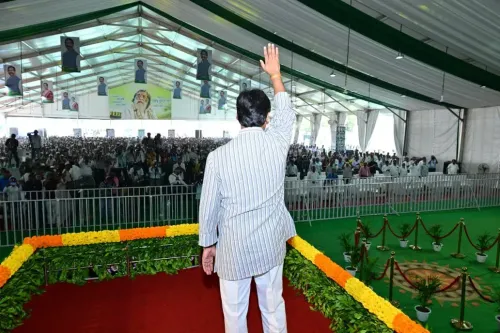
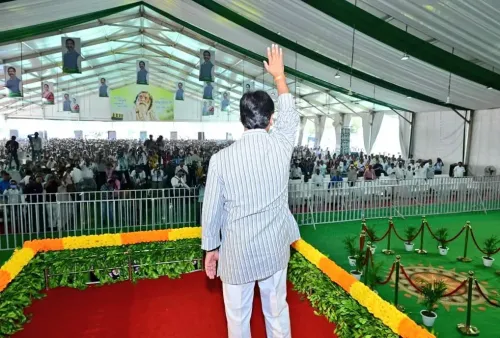
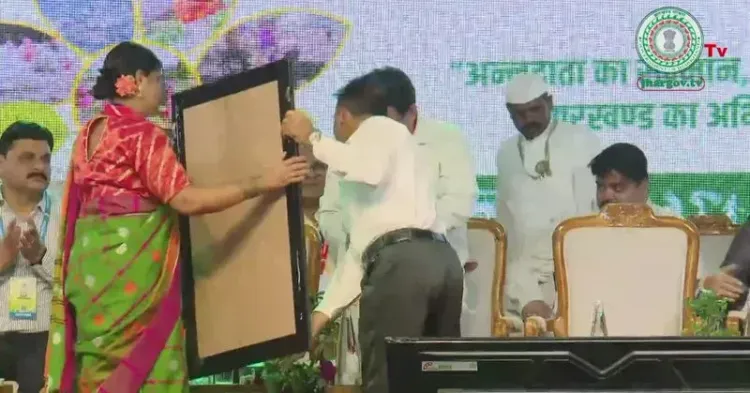
Jharkhand Chief Minister Hemant Soren on Tuesday, 16 June 2026, attended the Jharkhand Krishi Vyapar Mela 2026, a three-day agriculture trade fair organised by the Jharkhand government in Ranchi, extending greetings to farmers and traders gathered at the event.
Posting on X, the Chief Minister wrote: 'Aaj Ranchi mein Jharkhand Sarkar dwara aayojit teen diwasiya Jharkhand Krishi Vyapar Mela 2026 mein shamil hua hoon' — ('Today I attended the three-day Jharkhand Agriculture Trade Fair 2026 organised by the Jharkhand government in Ranchi'). He extended 'heartfelt congratulations, good wishes and Johar' to all on the occasion. Johar is a traditional salutation widely used among tribal communities in Jharkhand.
Context
The Jharkhand Krishi Vyapar Mela 2026 is a state-sponsored platform designed to bring together farmers, agri-traders, input suppliers and buyers under one roof in Ranchi, the state capital. Events of this nature typically feature displays of local crops, seeds and farm machinery, alongside buyer-seller meets aimed at improving market access for small and marginal farmers. Chief Minister Soren's personal attendance signals the administration's emphasis on the fair as a policy priority, not merely a ceremonial occasion.
Policy Backdrop
Jharkhand's economy remains heavily dependent on agriculture alongside mining, and successive governments have used periodic trade fairs to strengthen market linkages and promote value addition for small and tribal farmers. The Jharkhand Mukti Morcha (JMM)-led government, in power since 2019, has consistently positioned agricultural outreach and tribal economic empowerment as central planks of its governance agenda. Fairs of this kind also serve as platforms to publicise state and central schemes covering crop insurance, irrigation support and agricultural marketing reforms.
CM Soren, who also serves as executive president of the JMM, has repeatedly stressed the need to diversify rural incomes in a state where a large share of the population belongs to tribal and agrarian communities. Agriculture trade fairs align with that stated objective by creating direct channels between producers and markets, reducing dependence on intermediaries.
Stakeholders and Impact
The primary beneficiaries of the Jharkhand Krishi Vyapar Mela 2026 are small and marginal farmers, tribal cultivators and agri-traders operating within the state. For farmers, such events offer rare direct access to buyers, new seed varieties and information on government subsidies. For traders and agribusinesses, the fair provides a concentrated marketplace to assess local produce quality and forge supply-chain partnerships.
Broader rural communities stand to benefit if the fair catalyses follow-on investment in agricultural infrastructure or results in formal agreements between farmer groups and commercial buyers. State officials and policymakers also use these gatherings to gauge ground-level demand for irrigation, cold-storage and logistics support.
What's Next
With the fair running for three days, attention will turn to any memoranda of understanding signed, marketing agreements announced or new subsidy schemes unveiled during the event. Observers will also watch for subsequent state budget allocations directed at agricultural infrastructure, which would indicate whether the fair translates into durable policy commitments. Any participation data or outcome statements released by the Jharkhand government at the close of the fair will offer a clearer picture of its on-ground impact.
Point of View
Soren signals that farm-sector outreach remains a political as much as a policy priority, particularly as rural constituencies form the backbone of JMM's electoral coalition. The fair also reflects a broader state-level strategy of using buyer-seller platforms to compensate for structural gaps in Jharkhand's agricultural marketing infrastructure. Whether the event produces measurable outcomes — in the form of MoUs, scheme uptake or infrastructure investment — will determine if it is a substantive policy moment or a well-attended photo opportunity.
NationPress
15 Sept 2026
Frequently Asked Questions
What is the Jharkhand Krishi Vyapar Mela 2026?
The Jharkhand Krishi Vyapar Mela 2026 is a three-day agriculture trade fair organised by the Jharkhand government in Ranchi, designed to connect farmers with traders, input suppliers and buyers to improve market access and promote local produce.
Who attended the Jharkhand agriculture trade fair 2026?
Jharkhand Chief Minister Hemant Soren attended the Jharkhand Krishi Vyapar Mela 2026 in Ranchi on 16 June 2026 and extended greetings to farmers and traders at the event.
Where is the Jharkhand Krishi Vyapar Mela 2026 being held?
The fair is being held in Ranchi, the capital of Jharkhand.
What is the purpose of the Jharkhand agriculture trade fair?
The fair aims to strengthen market linkages for small and tribal farmers, facilitate direct buyer-seller interactions, showcase local crops and farm inputs, and publicise government schemes on crop insurance, irrigation and marketing support.
What is 'Johar' as used by Hemant Soren?
'Johar' is a traditional salutation used among tribal communities in Jharkhand. CM Hemant Soren frequently uses it as a greeting that reflects cultural solidarity with the state's tribal population.