CM Hemant Soren Invites Agri Sector to Jharkhand Trade Fair 2026
Synopsis
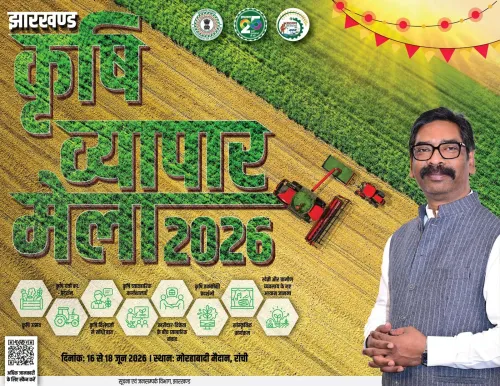
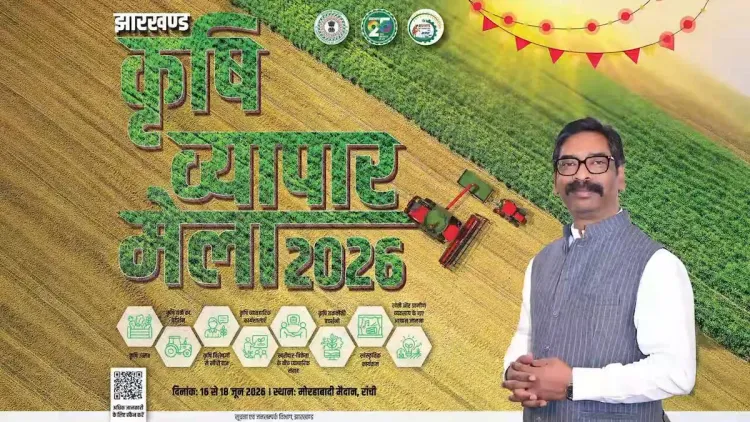
Chief Minister Hemant Soren has invited all agriculture-sector industries, units, and exporters to the Jharkhand Krishi Vyapar Mela 2026 at Morabadi Maidan, Ranchi, from 16 to 18 June 2026, in a push to strengthen market linkages and export orientation for the state's farm sector.
Key Takeaways
Chief Minister Hemant Soren has formally invited agri-sector industries, units, and exporters to the Jharkhand Krishi Vyapar Mela 2026 .
The fair is scheduled for 16–18 June 2026 at Morabadi Maidan, Ranchi .
The event is described by the CMO as a 'maha-utsav' (grand festival) for the agriculture business community.
Agriculture Minister Shilpi Neha Tirki and the Jharkhand Agriculture Department are officially tagged, indicating active departmental involvement.
The invitation targets the full agri value chain — industries, processing units, and exporters — not just farmers.
Key outcomes to watch include MoUs, export orders, and any policy announcements made during the three-day fair.
The Chief Minister's Office of Jharkhand on Monday, 15 June 2026 announced that Chief Minister Hemant Soren has extended a formal invitation to all industries, units, and exporters connected to the agriculture sector to participate in the Jharkhand Krishi Vyapar Mela 2026, scheduled to be held at Morabadi Maidan, Ranchi from 16 to 18 June 2026.
Context
The official post from the Chief Minister's Office reads: 'Mukhyamantri Shri Hemant Soren ne krishi kshetra se jude sabhi udyogon, ikaaiyon aur niryaatkon ko Jharkhand Krishi Vyapar Mela 2026 mein shaamil hone ka saadar aamantran diya hai' — Chief Minister Hemant Soren has cordially invited all industries, units, and exporters linked to the agriculture sector to join the Jharkhand Agriculture Trade Fair 2026. The announcement describes the event as a 'maha-utsav' — a grand festival — underscoring the state government's intent to position it as a marquee occasion for the agri-business community.
The three-day fair is to be held at Morabadi Maidan, one of Ranchi's largest open grounds and a regular venue for major state-level public events. The post also tagged Agriculture Minister Shilpi Neha Tirki and the official Jharkhand Agriculture Department handle, signalling active departmental ownership of the event.
Policy Backdrop
Jharkhand's economy rests on two broad pillars: its mineral wealth and its agriculture sector, which sustains a large share of the state's rural and tribal population. Successive state governments have sought to reduce dependence on primary commodity extraction by building market linkages for farm produce, improving value addition, and expanding export orientation.
Sector-specific trade fairs have become a standard instrument across Indian states to connect producers directly with buyers, processors, and export intermediaries. For a state like Jharkhand — where tribal farming communities cultivate a range of produce including millets, vegetables, and forest-linked crops — an agriculture trade fair offers a structured platform to bridge the gap between field and market. The Soren government has previously signalled interest in boosting rural incomes through improved market access as part of its broader development agenda.
Stakeholders and Impact
The invitation is addressed broadly to all agri-sector industries, processing units, and exporters, suggesting the fair is designed to attract participation beyond small farmers to include the full value chain — from input suppliers and processors to logistics providers and overseas buyers. This framing positions the mela as a B2B and B2G networking event as much as a public showcase.
Small and marginal farmers, self-help groups, and tribal producer collectives stand to benefit if the fair generates concrete linkages with larger buyers or export houses. The tagging of the Agriculture Department and the minister indicates that government-facilitated matchmaking between producers and industry is likely a core objective of the three-day programme.
What's Next
Attention will focus on the scale of industry participation that the fair attracts and whether the event produces tangible outcomes such as memoranda of understanding, supply agreements, or confirmed export orders. Any policy announcements made by Chief Minister Hemant Soren or Agriculture Minister Shilpi Neha Tirki on the sidelines of the mela — covering procurement, export incentives, or agri-infrastructure — will be closely watched as indicators of the government's follow-through intent. The fair's success could shape the state's approach to agri-business promotion in subsequent years.
Point of View
Low-risk instruments to signal pro-farmer and pro-business intent simultaneously. For Chief Minister Hemant Soren, whose constituency includes a large tribal agrarian base, the event serves both a developmental and a political signalling function ahead of ongoing rural outreach efforts. The explicit inclusion of exporters in the invitation suggests the government is keen to move beyond subsistence-level narratives and project Jharkhand as an emerging agri-export destination. Whether the fair translates into durable supply-chain linkages or remains a ceremonial showcase will depend on the institutional follow-up that the Agriculture Department delivers post-event.
NationPress
16 Sept 2026
Frequently Asked Questions
What is the Jharkhand Krishi Vyapar Mela 2026?
The Jharkhand Krishi Vyapar Mela 2026 is a state-organised agriculture trade fair scheduled from 16 to 18 June 2026 at Morabadi Maidan, Ranchi, aimed at connecting agri-sector industries, processing units, and exporters with producers and market opportunities.
Where is the Jharkhand agriculture fair 2026 being held?
The fair is being held at Morabadi Maidan in Ranchi, the capital of Jharkhand, from 16 to 18 June 2026.
Who invited participants to the Jharkhand Krishi Vyapar Mela?
Chief Minister Hemant Soren extended the formal invitation, as announced by the Chief Minister's Office of Jharkhand on 15 June 2026.
Who can participate in the Jharkhand agriculture trade fair 2026?
The invitation is open to all industries, processing units, and exporters connected to the agriculture sector, as well as the broader agri-business community.
What is the significance of the Jharkhand Krishi Vyapar Mela for farmers?
The fair is intended to create direct market linkages between Jharkhand's farmers and agri-businesses, processors, and exporters, potentially improving income and expanding access to national and international markets for farm produce.