Poland demands free Hormuz passage as energy costs bite, Sikorski warns on Russia-Iran ties
Synopsis
At the G20 in Atlanta, Poland's Foreign Minister Sikorski didn't just call for free Hormuz passage — he alleged Russia is giving Iran targeting data for hypersonic missiles capable of hitting US warships. With 9% of Poland's LNG coming through Hormuz and a domestic consumer protection law already enacted, Warsaw is making the strait's future a live geopolitical issue.
Key Takeaways
Polish Foreign Minister Radosław Sikorski demanded free navigation through the Strait of Hormuz at the G20 meeting in Atlanta on 31 October 2026 .
Qatar supplies 9 per cent of Poland's LNG; Saudi Arabia is its largest crude oil source, routed via the Suez Canal .
Poland has passed a special law to shield consumers from excessive petrol and diesel prices, details of which were not disclosed.
Sikorski alleged Russia is supplying Iran with targeting data and hypersonic missile technology capable of hitting American warships — without specifying the systems involved.
The minister linked any Russian return to European energy markets to a fair end to the war in Ukraine .
Sikorski called for a Black Sea ceasefire to restore food exports, citing Turkish and Indian diplomatic efforts.
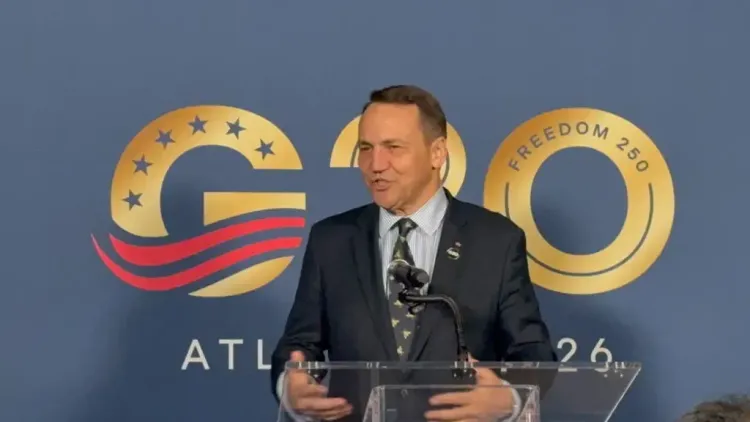
Polish Foreign Minister Radosław Sikorski on 31 October 2026 demanded the restoration of free navigation through the Strait of Hormuz, saying that soaring energy costs had compelled Poland to enact special legislation shielding consumers and motorists from excessive petrol and diesel prices. Sikorski made the remarks at a press conference on the sidelines of the G20 meeting in Atlanta, framing the strait as international waters in which unimpeded passage must be guaranteed.
Why Poland Has a Direct Stake in Hormuz
Sikorski said Saudi Arabia supplied the largest share of Poland's crude oil, with those shipments routed northward through the Suez Canal. He added that Qatar accounted for 9 per cent of Poland's liquefied natural gas (LNG) imports — a figure he cited as evidence of Warsaw's direct interest in securing the waterway. 'And of course, we are an energy consumer and importer,' he said, adding that Poland wanted oil prices to 'come back to previous levels as soon as possible.'
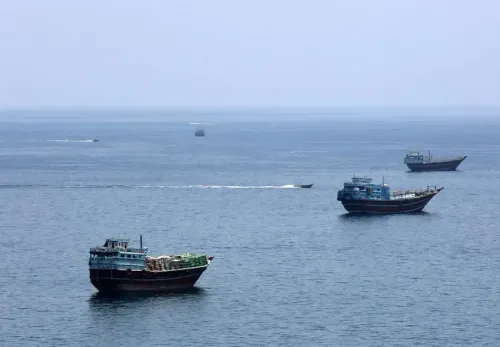
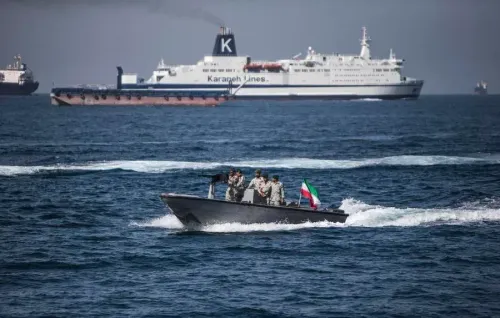
The Strait of Hormuz lies between Iran and Oman, linking the Persian Gulf with the Gulf of Oman and the Arabian Sea. In 2024, crude oil flows through the strait averaged approximately 20 million barrels a day, while roughly one-fifth of global LNG trade — chiefly from Qatar — also passed through it. India was among the leading Asian importers of both crude and LNG shipped via the strait.
Allegations Against Russia and Tehran's Response
Sikorski went further, alleging that Russia was supplying Iran with targeting data and technology for hypersonic missiles 'which would have the capacity to hit American warships.' He questioned why such alleged transfers were 'not a bigger issue', though he did not provide details of the specific systems or name the platforms involved. When asked whether Polish officials had raised Hormuz and Iran's support for Russia directly with Iranian counterparts, Sikorski confirmed: 'Of course we did.' On Tehran's reaction, he said simply, 'they have their view.'
This comes amid broader Western concerns about deepening military cooperation between Moscow and Tehran since Russia's full-scale invasion of Ukraine in 2022. Sikorski's public airing of these allegations at a multilateral forum signals Warsaw's intent to internationalise the issue.
Russia's Energy Revenue Loss and the War in Ukraine
Sikorski linked Europe's energy pivot directly to the conflict in Ukraine. He noted that most European countries had sharply reduced purchases of Russian energy and described the loss of that market as one of the costs Moscow bore for the war. Russia was now selling energy elsewhere at a 'steep discount', he said. Poland, he added, had no interest in becoming dependent on supplies from a country that 'invaded its neighbours.' Any Russian return to its former European energy markets, Sikorski argued, would require a fair resolution to the war.
Black Sea Ceasefire and Global Food Security
Beyond energy, the Polish minister called for a Black Sea ceasefire to unblock food exports destined for countries such as Egypt. He pointed to Turkish and Indian diplomatic initiatives on this front and urged quicker action to meet the food security needs of nations in the Global South. On the broader G20 agenda, Sikorski acknowledged sharp differences among the member states but insisted that dialogue must continue. 'There are countries here represented that don't necessarily see eye to eye, but we need to keep the conversation going,' he said.
Poland's consumer protection law — passed in response to elevated fuel prices — underscores the domestic political pressure Sikorski faces as Warsaw juggles NATO commitments, energy security, and its exposed position on Europe's eastern flank. How quickly global energy markets can stabilise will depend, in large part, on whether diplomatic channels over Iran and the Hormuz question yield any movement.
Point of View
Warsaw is pressuring allies to treat the Russia-Iran military relationship as a first-order security threat, not a footnote. The fact that Poland has already moved domestic legislation on fuel prices tells you the political heat at home is real. What the speech leaves unresolved is the harder question: the same G20 table includes countries — India and others — that continue buying Russian energy at steep discounts, making any unified pressure campaign structurally difficult. Sikorski's call for dialogue despite differences reads less like optimism and more like an acknowledgement that Warsaw is, for now, largely alone in the urgency it assigns to Hormuz.
NationPress
31 Oct 2026
Frequently Asked Questions
Why is Poland demanding free passage through the Strait of Hormuz?
Poland depends on the Strait of Hormuz for a significant share of its energy imports, including 9 per cent of its LNG from Qatar and crude oil from Saudi Arabia routed via Suez. Foreign Minister Sikorski argued at the G20 that disruptions to the strait directly raise energy costs for Polish consumers, prompting Warsaw to enact a domestic consumer protection law.
What did Sikorski allege about Russia and Iran at the G20?
Sikorski alleged that Russia was supplying Iran with targeting data and technology for hypersonic missiles capable of hitting American warships. He did not name the specific systems or provide documentation, but questioned why the alleged transfers were not receiving greater international attention.
How much oil and gas passes through the Strait of Hormuz?
In 2024, approximately 20 million barrels of crude oil passed through the Strait of Hormuz daily, while around one-fifth of global LNG trade — primarily from Qatar — also transited the waterway. India was among the leading Asian importers of both crude and LNG shipped through the strait.
What law has Poland passed to protect consumers from energy prices?
Poland has enacted special legislation to shield consumers and motorists from excessive petrol and diesel prices, according to Sikorski. He did not specify the detailed measures contained in the law during his G20 press conference.
What did Sikorski say about Russia's energy revenues and the Ukraine war?
Sikorski said most European countries had sharply cut purchases of Russian energy, forcing Russia to sell elsewhere at a steep discount. He argued that Russia's return to its former European energy market would require a fair end to the war in Ukraine, and that Poland had no interest in depending on energy from a country that invaded its neighbours.