Strait of Hormuz reopening: EU foreign ministers meet in Cyprus
Synopsis
EU foreign ministers gathered in Cyprus with India and Saudi Arabia to push for the immediate reopening of the Strait of Hormuz — a move that would also unblock the stalled IMEC corridor. Italy's Tajani linked the diplomatic push directly to Italian export growth, signalling that the Gulf crisis has become as much an economic emergency for Europe as a geopolitical one.
Key Takeaways
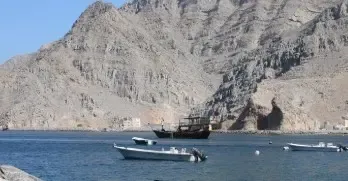
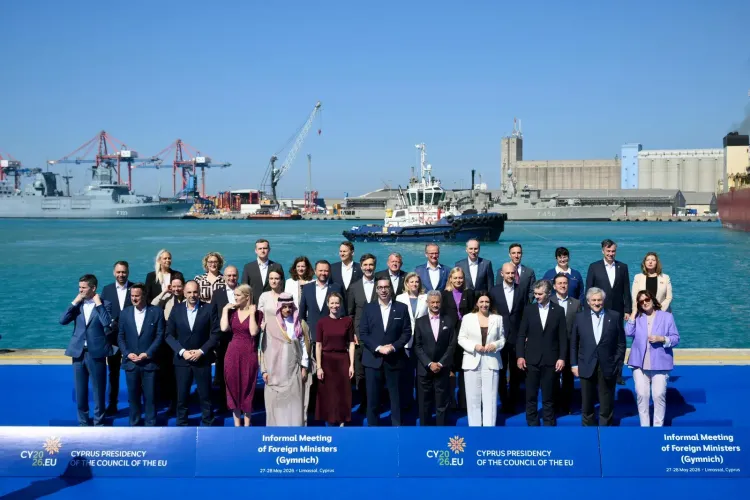
EU foreign ministers held an informal Gymnich meeting in Limassol, Cyprus on 28 May , focused on the Strait of Hormuz and Middle East peace.
Italian FM Antonio Tajani confirmed on X that the EU is working toward an agreement for the 'immediate reopening' of the Strait of Hormuz .
India's External Affairs Minister S.
Jaishankar and Saudi FM Faisal bin Farhan participated as strategic partners.
The meeting also addressed Israel's war on Hezbollah in Lebanon and the situation in Gaza and the West Bank .
The IMEC corridor — announced at the 2023 G20 Summit in India — was highlighted as a vehicle for boosting trade, but faces delays from geopolitical and financial obstacles.
PM Modi and PM Meloni agreed last week in Rome to elevate India-Italy ties to a special strategic partnership , with IMEC acceleration as a priority.
European Union foreign ministers gathered in Limassol, Cyprus on Thursday, 28 May for an informal 'Gymnich' meeting focused on advancing peace in Ukraine and the Middle East, with the immediate reopening of the Strait of Hormuz and freedom of navigation in the critical waterway emerging as a central agenda item. Italy's Foreign Minister Antonio Tajani confirmed the discussions in a post on X, signalling active EU coordination with strategic partners including India and Saudi Arabia.
Key Developments at the Cyprus Meeting
The Limassol gathering — formally known as a Gymnich meeting, an informal format for EU foreign ministers — placed the Gulf crisis, its global military and economic implications, and joint diplomatic solutions at the centre of the agenda. According to a statement from the Italian foreign ministry, ministers discussed support for the negotiating process to end the 12-week-old war between the US and Iran and the 'full restoration of freedom of navigation' through the Strait of Hormuz.
The meeting also reviewed Israel's war on Hezbollah in Lebanon and the situation in the occupied Palestinian territories, including Gaza and the West Bank, the ministry statement added.
What Tajani Said on X
In his post, Tajani wrote that EU ministers were working 'to contribute to an agreement for the immediate reopening of the Strait of Hormuz to guarantee freedom of navigation and international trade.' He noted that 'strategic partners such as India' — referencing External Affairs Minister S. Jaishankar — and Saudi Arabia, represented by Foreign Minister Faisal bin Farhan, were also participating in the discussions.
Tajani further linked the diplomatic effort to the India-Middle East-Europe Economic Corridor (IMEC), stating that through IMEC, Italy aims to 'increase Italian exports, fostering economic growth and jobs.'
IMEC's Role and Current Status
The IMEC project, announced on the sidelines of the 2023 G20 Summit in India, was signed by partners including the EU and the United States as a framework to develop trade routes connecting India to the Arabian Gulf and the Gulf to Europe via ship and rail. The corridor was widely seen as a strategic rival to China's Belt and Road Initiative.
However, the project reportedly faces significant delays owing to geopolitical and financial obstacles — delays that the current Hormuz crisis has further compounded, given the corridor's dependence on stable Gulf transit routes.
India-Italy Bilateral Push
The Cyprus meeting comes days after talks in Rome, where Italian Prime Minister Giorgia Meloni and Prime Minister Narendra Modi focused heavily on accelerating IMEC as part of a broader effort to deepen bilateral ties. The two countries elevated their relationship to a special strategic partnership, with IMEC advancement cited as a key deliverable.
Notably, Jaishankar's presence at the Limassol talks underscores India's growing role as an indispensable partner in EU-led diplomatic efforts in the Gulf — a shift that reflects New Delhi's expanding strategic footprint in the region.
What Comes Next
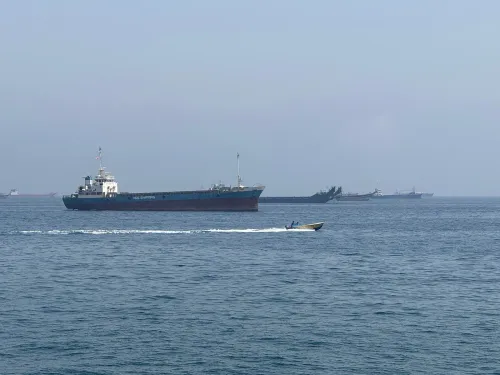
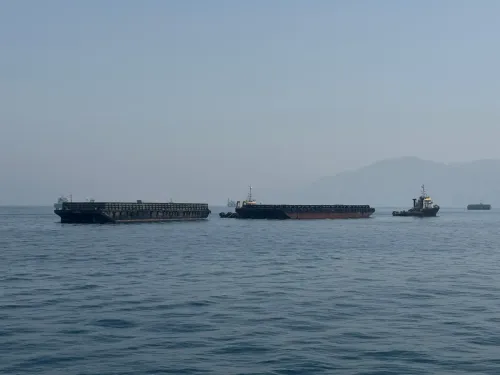
With the US-Iran conflict now in its 12th week, the pressure on the Strait of Hormuz — through which roughly 20% of global oil trade passes — has kept energy markets and international shipping on edge. EU foreign ministers are expected to carry the outcomes of the Limassol talks into formal Council discussions, with the Hormuz reopening and IMEC revival likely to feature prominently in upcoming diplomatic engagements.
Point of View
In particular, is framing a Gulf diplomatic push in terms of export growth and jobs. What is less clear is whether EU foreign ministers, however well-coordinated, carry enough leverage with Tehran or Washington to move a 12-week-old conflict toward a navigational agreement. Jaishankar's presence adds diplomatic weight, but India's historically calibrated neutrality on Iran means New Delhi is unlikely to apply the kind of pressure that could accelerate a deal. The risk is that IMEC becomes a recurring aspirational headline without the security architecture to make it operational.
NationPress
11 Oct 2026
Frequently Asked Questions
What was decided at the EU foreign ministers meeting in Cyprus on 28 May?
EU foreign ministers held an informal Gymnich meeting in Limassol, Cyprus, focused on pushing for the immediate reopening of the Strait of Hormuz and freedom of navigation, alongside discussions on Ukraine, Lebanon, and the Palestinian territories. No formal decisions have been announced; the talks are part of an ongoing diplomatic process.
Why is the Strait of Hormuz closure significant?
The Strait of Hormuz is one of the world's most critical maritime chokepoints, through which a substantial share of global oil and trade passes. Its closure amid the US-Iran conflict has disrupted international shipping and energy markets, and also threatens the viability of the IMEC trade corridor.
What is IMEC and why does it matter here?
IMEC — the India-Middle East-Europe Economic Corridor — is a trade route project connecting India to the Arabian Gulf and Europe via ship and rail, announced at the 2023 G20 Summit in India. It is seen as a strategic alternative to China's Belt and Road Initiative, but faces delays due to geopolitical and financial obstacles, including the current Gulf crisis.
Why were India and Saudi Arabia at an EU foreign ministers meeting?
India's External Affairs Minister S. Jaishankar and Saudi FM Faisal bin Farhan participated as strategic partners in the Limassol talks, reflecting the EU's approach of engaging key regional and global players in diplomatic efforts around the Hormuz crisis and IMEC revival.
How does this connect to the recent Modi-Meloni meeting in Rome?
Just days before the Cyprus meeting, PM Modi and Italian PM Giorgia Meloni met in Rome and agreed to elevate India-Italy ties to a special strategic partnership, with accelerating IMEC cited as a key priority. The Limassol talks represent a multilateral follow-through on that bilateral momentum.