Australian PM Praises Reopening of Strait of Hormuz

Synopsis
In a significant development, Prime Minister Anthony Albanese of Australia has expressed support for the reopening of the Strait of Hormuz, indicating potential military involvement to ensure maritime security. This move follows Iran's announcement of full access for commercial vessels amid a ceasefire between Israel and Lebanon. Explore the implications of this reopening.
Key Takeaways
Australia welcomes the reopening of the Strait of Hormuz.
The Prime Minister is considering military deployment to secure shipping.
Iran has declared the Strait completely open for vessels.
The issue arises amid a ceasefire between Israel and Lebanon.
Australia's fuel reserves have been increased recently.
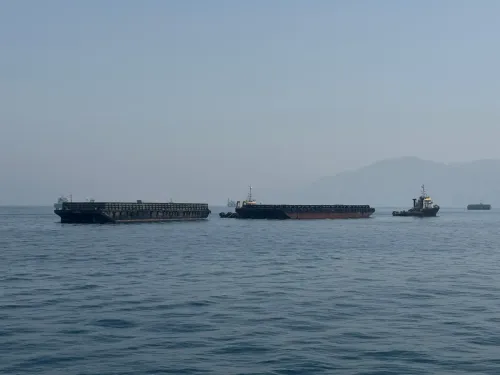
Sydney, April 18 (NationPress) Prime Minister Anthony Albanese expressed on Saturday that Australia is pleased with the reopening of the Strait of Hormuz and is willing to contemplate the deployment of military resources to ensure the security of maritime activities in that area.
During a press briefing in Sydney, Albanese praised Iran's declaration that the Strait is now fully accessible to all commercial vessels amid the ongoing ceasefire between Israel and Lebanon.
"This is encouraging news that we received last night," Albanese stated. "However, we wish to see this delicate arrangement solidified."
When asked about the possibility of Australia sending military resources to maintain open shipping lanes, Albanese indicated that the government would evaluate any such proposals.
"Geographically, Australia is quite distant from the Strait compared to European countries. It's reasonable to say that we will consider any requests that come our way during discussions," he mentioned.
Albanese was joined by Energy Minister Chris Bowen, who noted that Australia has bolstered its strategic fuel reserves over the past week, according to reports from Xinhua news agency.
Bowen revealed that Australia currently possesses 46 days' worth of petrol in its national reserves, alongside 31 days' worth of diesel and 30 days' worth of jet fuel.
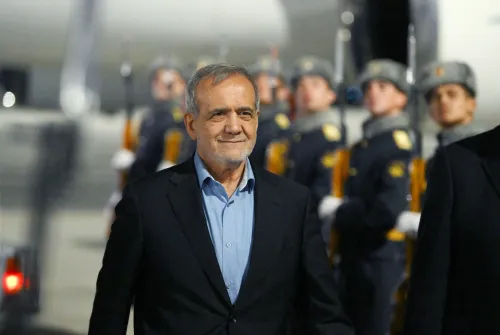
Earlier on Friday, Iran's Foreign Minister Seyed Abbas Araghchi announced that, in accordance with the truce in Lebanon, the passage for all commercial vessels through the Strait of Hormuz has been declared "entirely open" for the duration of the ceasefire between Tehran and Washington.
These comments were made on social media just hours after a 10-day ceasefire came into effect between Israel and Lebanon, following over a month of intense conflict that resulted in more than 2,000 casualties.
Araghchi emphasized that vessels can navigate the Strait via the previously announced coordinated route established by Iran's Ports and Maritime Organization.
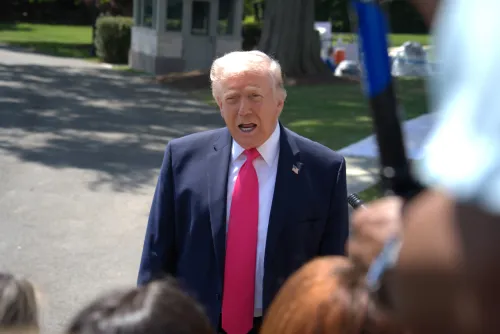
In response to this announcement, US President Donald Trump expressed gratitude to Iran for confirming the full reopening of the Strait of Hormuz.
Iran had previously tightened its control over the Strait of Hormuz by restricting safe passage for vessels affiliated with Israel and the United States after they conducted joint strikes on the country on February 28.
The United States has also enforced a blockade on the strait, hindering the transit of ships traveling to and from Iranian ports, following the collapse of peace negotiations between the Iranian and US delegations in Islamabad, Pakistan, on Saturday and early Sunday.
Point of View
Particularly in light of recent tensions in the Middle East. The readiness to deploy military assets highlights the importance of international shipping routes and Australia's commitment to maintaining trade security.
NationPress
19 Sept 2026
Frequently Asked Questions
What is the Strait of Hormuz?
The Strait of Hormuz is a vital waterway that connects the Persian Gulf with the Arabian Sea, through which a significant portion of the world's oil supply passes.
Why is the reopening significant?
The reopening of the Strait of Hormuz is significant as it ensures the continued flow of commercial shipping and oil transport, which is crucial for global economies.
What role is Australia considering in the region?
Australia is considering the deployment of military assets to secure shipping lanes in the Strait of Hormuz amid ongoing geopolitical tensions.
What led to the reopening of the Strait?
The Strait was reopened following a ceasefire agreement between Israel and Lebanon, allowing for safe passage of commercial vessels.
How does this affect global trade?
The reopening of the Strait of Hormuz positively impacts global trade by ensuring that oil and other goods can move freely through this critical shipping lane.