Saudi FM urges Strait of Hormuz return to pre-Feb 28 status at UNGA
Synopsis
At the UN General Assembly, Saudi Foreign Minister Prince Faisal bin Farhan Al Saud demanded the Strait of Hormuz be restored to its pre-February 28 status — the same day Iran floated a concrete seven-day reopening plan to Washington via Qatar. With global energy security and supply chains on the line, the next move belongs entirely to the United States.
Key Takeaways
Saudi FM Prince Faisal bin Farhan Al Saud addressed the 81st UNGA on 27 September 2026 , demanding the Strait of Hormuz revert to its pre-February 28 status.
He called for freedom of navigation across the Strait of Hormuz , Bab el-Mandeb , Red Sea , and Gulf of Aden , rejecting their use as tools of coercion.
The disruption follows US-Israel military strikes on Iran on February 28 and Iran's subsequent retaliation across the Middle East.
Iranian FM Seyed Abbas Araghchi disclosed a seven-day strait-reopening plan conveyed to the US through Qatar , tied to conditions already outlined in a June MoU .
The timeline starts only after Washington's formal acceptance ; on day six the strait reopens, and on day seven formal talks begin.
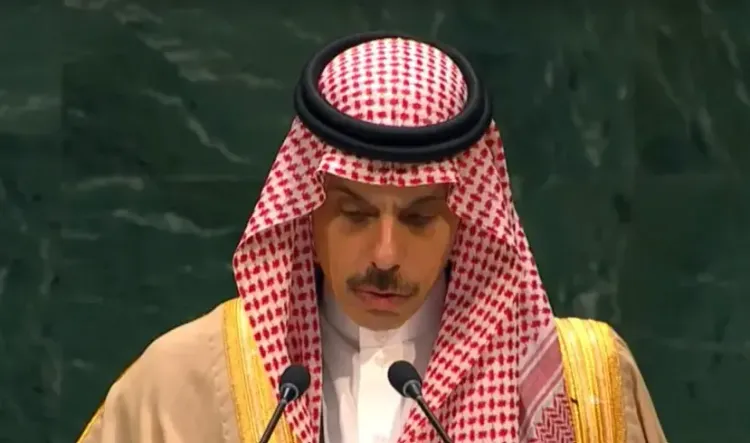
Saudi Foreign Minister Prince Faisal bin Farhan Al Saud on 27 September 2026 called for the Strait of Hormuz to be restored to its pre-February 28 status, free of any fees or restrictions, in an address to the 81st Session of the United Nations General Assembly in New York. The remarks underscore mounting international pressure to reopen one of the world's most critical maritime chokepoints following months of disruption tied to the US-Israel military strikes on Iran.
Key Demands at the UNGA Podium
Speaking during the general debate, Prince Faisal stressed the need for unimpeded freedom of navigation across several strategic waterways — including the Strait of Hormuz, Bab el-Mandeb Strait, Red Sea, and Gulf of Aden. He explicitly rejected the use of any of these routes as instruments of political pressure or military threat by any party.
The minister tied Gulf security directly to the global economy, arguing that stability in the region is inseparable from global energy security, international trade, and supply chain integrity. He also reaffirmed Saudi Arabia's support for de-escalation efforts and called for the entire region to remain free of weapons of mass destruction.
Background: How the Strait Became a Flashpoint
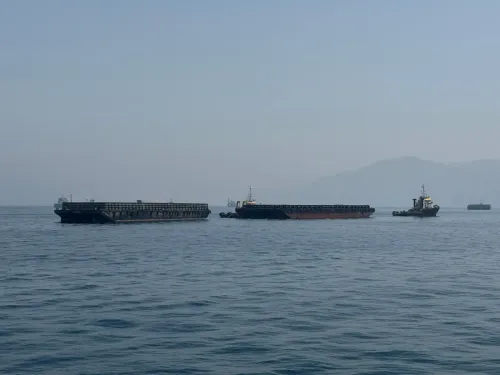
The crisis traces back to February 28, when the United States and Israel launched what reports described as a massive military strike against Iran. Tehran retaliated by targeting Israeli positions and multiple sites across the Middle East. The exchange triggered severe disruption to shipping through the Strait of Hormuz — a waterway through which a significant share of global oil exports, including Saudi Arabia's, transit — with knock-on effects across global energy markets and supply chains.
This is not the first time the strait has been weaponised in regional confrontations, but the scale of the current disruption, and its duration since late February, marks it as among the most consequential episodes in decades.
Iran's Seven-Day Reopening Proposal
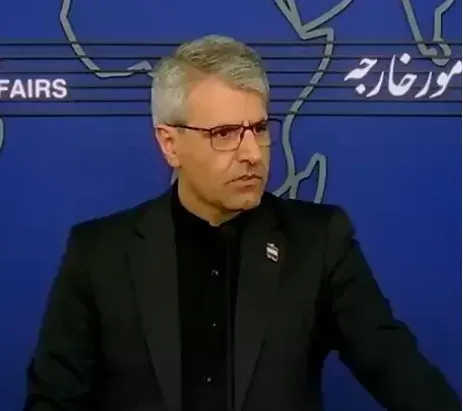
In a significant parallel development, Iranian Foreign Minister Seyed Abbas Araghchi told reporters at UN Headquarters in New York on Friday that Iran had conveyed to the United States — through Qatar acting as intermediary — a 'concrete' plan to reopen the strait within seven days, provided certain conditions are met.
According to Araghchi, the timeline would begin the moment Washington formally accepts the plan. Under the proposed framework, the US would need to fulfil specific actions that Iran believes will take approximately four to five days. On day six, the strait would reopen. 'And on day seven, the talks with the US will be started for the final deal on mutually agreed subjects,' he said.
Araghchi noted that the actions required of Washington are not new demands — they are reportedly already embedded in a memorandum of understanding (MoU) signed in June.
What Happens Next
The convergence of Saudi Arabia's public demand and Iran's conditional proposal at the same UNGA session signals a rare moment of diplomatic alignment on at least one outcome — reopening the strait — even as the broader US-Iran confrontation remains unresolved. Whether Washington moves to accept Iran's terms, and on what timeline, will be the decisive variable. Any reopening would have immediate consequences for global oil prices and shipping costs, both of which have been elevated since the February strikes.
Point of View
With Riyadh applying visible pressure on all parties while Tehran dangles a face-saving off-ramp for Washington. What the mainstream coverage underplays is the June MoU: if the conditions Iran now cites were already agreed in writing three months ago, the question is why the US has not acted on them. Saudi Arabia's real leverage here is economic — prolonged Hormuz disruption hurts Riyadh's own export revenues as much as anyone's, which is precisely why Faisal's tone at the UNGA was pointed rather than merely diplomatic.
NationPress
27 Sept 2026
Frequently Asked Questions
What did Saudi FM Prince Faisal say about the Strait of Hormuz at the UNGA?
Prince Faisal bin Farhan Al Saud called for the Strait of Hormuz to be restored to its pre-February 28 status, free of fees or restrictions. He also demanded freedom of navigation across the Bab el-Mandeb Strait, Red Sea, and Gulf of Aden, rejecting their use as instruments of pressure or threat.
Why has the Strait of Hormuz been disrupted since February 28?
The disruption followed US and Israeli military strikes against Iran on February 28, after which Iran retaliated by targeting Israeli and regional sites. Shipping through the strait — a critical conduit for global oil exports — has been significantly affected since then, impacting Saudi Arabia's oil exports and global supply chains.
What is Iran's seven-day plan to reopen the Strait of Hormuz?
Iranian FM Seyed Abbas Araghchi disclosed that Iran conveyed a concrete plan to the US via Qatar under which the strait can reopen within seven days of Washington accepting the proposal. The US would fulfil certain conditions in four to five days, the strait would reopen on day six, and formal talks for a final deal would begin on day seven.
What is the June MoU referenced by Iran's foreign minister?
Araghchi stated that the actions the US must take under the seven-day plan are not new demands — they are already included in a memorandum of understanding signed in June. The specific contents of the MoU have not been publicly disclosed.
What is the broader significance of the Strait of Hormuz for global trade?
The Strait of Hormuz is one of the world's most critical maritime chokepoints, through which a large share of global oil and gas exports transit. Saudi FM Faisal noted that Gulf stability is directly connected to global energy security, international trade, and supply chains, making any prolonged disruption an economy-wide concern well beyond the region.