Iran's Strait of Hormuz 'legal framework' will bring peace, end US role: Khamenei
Synopsis
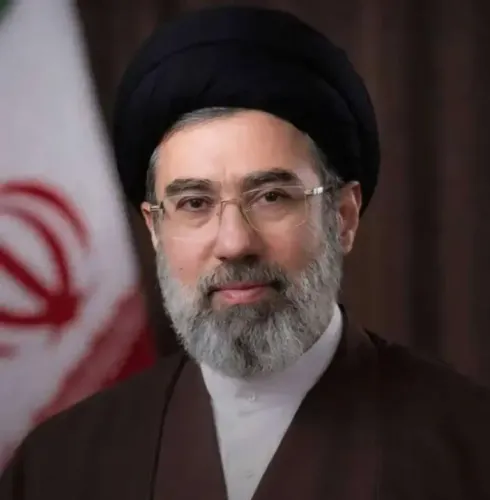
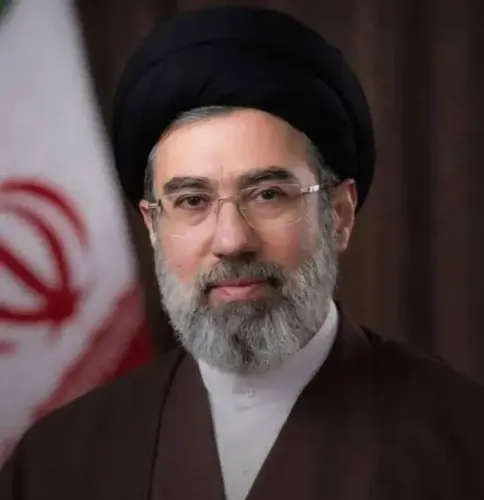
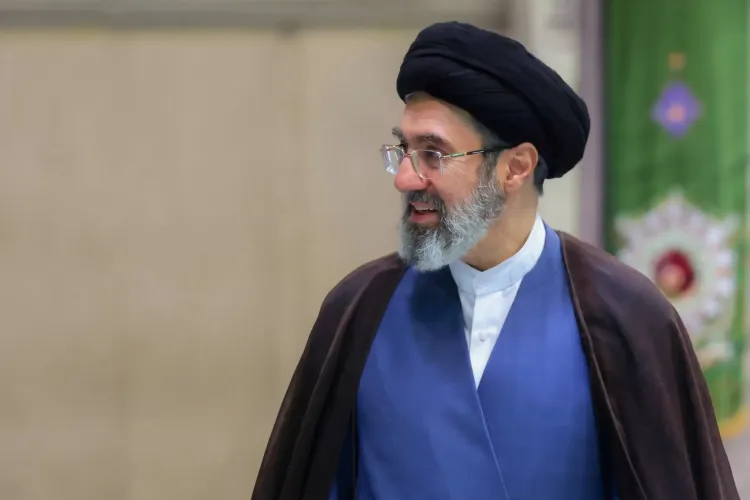
Iran's new Supreme Leader Mojtaba Khamenei has put the world on notice: Tehran intends to rewrite the rules governing the Strait of Hormuz — the chokepoint for roughly 20% of global oil supply — and wants the US military out of the Persian Gulf entirely. The message, delivered on Iran's National Persian Gulf Day, is as much a declaration of regional ambition as it is a geopolitical provocation.
Key Takeaways
Mojtaba Khamenei declared on 30 April 2025 that a new "legal framework" for the Strait of Hormuz will bring peace and development to the region.
He described the future of the Persian Gulf as one that will be "free of America," calling US military presence the "chief cause" of regional insecurity.
Khamenei stated that 90 million Iranians regard nuclear, missile, nano, and bio technologies as collective national heritage to be defended.
He warned that "foreigners who covetously meddle" from thousands of kilometres away have "no rightful place" in the Gulf.
No specific structural or timeline details of the proposed Hormuz management framework were disclosed.
Iran's Supreme Leader Mojtaba Khamenei on Thursday, 30 April declared that a new "legal framework" and management system for the Strait of Hormuz will bring progress and comfort to all nations in the region, while asserting that the future of the Persian Gulf will be "free of America." His remarks, released as a message on the occasion of Iran's National Day of the Persian Gulf, signal Tehran's intent to reshape control over one of the world's most strategically critical waterways.
A 'New Chapter' in the Persian Gulf
Khamenei described the current moment as a turning point, saying a "new chapter" is being drawn in the Persian Gulf and the Strait of Hormuz. He spotlighted what he called the "sacrifices" made by Iran for the independence of the Persian Gulf and for "confronting foreigners and aggressors," terming the Islamic Revolution a "turning point" in those resistances. The message was reported by Iran's state-affiliated Mehr News Agency.
"This strategic asset has long provoked the greed of many evildoers over the centuries. The record of repeated invasions by European and American foreigners — the insecurities, damages, and multiple threats they have imposed on the region's countries — reflects only a fraction of the malicious schemes of global oppressors against the peoples of the Persian Gulf," his message read, according to Mehr.
What the New Legal Framework Entails
"The new legal framework and management system for the Strait of Hormuz will advance comfort and development for all the region's nations, and its economic benefits will bring joy to the nation," Khamenei was quoted as saying. He did not provide specific details of the proposed framework's structure or timeline, though the assertion carries significant geopolitical weight given that the Strait of Hormuz is a chokepoint through which roughly 20% of the world's oil supply transits annually.
Khamenei also stated that Iran considers nuclear, missile, nano, and bio technologies as national assets to be defended as vigorously as its water, land, and air borders. "Today, 90 million Iranian people at home and abroad regard all national assets, including identity, spirituality, human talent, scientific innovation, industry, and fundamental technologies — from nano and bio to nuclear and missile technologies — as their collective heritage," he stated.
Direct Challenge to US Military Presence
Khamenei asserted that it has become evident to the world and regional states that US military presence in the Persian Gulf is the "chief cause" of insecurity in the region. "America's hollow bases can barely guarantee their own safety, let alone that of their dependents or pro-American allies in the area," he said.
He added that Iran will "secure the Persian Gulf region and eliminate the hostile enemy's abuses of this waterway." The remarks represent one of the sharpest articulations yet of Tehran's position on American military footprint in the Gulf, coming at a time when US-Iran nuclear negotiations are reportedly ongoing through back-channel diplomacy.
Regional Neighbours and Shared Destiny
Khamenei extended his message to neighbouring states, framing the Gulf's future as a collective regional project. "We, the peoples and neighbours of the Persian Gulf and the Sea of Oman, share a common destiny, and the foreigners who covetously meddle here from thousands of kilometres away have no rightful place, except at the depths of its waters," he said.
The future of the Persian Gulf, he emphasised, will be devoted to "progress, peace, and prosperity" for its nations — a framing that positions Iran as a stabilising force rather than a disruptive one, even as the substance of his remarks challenges the existing security architecture underpinned by the United States Navy's Fifth Fleet, headquartered in Bahrain. Whether regional states — many of which maintain close security ties with Washington — will align with Tehran's proposed framework remains to be seen.
Point of View
Tehran reserves room to manoeuvre while putting Gulf Arab states, which depend on both US security guarantees and open shipping lanes, in an uncomfortable position. The timing matters: back-channel US-Iran nuclear talks are reportedly active, and this kind of maximalist public posturing is a classic Iranian negotiating tactic — raise the temperature in public, extract concessions in private. The deeper question is whether Gulf neighbours will entertain any Iranian-led security architecture, given that Iran's own regional conduct — from Yemen to Iraq to Lebanon — is precisely what drove them toward Washington in the first place.
NationPress
29 Sept 2026
Frequently Asked Questions
What is Iran's proposed new legal framework for the Strait of Hormuz?
Iran's Supreme Leader Mojtaba Khamenei announced on 30 April 2025 that a new legal framework and management system for the Strait of Hormuz will bring progress and comfort to regional nations. No specific structural details or timelines were disclosed in the message reported by Mehr News Agency.
Why is the Strait of Hormuz strategically significant?
The Strait of Hormuz is one of the world's most critical oil chokepoints, through which roughly 20% of global oil supply transits. Control or disruption of the strait has direct consequences for global energy markets and regional security.
What did Khamenei say about US military presence in the Persian Gulf?
Khamenei called US military presence the 'chief cause' of insecurity in the Persian Gulf, adding that 'America's hollow bases can barely guarantee their own safety.' He stated that the region's future will be 'free of America.'
What did Khamenei say about Iran's nuclear and missile technologies?
Khamenei stated that Iran regards nuclear, missile, nano, and bio technologies as national assets — part of the collective heritage of 90 million Iranians — and will defend them as vigorously as its territorial borders.
How might Gulf Arab states respond to Iran's Hormuz framework proposal?
Gulf Arab states have not publicly responded to the proposal. Most maintain close security ties with the United States, including hosting US military bases, making alignment with an Iranian-led regional framework unlikely in the near term.