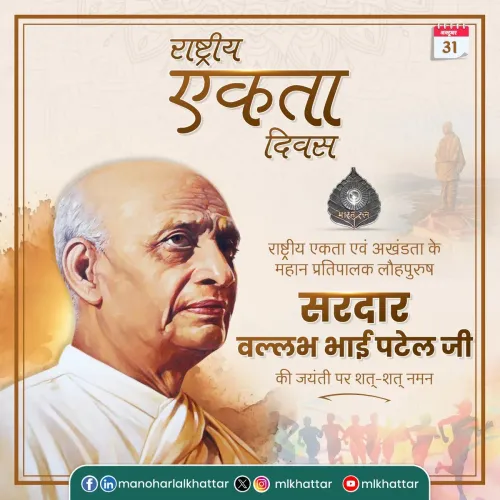
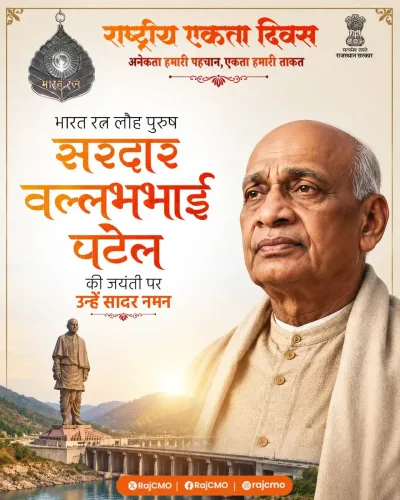
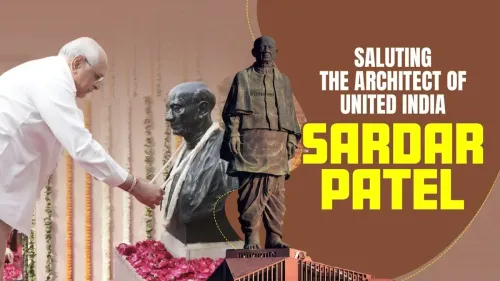
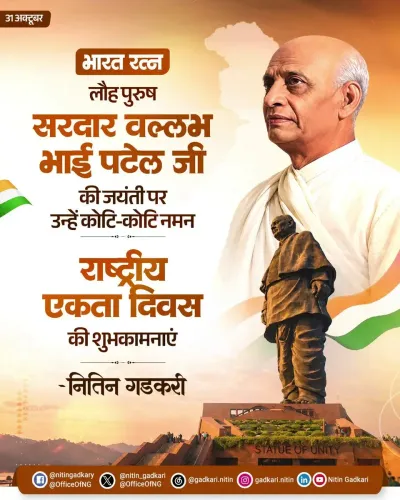
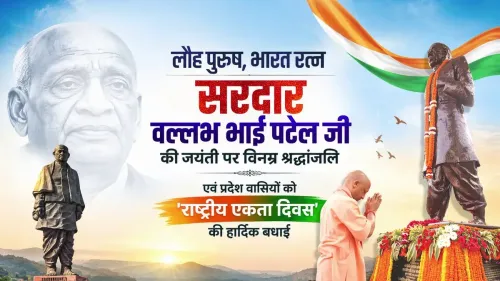
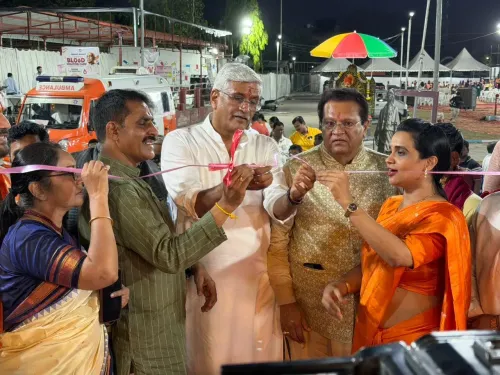
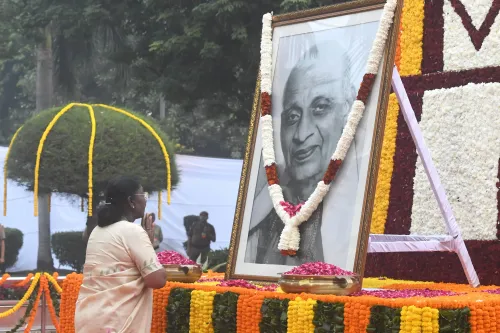
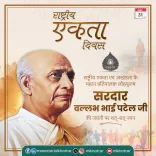
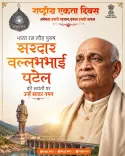
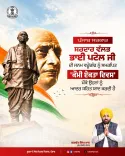
Lalan Singh pays tribute to Sardar Patel on Rashtriya Ekta Diwas
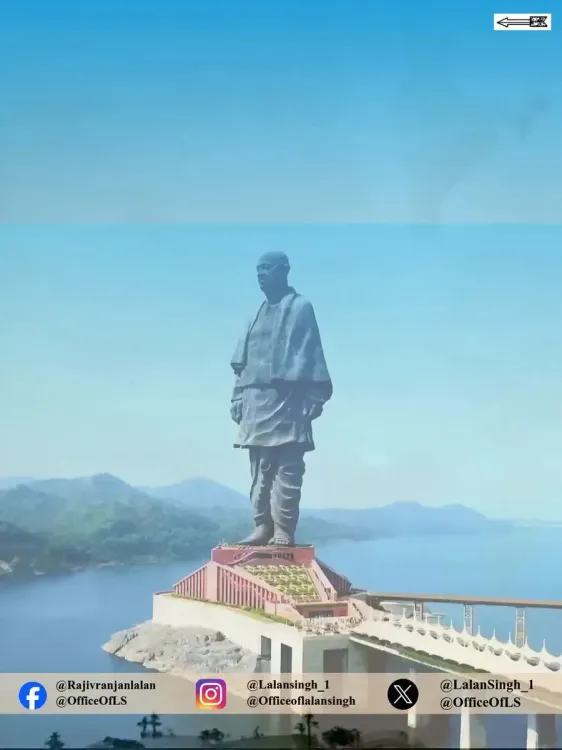
Synopsis
Union Minister Rajiv Ranjan Singh (Lalan Singh) paid tribute to Sardar Vallabhbhai Patel on his birth anniversary, Rashtriya Ekta Diwas, honouring the Iron Man's role in uniting over 500 princely states and calling his leadership an enduring inspiration for future generations.
Key Takeaways
Union Panchayati Raj and Fisheries Minister Lalan Singh paid tribute to Sardar Vallabhbhai Patel on 31 October 2026 .
Sardar Patel served as India's first Deputy Prime Minister and Home Minister , overseeing the integration of over 500 princely states post-Independence.
The Government of India declared 31 October as Rashtriya Ekta Diwas (National Unity Day) in 2014 to mark Patel's birth anniversary.
Lalan Singh described Patel as the 'shilpkar' (architect) of India's unity, integrity and sovereignty.
Annual Rashtriya Ekta Diwas observances include a national unity pledge administered at public institutions across India.
On the birth anniversary of the man who stitched more than 500 princely states into a single nation, Union Panchayati Raj and Fisheries Minister Rajiv Ranjan Singh — popularly known as Lalan Singh — bowed in remembrance to Sardar Vallabhbhai Patel on Saturday, 31 October 2026, marking Rashtriya Ekta Diwas.
In his post, the senior Janata Dal (United) leader saluted Patel as the 'shilpkar' — architect — of India's unity and integrity, writing: 'Innumerable salutations to Sardar Vallabhbhai Patel Ji, the architect of India's unity and integrity and the Iron Man, on his birth anniversary. His unparalleled contribution to the unity, integrity and sovereignty of the nation will always inspire the countrymen. His firm leadership and resolve for national service will remain a beacon of inspiration for generations to come.'
The Iron Man's unfinished revolution — and why it still resonates
Sardar Patel, India's first Deputy Prime Minister and Home Minister, achieved in the months after August 1947 what many historians consider one of the most audacious acts of statecraft in the twentieth century. Through a combination of persuasion, political pressure, and — where necessary — swift military action, he negotiated the accession of over 500 independent princely states into the Indian Union, preventing the subcontinent from fracturing into dozens of sovereign fragments. The Iron Man tag was earned, not gifted.
Rashtriya Ekta Diwas: a date that carries a national mandate
In 2014, the Government of India formally declared 31 October as Rashtriya Ekta Diwas — National Unity Day — to institutionalise the commemoration of Patel's birth anniversary and reinforce the idea of an undivided India. Every year on this date, the unity pledge is administered at schools, government offices and public events across the country, making it one of the few national observance days tied directly to a specific constitutional achievement rather than a symbolic ideal.
Lalan Singh's tribute is part of that broad, annual current of official remembrance — but coming from a minister who also oversees grassroots governance through the Panchayati Raj portfolio, the invocation of Patel carries a particular resonance. Patel's vision of a unified India was, at its core, a vision of an India governed from the ground up — villages, districts and states bound by a common sovereign thread.
Each 31 October, the nation does not merely recall a statesman. It reaffirms a choice made under extraordinary pressure — that diversity need not mean division. That, more than any monument, is Sardar Patel's living legacy.
Point of View
Invoking Patel is also a subtle alignment with the BJP-led NDA's long-standing project of reclaiming Patel as the pre-eminent nation-builder. The tribute signals institutional continuity — the NDA's annual insistence that Patel's legacy of unity remains the governing template. Whether that framing holds traction beyond the day's ceremonies is the question each 31 October quietly poses.
NationPress
31 Oct 2026
Frequently Asked Questions
Why is 31 October celebrated as Rashtriya Ekta Diwas?
31 October is Rashtriya Ekta Diwas (National Unity Day) because it marks the birth anniversary of Sardar Vallabhbhai Patel , who integrated over 500 princely states into India after independence. The Government of India officially declared the date in 2014 .
Who is Sardar Vallabhbhai Patel and why is he called the Iron Man of India?
Sardar Vallabhbhai Patel was India's first Deputy Prime Minister and Home Minister . He is called the Iron Man because of his resolute, unflinching effort to negotiate and — where necessary — compel the accession of over 500 independent princely states into the Indian Union after 1947 .
What did Lalan Singh say about Sardar Patel on his 2026 birth anniversary?
Union Minister Lalan Singh called Patel the 'architect of India's unity and integrity,' saying his unparalleled contribution to national unity and sovereignty would always inspire citizens, and that his firm leadership would remain a beacon for future generations.
Who is Lalan Singh and which ministry does he head?
Rajiv Ranjan Singh , popularly known as Lalan Singh , is a senior Janata Dal (United) leader and Union Minister for Panchayati Raj, Fisheries, Animal Husbandry and Dairying in the Government of India.
What events are held on Rashtriya Ekta Diwas every year?
Every 31 October , central and state governments organise a national unity pledge at schools, government offices and public gatherings across India, along with run-for-unity events and programmes commemorating Sardar Patel's contribution to national integration.