PM Modi hails ISRO on GSLV-F18 launch of NavIC satellite NVS-03
Synopsis
Prime Minister Narendra Modi congratulated ISRO on the successful GSLV-F18 launch of NVS-03, a second-generation NavIC satellite, calling it a key step toward self-reliance in critical navigation technologies under the Atmanirbhar Bharat vision.
Key Takeaways
GSLV-F18 successfully placed the NVS-03 navigation satellite into orbit on 31 October 2026 .
NVS-03 is a second-generation satellite designed to modernise and strengthen the NavIC constellation with improved signals and longer life.
NavIC was first launched with IRNSS-1A in July 2013 and declared fully operational in 2018 with seven satellites.
The mission supports India's Atmanirbhar Bharat goal of reducing dependence on foreign navigation systems such as GPS.
Key beneficiaries include India's defence forces, civil aviation, fisheries, disaster response , and civilian smartphone users.
Further NVS-series launches are planned to complete the upgraded constellation and expand NavIC integration into public infrastructure.
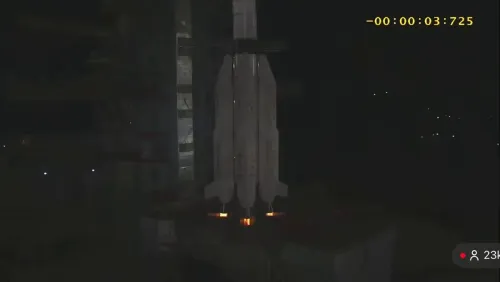
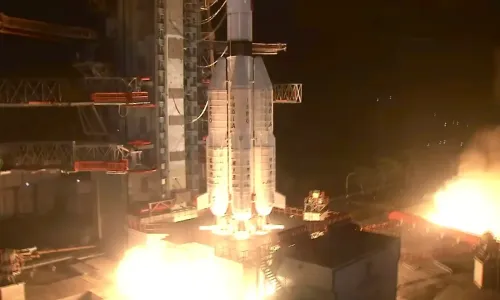
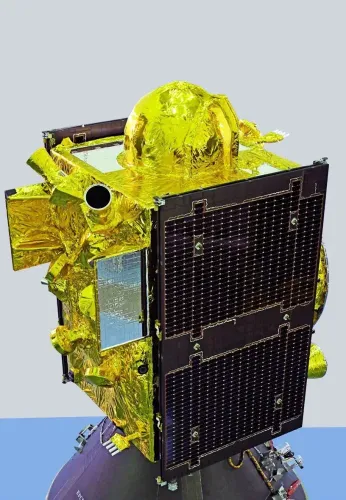
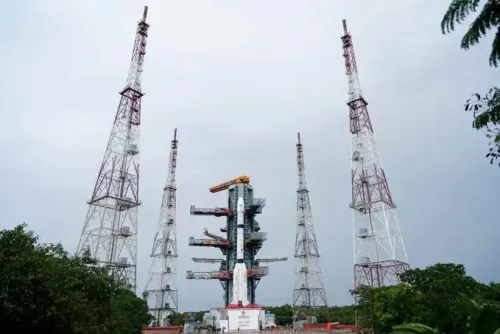
India's push for self-reliance in space-based navigation cleared another milestone on Saturday, 31 October 2026, as Prime Minister Narendra Modi congratulated ISRO scientists and engineers on the successful launch of GSLV-F18 carrying the NVS-03 navigation satellite — the latest addition to India's indigenous NavIC constellation.
Posting on X, PM Modi said the mission 'marks an important step in strengthening NavIC, our indigenous satellite navigation system,' adding that NVS-03 is 'equipped with enhanced capabilities' that will 'further our pursuit of self-reliance in critical technologies and support navigation services that benefit our people.'
What NVS-03 adds to India's navigation constellation
NavIC — short for Navigation with Indian Constellation — is India's answer to the American GPS, designed to deliver precise positioning services over India and the surrounding region. The system traces its origins to July 2013, when the first satellite in the series, IRNSS-1A, lifted off, and was declared fully operational in 2018 after seven satellites were in orbit.
NVS-03 belongs to the second generation of NavIC satellites, built to modernise the constellation with improved signal strength, longer operational life, and expanded capabilities. The GSLV-F18 rocket — a variant of ISRO's workhorse Geosynchronous Satellite Launch Vehicle — placed the satellite into its intended orbit, underlining ISRO's continued mastery of heavy-lift launches for strategic payloads.
Atmanirbhar Bharat in orbit: the strategic logic
The strategic case for NavIC is straightforward: dependence on a foreign navigation system is a vulnerability, especially for defence applications, disaster response, and critical infrastructure. India's experience watching GPS access become a geopolitical lever for other nations sharpened the resolve to field its own system.
Every NVS-series launch is a direct expression of the Atmanirbhar Bharat — self-reliant India — doctrine that has shaped science and technology policy across sectors, from semiconductors to space. The defence forces, civil aviation, fisheries, and emergency services all stand to gain from a more robust, domestically controlled navigation grid.
What comes next for NavIC
The completion of the upgraded NVS-series constellation is the immediate priority, with further launches expected to cement redundancy and coverage. Integration of NavIC signals into the smartphone ecosystem and public infrastructure — roads, railways, precision agriculture — remains the longer runway where the system's civilian value will truly land.
India's space scientists have built something rare: a sovereign navigation capability that fewer than a handful of nations on Earth possess. That list is about to get sharper.
Point of View
Decade-long strategy to own the full stack of critical space infrastructure. By upgrading NavIC with second-generation satellites, India is signalling that its navigation ambitions extend beyond symbolic sovereignty to genuine operational parity with established global systems. PM Modi's congratulatory post, explicitly linking the mission to Atmanirbhar Bharat, reinforces the government's framing of space as a strategic-industrial domain, not just a scientific one. The real test will be how quickly NavIC signals penetrate consumer devices and defence platforms — that is where declared policy becomes lived capability.
NationPress
31 Oct 2026
Frequently Asked Questions
What is NVS-03 and why was it launched?
NVS-03 is a second-generation NavIC navigation satellite launched aboard GSLV-F18 to modernise India's indigenous satellite navigation constellation with improved signals and longer operational life.
What is NavIC and how is it different from GPS?
NavIC (Navigation with Indian Constellation) is India's own regional satellite navigation system, providing positioning services over India and nearby areas. Unlike GPS, which is operated by the United States, NavIC is fully under Indian control.
When did NavIC become operational?
NavIC was declared fully operational in 2018, after seven satellites — beginning with IRNSS-1A in July 2013 — were successfully placed in orbit by ISRO.
Who benefits from NavIC satellites like NVS-03?
NavIC serves India's defence forces, civil aviation, disaster response teams, fisheries, and increasingly civilian users through smartphone integration and public infrastructure applications.