CM Hemant Soren: Banks Still Failing Tribal, Rural Borrowers
Synopsis
Jharkhand Chief Minister Hemant Soren has flagged a persistent gap between official banking figures and ground-level credit access in tribal and rural areas, calling for urgent reform in how banks serve indigenous and rural communities across the state.
Key Takeaways
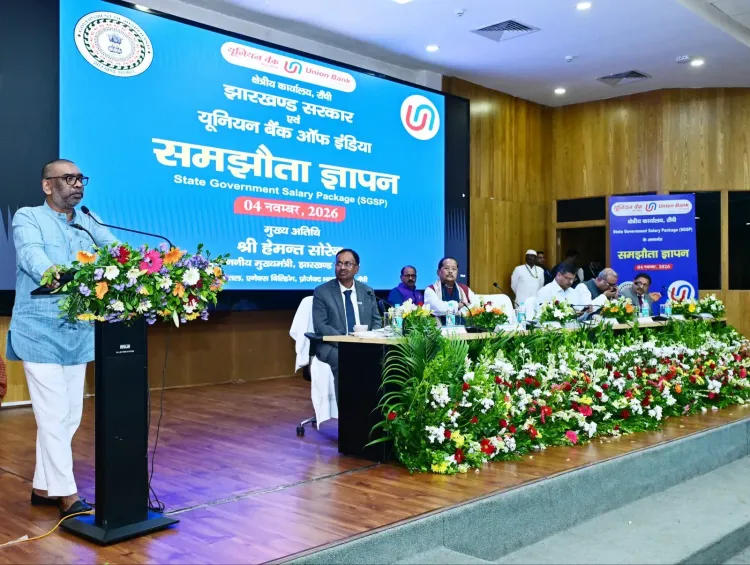
CM Hemant Soren stated on November 4, 2026 that official bank data masks real credit shortfalls in Jharkhand's tribal and rural areas.
Field visits to indigenous communities directly informed his remarks, undercutting reliance on paper metrics alone.
Jharkhand has over 26 percent Scheduled Tribe population, making last-mile banking access a high-stakes governance issue.
The Pradhan Mantri Jan Dhan Yojana (launched 2014 ) expanded account access but has not fully bridged the credit delivery gap in tribal belts.
Jharkhand's administration has previously raised implementation shortfalls with the Reserve Bank of India and public-sector banks.
The statement signals potential follow-up directives on credit disbursement and bank outreach in Scheduled Area districts.
The numbers on paper may look promising — but the ground tells a different story. Chief Minister Hemant Soren of Jharkhand said on Wednesday, November 4, 2026 that field visits to rural and tribal areas make it starkly clear that indigenous communities and ordinary citizens are still being denied adequate banking support and credit access, and that meaningful reform is overdue.
Posting from the Chief Minister's Office of Jharkhand on X, Soren said — 'कागजी आंकड़े भले ही अच्छे दिखते हों' ('the paper figures may look good') — but the reality on the ground in rural and tribal zones reveals persistent shortfalls in the support and loans that banks are expected to provide to moolvasiyon (indigenous residents) and the general public.The Gap Between Official Metrics and Village Reality
Jharkhand is home to one of India's largest Scheduled Tribe populations, accounting for over 26 percent of the state's residents. Despite over a decade of financial inclusion drives — including the Pradhan Mantri Jan Dhan Yojana launched in 2014, which pushed banking access and credit linkage into rural India — field realities in tribal belts have stubbornly lagged behind headline numbers. The pattern is a familiar and frustrating one: central and state agencies report rising bank account penetration and priority-sector lending figures, while district-level assessments in Scheduled Areas continue to flag poor credit disbursement, inadequate branch coverage and broken grievance redressal mechanisms. Soren's remarks signal that his administration has not accepted those official figures at face value.Jharkhand's Recurring Push on Last-Mile Credit
Jharkhand's government has periodically flagged implementation shortfalls with the Reserve Bank of India and public-sector banks, pressing for stronger last-mile delivery in districts where land, language and distance barriers compound the difficulty of accessing formal credit. The Chief Minister's direct citation of field visits — rather than a data report or committee recommendation — lends his statement an on-the-ground authority that is harder for banking institutions to deflect. For tribal households that need credit to invest in agriculture, forest-produce trade, or small enterprise, a gap between what scheme documents promise and what a bank branch actually delivers can be the difference between a productive season and a cycle of informal debt. That is the stakes Soren is pointing at.What Comes Next for Tribal Banking Access in the State
The statement sets up an expectation of concrete follow-through: state-level coordination meetings with bank heads, possible directives to district collectors and lead district managers, and a sharper audit of credit disbursement in Scheduled Areas. Whether the Chief Minister's public pressure translates into measurable changes in loan approvals and branch outreach in tribal districts will be the test that matters.For a state where financial exclusion is not a statistic but a lived condition for millions, the Chief Minister has drawn a clear line — and put the banking system on notice.
Point of View
And linking banking failure to indigenous rights frames a bureaucratic shortfall as a justice issue. The real test will be whether this public call triggers a formal state-bank coordination mechanism or remains a pointed but unacted-upon statement.
NationPress
4 Nov 2026
Frequently Asked Questions
What did Jharkhand CM Hemant Soren say about banks and tribal communities?
CM Hemant Soren said that despite positive-looking official data, field visits to rural and tribal areas in Jharkhand reveal that indigenous and rural residents are still not receiving adequate banking support and loans, and that reform is needed.
Why do tribal areas in Jharkhand face banking access problems?
Tribal areas in Jharkhand face barriers including inadequate bank branch coverage, language and geographic distance challenges, poor grievance redressal, and gaps between scheme-mandated credit targets and actual disbursement on the ground.
What is the Pradhan Mantri Jan Dhan Yojana and has it helped Jharkhand tribals?
Pradhan Mantri Jan Dhan Yojana, launched in 2014, expanded bank account access across rural and tribal India, but field assessments in Jharkhand's tribal belts continue to show that account ownership has not translated into proportionate credit access or loan disbursement.
How large is Jharkhand's tribal population?
Scheduled Tribes make up over 26 percent of Jharkhand's population, making the state one of India's most significant for tribal welfare and financial inclusion policy.
What action is expected following Hemant Soren's remarks on bank credit for tribals?
The statement is expected to precede state-level coordination meetings with public-sector bank heads and possible directives to district officials to audit and improve credit disbursement in Scheduled Area districts of Jharkhand.