CM Hemant Soren Issues Forest & Wildlife Directives
Synopsis
Chief Minister Hemant Soren chaired a forest and environment review on 20 July 2026, directing officials to digitally map forest cover changes within one month, saturate pending tribal forest rights claims, promote commercial plantations at the gram sabha level, expand eco-tourism via JETA, and submit a carbon credit action plan.
Key Takeaways
CM Hemant Soren chaired a Forest, Environment and Climate Change department review on 20 July 2026 and issued multiple directives.
Officials must present a digital record of changes in forest cover, plantations, wildlife, and national parks within one month .
The department has been asked to saturate pending IFR and CFR forest land-title claims in coordination with the Welfare Department , reviving the Abua Bir Abua Dishom Abhiyan .
Commercial species, bamboo, and cashew plantations are to be promoted at the gram sabha level; promotion of invasive species like Acacia has been explicitly prohibited.
JETA is to advance all eco-tourism activities, while a carbon credit action plan must be submitted linking the Birsa Harit Gram Yojana and other schemes.
The department must also address sluggish transit tax collection, publicise its toll-free helpline, adopt new technology to reduce human-wildlife conflict, and complete all pending appointments.
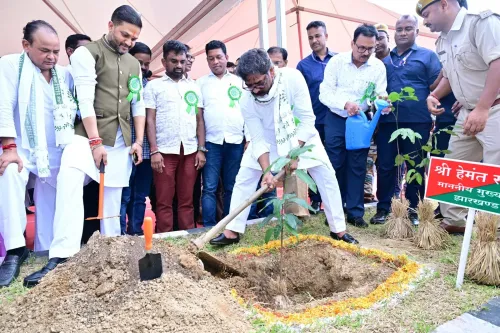
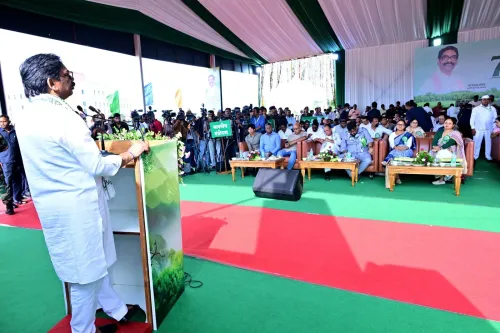
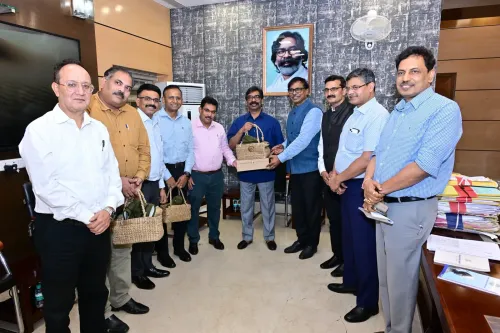
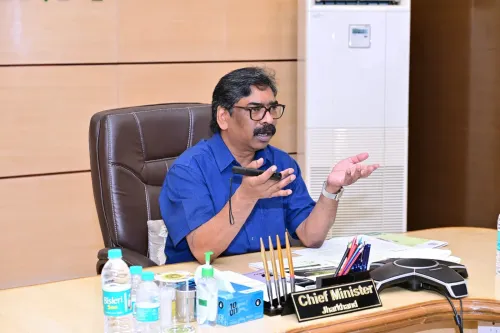
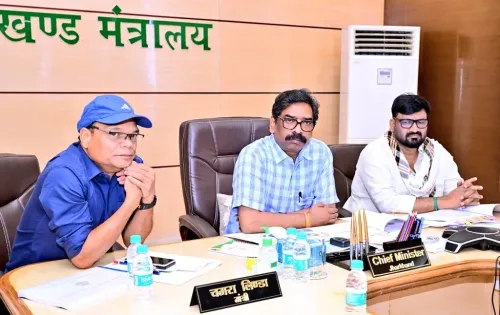
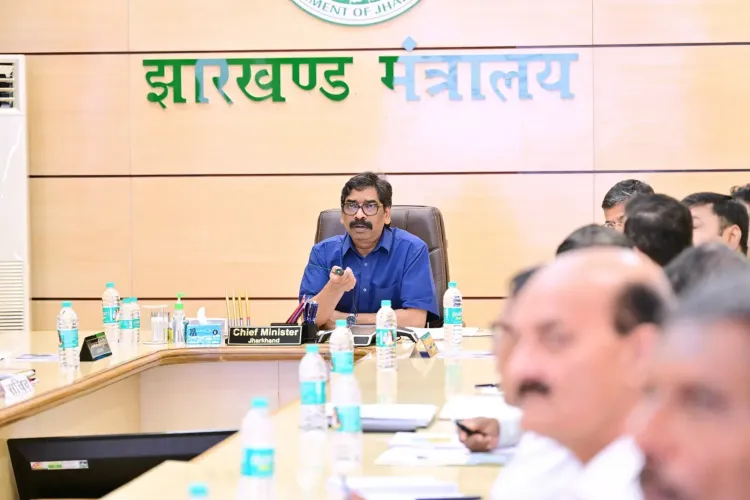
Jharkhand Chief Minister Hemant Soren on Monday, 20 July 2026, chaired a review meeting of the Forest, Environment and Climate Change department and issued a sweeping set of directives covering forest cover mapping, tribal land rights, commercial plantations, eco-tourism, and carbon credits — signalling a push to close the gap with neighbouring states on forest governance.
Context
CM Soren directed officials to digitally document changes in Jharkhand's forest cover, plantations, wildlife, and national parks across different timelines — and to present the findings within one month using a digital process. Acknowledging the state's relative underperformance, he stated plainly: 'हमारे समानांतर, पड़ोसी राज्य आगे हैं और हमारा राज्य अभी भी बहुत पीछे है' ('Our neighbouring states are ahead of us, and our state is still far behind').
The Chief Minister also called for the saturation of pending Individual Forest Rights (IFR) and Community Forest Rights (CFR) land-title claims — a process that grants forest-dwelling communities legal ownership of the land they have historically cultivated or inhabited under the Scheduled Tribes and Other Traditional Forest Dwellers (Recognition of Forest Rights) Act, 2006.
Policy Backdrop
Soren directed that the Abua Bir Abua Dishom Abhiyan — a state campaign to accelerate forest rights distribution in tribal areas — be revived at speed in coordination with the Welfare Department, noting that the scheme had earlier gained momentum but had since slowed. He also asked officials to promote the Birsa Harit Gram Yojana and other existing schemes in connection with a new carbon credit action plan to be submitted to the government.
On plantations, the CM was specific: officials must scale up commercial species, bamboo, and cashew plantations at the gram sabha level with community participation, and must actively avoid promoting invasive species such as Acacia. He further directed the use of seed balls as a technology-driven method for sowing seeds across forest areas.
Stakeholders and Impact
Tribal communities and forest dwellers stand to benefit most directly from the push to saturate IFR and CFR claims, which would formalise their land rights and improve livelihood security. Gram sabhas — village assemblies — are specifically tasked with driving commercial plantation drives, ensuring community-level ownership of the effort.
On human-wildlife conflict, CM Soren reiterated earlier instructions to minimise losses and directed the department to adopt new technologies and to more widely publicise its toll-free helpline number so that residents can report problems and share suggestions. The Jharkhand Eco Tourism Authority (JETA) was asked to advance all eco-tourism activities to boost revenue from forest areas. Officials were also told to address the sluggish pace of transit tax collection and to prepare action plans to curb pollution across the state.
What's Next
The most immediate deliverable is the one-month digital mapping exercise on forest cover changes, which will set a baseline for future policy decisions. Simultaneously, the department is expected to fast-track all pending appointments and submit a carbon credit action plan linking existing schemes with new frameworks.
If implemented as directed, the combined thrust on rights saturation, commercial plantations, eco-tourism, and carbon credits could position Jharkhand more competitively among eastern Indian states on forest governance — while also generating new income streams for tribal communities at the village level.
Point of View
Which could accelerate bureaucratic action. The linking of village-level plantation drives with carbon credit frameworks is a forward-looking fiscal move that could generate new revenue streams for tribal communities if implementation follows through. However, the recurring nature of these directives — many echoing earlier instructions — raises a legitimate question about whether the bottleneck lies in policy design or in departmental capacity.
NationPress
20 Oct 2026
Frequently Asked Questions
What did Hemant Soren announce for Jharkhand forests in July 2026?
On 20 July 2026, CM Hemant Soren directed the Forest, Environment and Climate Change department to digitally map all changes in forest cover, plantations, wildlife, and national parks within one month, and issued a range of directives on tribal land rights, commercial plantations, eco-tourism, and carbon credits.
What is the Abua Bir Abua Dishom Abhiyan?
Abua Bir Abua Dishom Abhiyan is a Jharkhand government campaign designed to accelerate the distribution of forest rights and related welfare activities for tribal communities. CM Soren has directed it be revived and fast-tracked in coordination with the Welfare Department.
What are IFR and CFR claims in Jharkhand?
IFR (Individual Forest Rights) and CFR (Community Forest Rights) are land titles granted to forest-dwelling communities under the Forest Rights Act, 2006. CM Soren has directed officials to 'saturate' — meaning fully process and distribute — all pending such claims in Jharkhand.
What is JETA and what is its role in Jharkhand?
JETA stands for the Jharkhand Eco Tourism Authority. CM Soren has tasked it with advancing all eco-tourism activities in the state as part of a broader push to generate revenue from Jharkhand's forest areas.
How does Birsa Harit Gram Yojana relate to carbon credits?
Birsa Harit Gram Yojana is a Jharkhand afforestation scheme. CM Soren has directed officials to link it with other schemes and submit a carbon credit action plan, potentially enabling the state and tribal communities to earn revenue from verified carbon sequestration.