CM Hemant Soren Directs Comprehensive SHG Push in Jharkhand

Synopsis
Jharkhand CM Hemant Soren chaired a Rural Development Department review on 27 May 2026, directing comprehensive support for SHG women through Maiyan Yojana, Palash brand, Didi Cafes, and a landmark move to link the Birsa Harit Gram afforestation scheme to carbon credit markets.
Key Takeaways
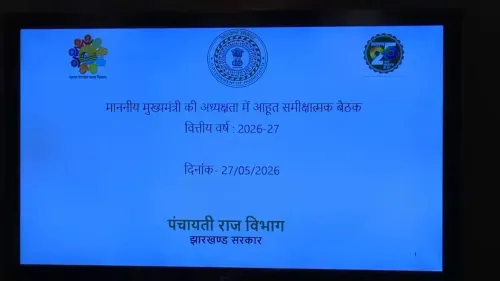
CM Hemant Soren chaired a Rural Development Department review meeting on 27 May 2026 .
Directives covered housing construction, Maiyan Yojana , Johar Pariyojana , Palash brand , Didi Cafe , and Birsa Harit Gram .
The department was instructed to provide 'comprehensive support' to SHG-linked women to accelerate their economic advancement.
Beneficiaries of the Maiyan Yojana are to be formally linked with SHG networks.
The Birsa Harit Gram afforestation programme is to be connected to carbon credit markets, a potentially path-breaking step for tribal villages.
CM Soren described Jharkhand 's women as highly skilled and said the time has come to give them 'a new platform.'
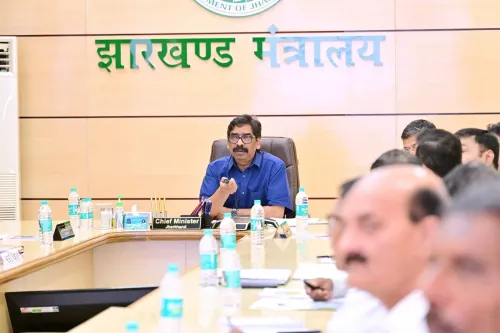
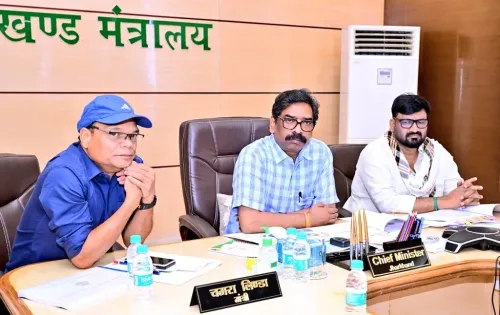
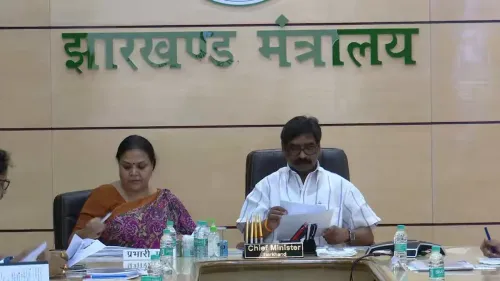
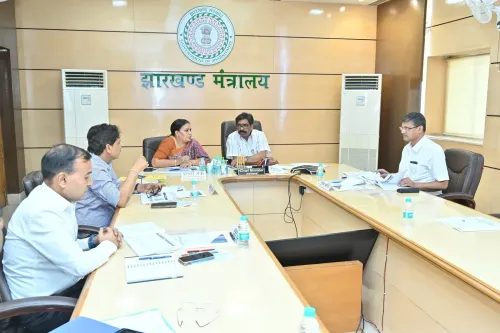
Jharkhand Chief Minister Hemant Soren on Wednesday, 27 May 2026 chaired a review meeting of the Rural Development Department, issuing wide-ranging directives to accelerate housing construction, strengthen women's self-help groups, and link flagship state schemes to new economic platforms including carbon credit markets.
Context
Posting on X after the meeting, CM Soren outlined instructions covering housing construction, the Maiyan Yojana, the Johar Pariyojana, the Palash brand, Didi Cafe, and the Birsa Harit Gram programme. In his words, 'हमारे राज्य की आधी आबादी बहुत हुनरमंद है, अब वक्त आ गया है उन्हें नया प्लेटफार्म देने का' — 'half the population of our state is very skilled; the time has come to give them a new platform.'
The Chief Minister directed the department to provide 'comprehensive support' to mothers and sisters linked with Self-Help Groups (SHGs) so that they can advance rapidly through their own skill, hard work, and talent. He also specifically called for connecting beneficiaries of the Maiyan Yojana — a state scheme providing financial assistance to women — with SHG networks.
Policy Backdrop
Jharkhand has been building its SHG ecosystem since adopting the National Rural Livelihoods Mission (NRLM) framework in 2011. The Johar Pariyojana, launched in 2017 with World Bank support, targets tribal households across the state through farm and non-farm livelihood interventions.
The Palash brand was created to give market identity and commercial reach to products crafted by women artisans and SHG members. Didi Cafes extend this model into the food and hospitality sector, giving SHG women an entrepreneurship platform at the district level. The instruction to link Birsa Harit Gram — an afforestation programme named after tribal icon Birsa Munda — with carbon credits signals an intent to monetise the state's green cover through emerging carbon markets.
Stakeholders and Impact
The directives directly concern rural and tribal women enrolled in SHGs across Jharkhand's districts, as well as households benefiting from the Maiyan Yojana. By bundling livelihood support with skill platforms, market linkages, and carbon-credit incentives, the government is attempting to address economic inclusion and climate goals simultaneously.
The push to strengthen the Palash brand and expand Didi Cafes could open new commercial channels for women producers, while the carbon-credit linkage for Birsa Harit Gram may generate additional revenue for participating villages and incentivise continued afforestation in tribal blocks.
What's Next
The Rural Development Department has been tasked with translating these directives into a comprehensive support package for SHG members. Key milestones to watch include the rollout of structured assistance plans for women entrepreneurs and the progress of carbon-credit monetisation under the Birsa Harit Gram scheme.
If the carbon-credit linkage is operationalised, Jharkhand could become one of the first Indian states to formally integrate a rural afforestation programme with voluntary carbon markets — a model that other tribal-majority states may look to replicate.
Point of View
Consolidating several schemes under a single comprehensive support architecture. Linking Birsa Harit Gram to carbon credits is the most structurally novel element — it attempts to convert tribal afforestation labour into a tradeable asset, blending social policy with green finance. This fits a broader pattern in Jharkhand of using JMM's tribal identity politics as a policy engine, keeping women's livelihoods and environmental stewardship at the centre of the governance narrative ahead of future electoral cycles. Whether implementation matches the directive's ambition will depend on the department's capacity to coordinate across the Palash, Johar, and NRLM frameworks simultaneously.
NationPress
11 Oct 2026
Frequently Asked Questions
What is the Maiyan Yojana in Jharkhand?
The Maiyan Yojana is a Jharkhand state scheme that provides financial assistance and livelihood linkages to women, particularly mothers, across the state. CM Soren has now directed that its beneficiaries be formally connected with Self-Help Group networks for broader economic support.
What is Birsa Harit Gram and how will it be linked to carbon credits?
Birsa Harit Gram is a Jharkhand government programme promoting afforestation and sustainable village development, named after tribal icon Birsa Munda . CM Soren has directed the Rural Development Department to link this scheme to carbon credit markets, which would allow villages to earn revenue by monetising their afforestation efforts.
What is the Palash brand in Jharkhand?
Palash is a state-backed brand created to market products made by women's self-help groups and artisans in Jharkhand . CM Soren's latest directive calls for its further strengthening to expand commercial opportunities for SHG women.
What is the Johar Pariyojana?
The Johar Pariyojana is a World Bank -supported rural livelihoods project launched in Jharkhand in 2017 , aimed at improving farm and non-farm incomes of tribal households. It was among the schemes reviewed in CM Soren's 27 May 2026 departmental meeting.
What are Didi Cafes in Jharkhand?
Didi Cafes are women-run food outlets operated by self-help groups across Jharkhand districts, designed to provide employment and entrepreneurship opportunities to rural women. They form part of the state's broader SHG empowerment ecosystem reviewed by CM Soren on 27 May 2026 .