CM Hemant Soren Directs Faster Rural Housing, SHG Tech Training
Synopsis
Chief Minister Hemant Soren on 27 May 2026 called SHG women the most vital force in Jharkhand's rural economy and directed officials to fast-track rural housing delivery under PMAY-G while rolling out technical training for self-help group members across the state.
Key Takeaways
CM Hemant Soren declared women in self-help groups the most important contributors to strengthening Jharkhand's rural economy.
Officials were directed to accelerate rural housing schemes, with PMAY-G as the primary central framework for pucca house delivery.
The Chief Minister ordered technical training for SHG women — referred to as didiyan — to upgrade their skills beyond credit access.
The Jharkhand State Livelihood Promotion Society (JSLPS) is the state nodal agency responsible for implementing SHG and NRLM programmes.
The directives reflect a convergence approach linking women's collectives with housing and livelihoods delivery in rural Jharkhand .
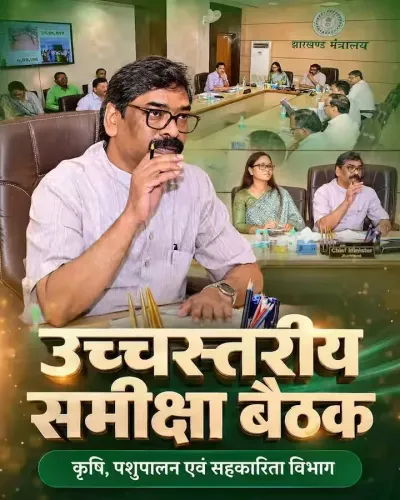
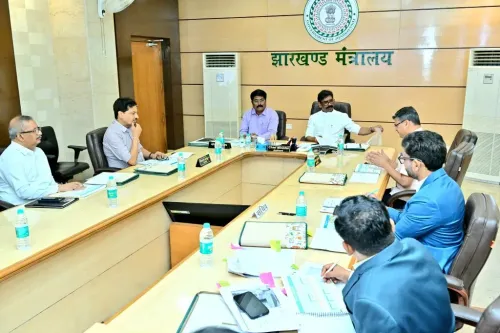
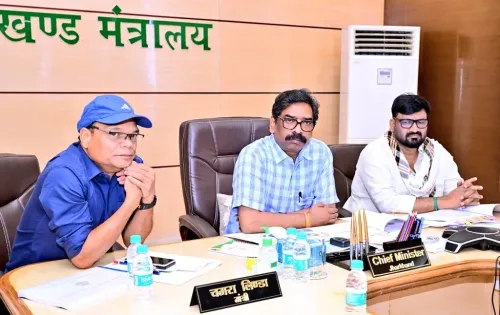
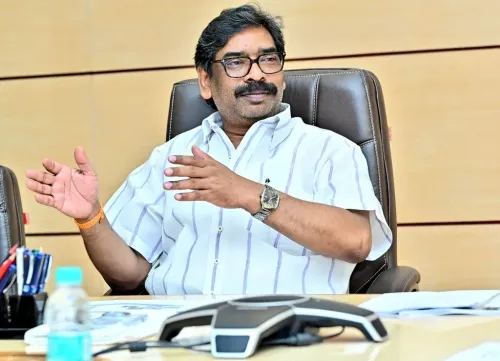
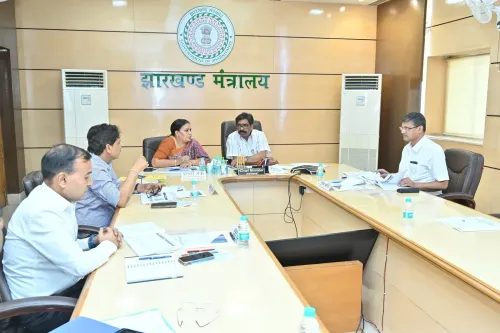
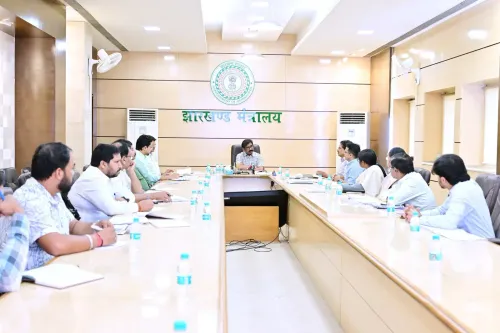
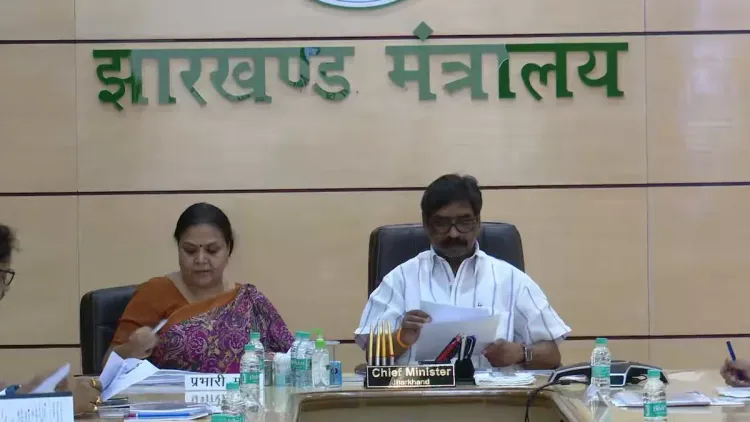
The Chief Minister's Office of Jharkhand on Wednesday, 27 May 2026 shared remarks by Chief Minister Hemant Soren underlining that women linked to self-help groups are the most critical contributors to strengthening the rural economy, while directing officials to accelerate rural housing schemes and extend technical training to SHG members.
Context
Addressing officials, CM Soren stated — 'ग्रामीण अर्थव्यवस्था को मजबूत करने में सेल्फ-हेल्प ग्रुप से जुड़ी महिलाओं की भागीदारी सबसे महत्वपूर्ण है' ['The participation of women associated with self-help groups is the most important factor in strengthening the rural economy']. The statement signals a policy emphasis on treating SHG women not merely as beneficiaries but as active drivers of rural growth in Jharkhand. The Chief Minister simultaneously issued directions to speed up rural housing delivery and provide technical skills to the women referred to as didiyan (sisters) within the SHG network.
Policy Backdrop
Self-help groups in India gained institutional momentum with the launch of the National Rural Livelihoods Mission (NRLM) in 2011, which sought to organise rural women into community collectives for savings, credit access and micro-enterprise development. In Jharkhand, the Jharkhand State Livelihood Promotion Society (JSLPS) serves as the nodal agency implementing NRLM and SHG programmes across the state. The convergence of SHG networks with housing delivery has been a recurring feature of state-level rural policy, particularly under the Pradhan Mantri Awas Yojana-Gramin (PMAY-G), the central scheme launched in 2016 to provide pucca houses to deprived rural households.
The directive to provide technical training to SHG women reflects a broader national push to move these groups beyond basic credit linkage toward sustainable livelihoods and enterprise. States that have invested in skill-building within SHG ecosystems have reported stronger economic outcomes for member households, though specific figures for Jharkhand's current targets were not available from verified records.
Stakeholders and Impact
The primary beneficiaries of these directives are rural women SHG members across Jharkhand who stand to gain both faster access to housing under PMAY-G and new technical skills that could diversify their income sources. Rural households awaiting housing assistance under pending scheme allocations are also directly affected by the instruction to accelerate implementation. The directive adds institutional weight to the role of JSLPS and district-level officials in coordinating housing and livelihood delivery on the ground.
For the broader rural economy of Jharkhand — a state with significant tribal and agrarian populations — integrating women's collectives with infrastructure programmes has implications for household income stability, women's agency and local economic circulation. Technical training modules, once rolled out, could enable SHG members to participate in construction-linked livelihoods, digital financial services and value-chain enterprises.
What's Next
Attention will now turn to how swiftly state agencies translate the Chief Minister's directives into on-ground action — specifically the pace of PMAY-G housing completions and the design and rollout of technical training curricula for SHG women across Jharkhand's districts. The degree to which these two streams — housing acceleration and skills development — are operationally linked will determine whether the convergence model delivers measurable improvements for rural women and households. Progress against these targets is expected to become a key metric in the state government's rural welfare reporting in the months ahead.
Point of View
The Chief Minister is reinforcing a political identity centred on tribal and agrarian constituencies ahead of continued scrutiny of welfare delivery. The technical training push signals a maturation of SHG policy from basic financial inclusion toward enterprise-linked skilling, aligning Jharkhand with a national trend. How quickly district machinery translates these directives into verified outcomes will be the real test of policy intent.
NationPress
21 Oct 2026
Frequently Asked Questions
What did CM Hemant Soren say about self-help groups in Jharkhand?
CM Hemant Soren stated that women linked to self-help groups are the most important contributors to strengthening the rural economy in Jharkhand, and directed officials to provide them technical training.
What is PMAY-G and how does it relate to Jharkhand's rural housing push?
Pradhan Mantri Awas Yojana-Gramin (PMAY-G) is a central scheme launched in 2016 to provide pucca houses to deprived rural households; CM Soren directed officials to accelerate its implementation in Jharkhand.
What technical training will SHG women in Jharkhand receive?
CM Soren directed officials to provide technical training to SHG women, known as didiyan, though the specific modules and rollout timeline are subject to state agency planning and have not been formally announced yet.
Which agency implements SHG programmes in Jharkhand?
The Jharkhand State Livelihood Promotion Society (JSLPS) is the state nodal agency responsible for implementing NRLM and SHG programmes for women's economic empowerment across Jharkhand.
What is the National Rural Livelihoods Mission and when was it launched?
The National Rural Livelihoods Mission (NRLM) was launched in 2011 to organise rural women into self-help groups for savings, credit access and micro-enterprise development, and remains the primary framework for SHG policy in India.